Tranexamic Acid for Melasma (2026): Why Dermatologists Prefer It Over Hydroquinone
Tranexamic Acid for Melasma: The 2026 Gold Standard for Hyperpigmentation
1. Introduction: The Stubborn Reality of Melasma
For years, women struggling with melasma have felt trapped in a cycle of “clear and flare.” Melasma—often dubbed the “mask of pregnancy”—is notoriously difficult to treat because it isn’t just a surface-level tan; it is a complex, chronic inflammatory condition driven by hormones, UV exposure, and heat.
Many patients reach for standard brightening creams containing low-grade vitamin C or kojic acid, only to find that their stubborn dark patches barely budge. While these ingredients are great for general glow, they often fail to address the underlying vascular and hormonal triggers of melasma.
Enter Tranexamic Acid (TXA). In 2026, TXA has officially moved from a “niche ingredient” to the undisputed gold standard in clinical dermatology. Unlike traditional lighteners that simply bleach the skin, TXA works at a cellular level to shut down the “pigment factory” before it even starts. Most importantly, it offers a safer, long-term alternative to the controversial hydroquinone, making it the hero ingredient for anyone seeking a permanent solution to hyperpigmentation.
2. How Tranexamic Acid Works: The Science of Silence
To understand why tranexamic acid is so effective, we have to look at how pigment (melanin) is formed. When your skin is stressed by the sun or hormones, it produces a substance called “plasmin.” Plasmin acts like a “green light” for your melanocytes (pigment cells) to start pumping out melanin.
Tranexamic acid is a plasminogen inhibitor. Essentially, it cuts the communication lines between your skin cells and your pigment cells. It tells the skin to “stay calm” even when exposed to UV rays.
Key Benefits of TXA:
Targeted Brightening: It specifically fades dark patches without affecting the surrounding normal skin tone.
Vascular Regulation: Melasma often has a “redness” component. TXA helps reduce the appearance of tiny blood vessels that feed the pigment.
Reduction of PIE: It is excellent for post-inflammatory erythema (the red marks left after acne), which is a common concern for those with sensitive skin.
3.Tranexamic Acid vs. Hydroquinone: Why the Switch?
For decades, hydroquinone was the only answer for melasma. However, in the USA 2026 market, dermatologists are shifting away from it for long-term use due to risks like ochronosis (permanent blue-black darkening) and skin thinning.
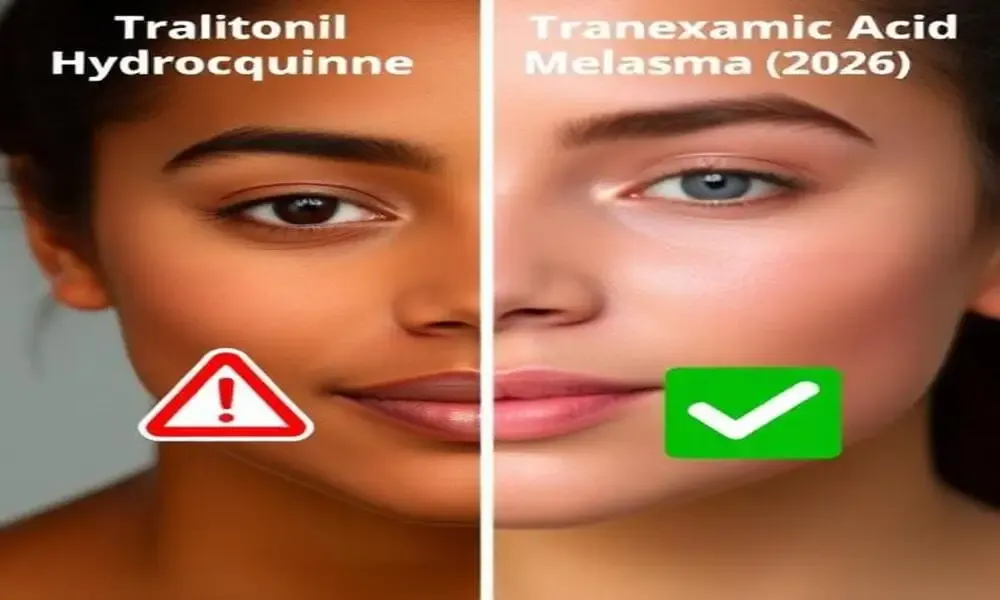
| Feature | Tranexamic Acid (TXA) | Hydroquinone (HQ) |
| Mechanism | Inhibits Plasmin (Prevents pigment) | Inhibits Tyrosinase (Bleaches pigment) |
| Safety Profile | High (Safe for long-term use) | Low (Needs “breaks” every 3 months) |
| Downtime | None (No peeling or redness) | Moderate (Can cause irritation/redness) |
| Results | Gradual but Sustainable | Fast but temporary |
| Suitability | All Skin Types (Especially Sensitive) | Caution for Darker Skin Tones |
Expert Note: While hydroquinone is the sprinter, tranexamic acid is the marathon runner of skincare. It builds a resilient skin barrier while fading spots. For more on high-strength prescription options, check out our guide on stubborn melasma.
4. The Dermatologist’s Guide: Best Ways to Use It
Topical Serums
In the USA, over-the-counter (OTC) serums usually contain 2% to 5% tranexamic acid. For clinical results, look for formulas that pair TXA with niacinamide or bakuchiol.
SkinCeuticals Discoloration Defense: A 2026 favorite for its high-potency blend.
Paula’s Choice Clinical Discoloration Repair: Excellent for mature skin.
Oral Tranexamic Acid: The Game Changer
For severe, resistant melasma, many US dermatologists now prescribe low-dose oral TXA. This works systemically to stop the hormonal triggers of pigment.
Warning: This is a medical prescription. You must consult your doctor to rule out any blood clotting risks before starting oral therapy.
Combination Therapy: The Power of Layering
TXA works best when it has “teammates.” Pairing it with an antioxidant like vitamin C in the morning creates a double shield against the sun.
5. Side Effects & Who Should Avoid TXA
While Tranexamic Acid is incredibly gentle compared to Retinoids or Acids, there are a few things to keep in mind:
Rare Sensitivity: Some users might experience mild dryness or itching when first starting a 5% concentration. Start every other night.
Pregnancy: While topical TXA is generally considered safer than hydroquinone, always consult your OB-GYN before adding new actives during pregnancy.
Sun Protection is Non-Negotiable: TXA stops new pigment, but just 10 minutes of unprotected sun exposure can undo weeks of progress.
6. The 2026 Routine: How to Incorporate TXA
To see results, consistency is more important than concentration. Here is a sample routine for someone targeting melasma:

Morning Routine:
Gentle Cleanser.
Vitamin C Serum (Antioxidant Protection).
Tranexamic Acid Serum (Pigment Prevention).
Moisturizer with ceramides.
Mineral SPF 50 (tinted is best for melasma!).
Evening Routine:
Double Cleanse (to remove SPF).
Tranexamic Acid Serum.
Optional: Retinol (if your skin isn’t too sensitive).
Barrier Repair Night Cream.
7. Expected Timeline: When Will You See Results?
Skincare is not magic. Because TXA works by stopping new pigment, you have to wait for your existing pigmented cells to naturally shed away.

Weeks 2-4: Improved skin radiance and reduced redness.
Weeks 8-12: Visible fading of dark patches and more even skin tone.
Month 6: This is where the “Gold Standard” results happen—significant reduction in melasma surface area.
8. Final Verdict: Why TXA Wins in 2026
The shift toward “slow skincare” and barrier health is why tranexamic acid has surpassed hydroquinone in popularity. It treats the skin with respect, avoiding the “rebound hyperpigmentation” that often happens with harsher chemicals.
If you have mature skin, sensitive skin, or have struggled with melasma that just won’t go away, tranexamic acid is the missing piece of your puzzle. It provides the clinical strength you need without the toxic side effects of the past.
9. Frequently Asked Questions (FAQs)
Q1. Can I use tranexamic acid with retinol?
Yes. In 2026, many dermatologists recommend layering tranexamic acid with retinol at night. TXA helps soothe the skin and reduce the redness that retinol might cause, while retinol speeds up cell turnover to shed existing pigment faster.
Q2. Is tranexamic acid safe for dark skin tones (melanin-rich skin)?
Absolutely. One of the reasons TXA is the “gold standard” is its safety for all Fitzpatrick skin types. Unlike hydroquinone, it has a very low risk of causing post-inflammatory hyperpigmentation or paradoxical darkening in skin of color.
Q3. How long can I use tranexamic acid for melasma?
Topical tranexamic acid is safe for long-term, indefinite use. Unlike other brightening agents that require a “break” every few months, TXA can be a permanent part of your maintenance routine to prevent melasma from returning.
Q4. Can I use tranexamic acid during pregnancy?
While topical TXA is generally considered low-risk, melasma is often hormonally driven during pregnancy. Always consult your OB-GYN before introducing active ingredients like tranexamic acid into your prenatal skincare routine.
Q5. Does tranexamic acid work on old sunspots?
Yes, it is effective for sunspots (solar lentigines) and age spots. However, it works best when paired with daily sun protection to prevent the UV rays from re-triggering the pigment.
10. Medical Disclaimer
Disclaimer: The information provided on Nagash Health by Dr. Sarah Reed is for educational and informational purposes only and is not intended as medical advice, diagnosis, or treatment.
While tranexamic acid is a clinically recognized ingredient for melasma, individual skin reactions can vary. Always perform a patch test before applying new active ingredients to your face. If you are considering oral tranexamic acid, a consultation with a board-certified dermatologist is mandatory to assess systemic health risks.
The use of skincare products mentioned in this guide should be part of a comprehensive routine that includes high-SPF sun protection. Nagash Health does not claim to cure chronic skin conditions, and results may vary based on skin type and severity of hyperpigmentation.
Dr. Sarah Reed’s Final Tip: Always remember that melasma is a journey, not a destination. Pair your tranexamic acid with a wide-brimmed hat and a high-quality tinted sunscreen to ensure those “2026 results” last a lifetime.