Methylene Blue Skincare: The Secret to Mitochondrial Health
Methylene Blue Skincare: The New Antioxidant Powerhouse for Mitochondrial Skin Health
For decades, the gold standard of anti-aging skincare has relied on a handful of “celebrity” molecules: Retinoids for turnover, Vitamin C for brightening, and Peptides for structural support. However, as we move through 2026, the focus of dermatology has shifted from surface-level correction to cellular longevity.
The most exciting breakthrough in this “longevity-first” approach is Methylene Blue skincare. Once a staple in diagnostic medicine, this vibrant blue molecule is now being hailed as the ultimate “biohack” for skin. Unlike traditional antioxidants that simply neutralize damage, Methylene Blue skincare addresses the root cause of skin aging: Mitochondrial Decay.
The Science: What is Methylene Blue?
Methylene Blue (MB) is a synthetic organic compound (methylthioninium chloride) with a storied history in medicine dating back to 1876. Traditionally used to treat methemoglobinemia and as a surgical stain, its transition into high-performance Methylene Blue skincare was sparked by groundbreaking longevity research. Studies have shown that while most antioxidants simply neutralize damage, MB works at a deeper, metabolic level to preserve the youthfulness of skin cells.
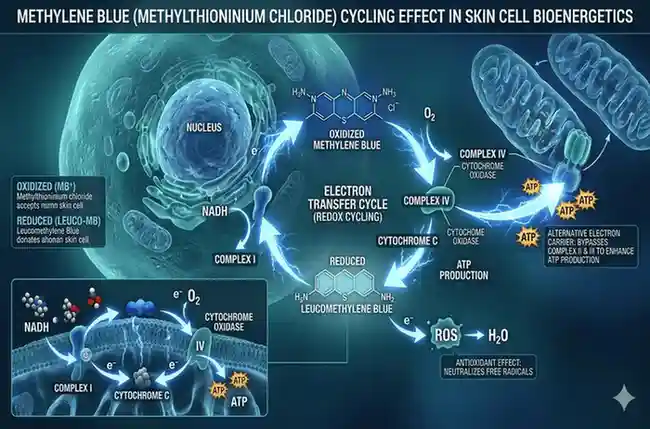
At a molecular level, Methylene Blue is a “redox agent.” This means it has the unique ability to cycle back and forth between two states: an oxidized form and a reduced form (leuco-methylene blue). Because of its cycling, it can function as a “electron recycler,” a feature that no other antioxidant on the skincare market has at the moment. While Vitamin C is “consumed” once it neutralizes a free radical, Methylene Blue skincare keeps working, continuously cycling to maintain cellular balance without becoming a pro-oxidant.
The “Power Plant” Connection
Our skin cells—specifically fibroblasts (which produce collagen) and keratinocytes (which form the protective barrier)—rely entirely on mitochondria for energy. Mitochondria produce Adenosine Triphosphate (ATP), which is essentially the “currency” of life. Without sufficient ATP, skin repair slows down, leading to the visible signs of aging.
As we age, or when we are exposed to chronic UV radiation and pollution, these mitochondria become “leaky” and inefficient. Instead of producing clean energy, they start generating more Reactive Oxygen Species (ROS) and significantly less ATP. This biological decline is known as Mitochondrial Dysfunction, and it is the primary driver behind why skin thins, loses elasticity, and develops deep wrinkles over time.
By integrating Methylene Blue skincare into a daily routine, we are effectively providing a “safety net” for these cellular power plants. MB enters the mitochondrial matrix and helps stabilize the electron transport chain, ensuring that even under environmental stress, your skin cells have the metabolic fuel they need to repair and regenerate.
Why Methylene Blue is Outperforming Vitamin C
While Vitamin C has been the undisputed king of antioxidants for decades, it has significant limitations. It is notoriously unstable, prone to rapid oxidation (turning that dreaded orange color), and can sometimes act as a “pro-oxidant” if the concentration or pH is off.
Methylene Blue skincare offers three distinct evolutionary advantages over traditional Vitamin C:
Direct Mitochondrial Targeting: Vitamin C works primarily in the cytoplasm (the fluid filling the cell). In contrast, Methylene Blue is “mitotropic,” meaning it specifically crosses the mitochondrial membrane to neutralize free radicals exactly where they are born—at the source.
The Bypass Effect: This is the most unique feature. When the mitochondrial electron transport chain is damaged by age or UV, it creates a “bottleneck” in energy production. An other electron carrier is methylene blue. It “jumps” the gap in a broken cellular circuit, allowing the cell to continue producing ATP energy even under extreme stress.
Hormetic Stress Response: MB induces a very mild, beneficial stress on cells that triggers the skin’s own internal antioxidant defense systems. This process, known as mitohormesis, essentially “trains” your skin cells to become more resilient over time.
Key Benefits for Skin Health
A. Reversing the “Clock” on Fibroblasts
The “architect” cells in charge of the extracellular matrix (ECM) are fibroblasts. Groundbreaking research published in Scientific Reports demonstrated that Methylene Blue can significantly increase the lifespan of human skin fibroblasts. It doesn’t just protect them; it epigenetically “reprograms” them to behave like younger cells, leading to a measurable increase in the production of both Type I Collagen and Elastin.
B. Accelerated Wound Healing and Barrier Repair
A healthy skin barrier requires the rapid migration of keratinocytes. Methylene Blue skincare accelerates this movement, making it essential for closing microscopic wounds and strengthening the acid mantle. For those dealing with “thinning skin” or delayed healing due to age or cortisol-related stress, MB provides the metabolic “fuel” required for the skin to knit itself back together faster.
C. Protection Against “Inflammaging”
“Inflammaging”—the chronic, low-grade inflammation that destroys collagen—is often triggered when damaged mitochondrial DNA leaks into the cell, signaling a “false” infection. By keeping the mitochondria structurally sound, Methylene Blue prevents this inflammatory cascade, reducing the persistent redness and sensitivity that many adults face in 2026.
D. Biological DNA Protection
MB has shown a remarkable ability to protect cellular DNA from the specific damage caused by UVB rays. While it is never a replacement for a high-quality SPF, it acts as a secondary biological shield. It works “behind the scenes” to repair the oxidative DNA breaks that slip past your sunscreen, providing a deeper level of photo-protection than topical antioxidants alone.
The Concentration Secret: Why “Less is More”
A common misconception in the beauty industry is that a higher percentage of an active ingredient equals better results. With Methylene Blue, the biological reality is the exact opposite. This molecule follows a U-shaped dose-response curve, meaning its benefits are peaked at a very specific, low concentration.
The Sweet Spot (Nanomolar Range): Peer-reviewed studies indicate that the most effective concentration for human skin health is approximately 0.5 micromolar (µM). At this precise level, it acts as a potent antioxidant and a catalyst for mitochondrial respiration.
The Danger Zone (High Concentration): If the concentration is too high (into the millimolar range), Methylene Blue can actually flip from being an antioxidant to a pro-oxidant, potentially causing cellular stress.
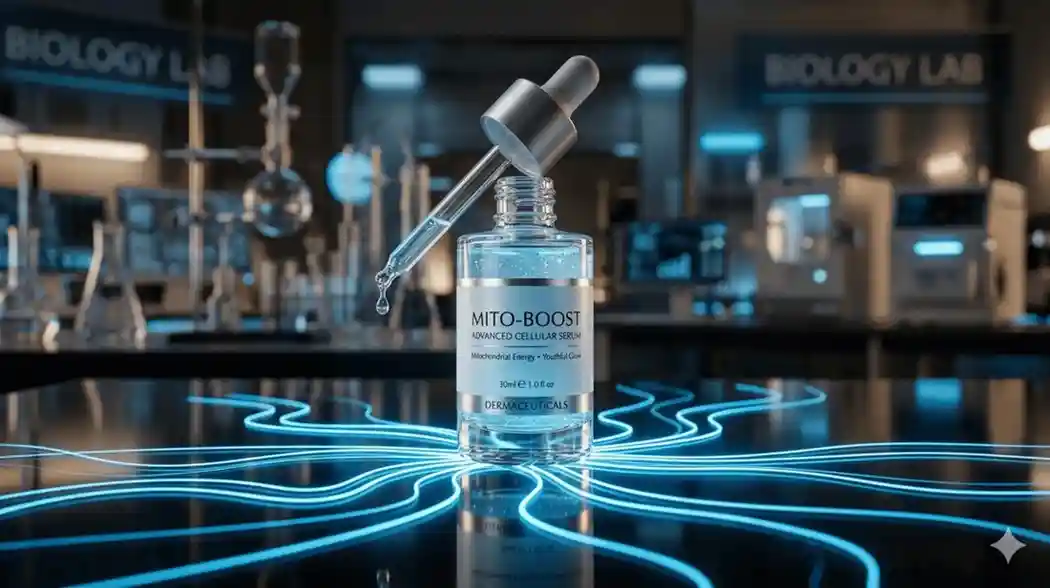
This is precisely why DIY Methylene Blue skincare is highly discouraged and potentially dangerous. High-quality, medical-grade formulations are precision-engineered to ensure the molecule stays within this beneficial “redox” window. These professional lab-grade serums also ensure the product remains translucent, preventing the skin staining or irritation associated with crude, high-concentration dyes.
Methylene Blue and Red Light Therapy: The Ultimate Synergy
By 2026, “At-Home Biohacking” has transitioned from a niche hobby to a mainstream skincare standard, making Red Light Therapy (RLT) a household staple. However, many users aren’t aware that Methylene Blue skincare is the “secret sauce” that makes these devices significantly more effective.
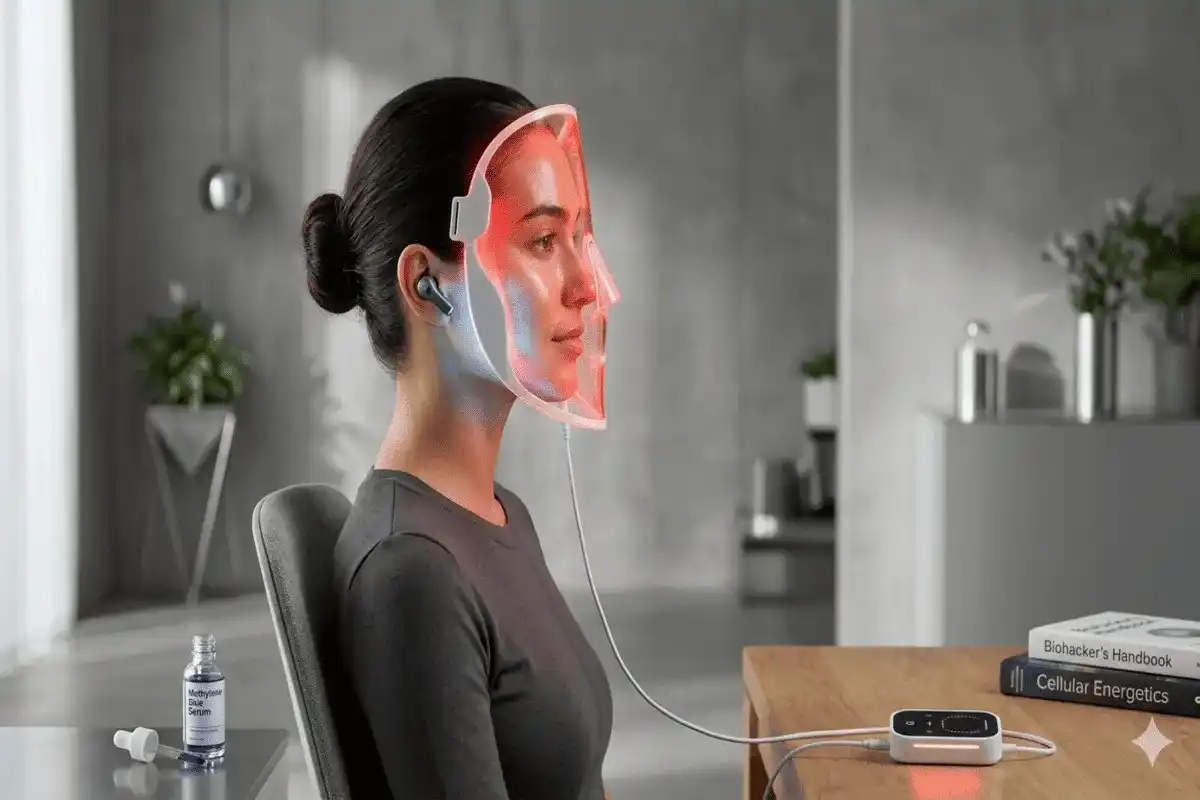
Methylene Blue is a powerful photosensitizer. It has a specific absorption peak that aligns perfectly with the wavelengths used in most LED masks and panels (especially the 660nm red light range).
How the Synergy Works:
Absorption: When you apply the serum, the MB molecule sits within the skin’s layers.
Activation: When hit by red light, the molecule becomes “excited,” accelerating the transfer of electrons within the mitochondrial electron transport chain.
Result: This leads to an exponential increase in ATP production.
Applying your serum 15–20 minutes before a Red Light session doesn’t just provide a surface-level glow; it “supercharges” the light’s ability to firm the skin and correct uneven tone. For the USA consumer looking for the highest ROI on their skincare devices, this combination is the gold standard of 2026.
How to Use Methylene Blue in Your 2026 Routine
If you are already following a multi-step regimen, you might wonder where a mitochondrial booster fits in. Because it is water-soluble and highly stable, Methylene Blue skincare is remarkably easy to integrate.
Morning: The Protective Shield
In the AM, MB acts as a stabilizer for the skin’s biological defense systems. It pairs beautifully with Niacinamide or Hyaluronic Acid to create a hydrated, resilient base.
The Order: Cleanse $\rightarrow$ Methylene Blue Serum $\rightarrow$ Moisturizer $\rightarrow$ Tinted Sunscreen.
The Why: It acts as a deep-level shield against “Digital Aging” (blue light) and pollution-induced oxidative stress that your topical SPF might not fully neutralize.
Evening: The Repair Phase
The PM is when your skin’s metabolic rate naturally increases to perform repairs. This is the optimal time to pair MB with other signaling molecules.
The “Longevity Duo”: Pair your serum with Copper Peptides. While the Peptides provide the “blueprint” for new collagen, the Methylene Blue provides the “fuel” (ATP) the cells need to actually build it.
A Note on Retinoids: You can safely use Methylene Blue skincare alongside Retinol or Retinal. In fact, its anti-inflammatory properties can help mitigate the “retinization” period—reducing the redness and peeling often associated with Vitamin A.
Safety and Side Effects
Is it safe for everyone? In professional concentrations, the answer is generally yes. However, here is what you need to know for a seamless experience:
The Staining Concern: This is the most common myth. High-end brands (such as Bluelene) use a specific, patented concentration that is colorless once absorbed into the dermis. As long as you avoid unverified DIY solutions, you will not experience any blue tint or “Smurf-like” staining.
Sensitive Skin & Rosacea: Unlike L-Ascorbic Acid (Vitamin C), which often requires a low, stinging pH to remain effective, Methylene Blue skincare solutions are typically formulated at a neutral pH (around 5.5–7.0). For people with sensitive skin or Rosacea who cannot handle conventional acids, this makes it a calming and useful substitute.
Pregnancy and Nursing: Although topical treatment at nanomolar concentrations is thought to be incredibly low-risk, clinical data for this particular group is currently being gathered. As a standard precaution in 2026, always consult your OB-GYN before adding a new bioactive ingredient to your routine.
The Future of Skincare: Beyond 2026
We are officially entering the era of “Metabolic Dermatology.” The industry is moving away from the old philosophy of “peel and conceal”—where we simply exfoliated the surface to hide damage. Instead, we are now focused on nourishing the living “engines” within our cells.
Methylene Blue skincare is far more than a passing trend; it represents a fundamental shift toward functional beauty. By addressing the bio-energetic decline of our skin at the mitochondrial level, we aren’t just engaging in “anti-aging”—we are practicing pro-vitality.
As we look beyond 2026, the goal of a skincare routine will be to maintain cellular energy for as long as possible. By optimizing mitochondrial health today, you aren’t just treating wrinkles; you are investing in the long-term resilience and biological youth of your skin.
Key Takeaways: Methylene Blue at a Glance
To summarize this deep dive, here is why this molecule is the new gold standard for your 2026 routine:
Mitochondrial Power: It recharges the “batteries” of your skin cells (ATP production).
Superior to Vitamin C: It is more stable and works inside the mitochondria, not just around them.
The 2026 Biohack: It pairs perfectly with Red Light Therapy to accelerate firming results.
Safe & Soothing: It is pH-neutral, making it ideal for sensitive skin and those who can’t tolerate Retinoids.
Summary Table: Methylene Blue vs. The Competition
| Benefit | Methylene Blue | Vitamin C | Retinol |
|---|---|---|---|
| Primary Mechanism | Mitochondrial ATP Booster | Radical Scavenger | Cell Turnover Stimulant |
| Stability | High (Stays active longer) | Low (Oxidizes quickly) | Medium (Light sensitive) |
| Irritation Potential | Very Low (pH Neutral) | High (Acidic) | High (Peeling) |
| Target Layer | Mitochondrial Matrix | Cytoplasm (Cell Fluid) | Dermis/Epidermis |
| Key Result | Skin Density & Resilience | Brightening & Glow | Texture & Wrinkles |
| Best Synergy | Red Light Therapy | Sunscreen (SPF) | Niacinamide |
Editor’s Choice: Get the Patented 0.5µM Methylene Blue Formula
*Optimized for Mitochondrial ATP Production & Cellular Longevity*
Conclusion
If you feel your skincare routine has hit a “plateau,” the issue might not be your products—it might be your cellular energy. By introducing Methylene Blue skincare, you are essentially “charging the battery” of your skin cells from the inside out.
In the competitive landscape of USA skincare in 2026, those who prioritize mitochondrial health will see the most sustainable, long-term results. It’s time to “go blue” for a brighter, firmer, and more resilient future.
Frequently Asked Questions (FAQs)
1. Does Methylene Blue skincare stain the face blue?
No. While the pure molecule is a dark blue dye, professional Methylene Blue skincare formulations use a highly diluted, patented concentration. When applied, it absorbs quickly and becomes completely translucent, leaving no tint on the skin.
2. Can I use Methylene Blue skincare with Vitamin C?
Yes, but for the best results, they are often used at different times or layered carefully. Since Methylene Blue skincare is more stable and works inside the mitochondria, many users prefer it as their primary antioxidant, using Vitamin C specifically for surface-level brightening.
3. Is Methylene Blue skincare safe for sensitive skin?
Absolutely. Unlike many high-potency Vitamin C serums that require a low (acidic) pH, most Methylene Blue skincare products are formulated with a neutral pH. This makes it an excellent alternative for those who experience redness or irritation from traditional anti-aging actives.
4. How much time does it take to see results?
Because Methylene Blue skincare works on a cellular level, you may notice an immediate “glow” due to better hydration. However, structural changes like increased skin thickness and reduced fine lines typically take 4 to 8 weeks of consistent use, as this is the time required for mitochondrial health to improve.
5. Can I use it with Red Light Therapy?
Yes, this is highly recommended. Methylene Blue skincare acts as a photosensitizer that can actually enhance the benefits of Red Light Therapy, helping the skin cells produce even more energy (ATP) during the session.
Medical Disclaimer
Disclaimer: The information provided in this article regarding Methylene Blue skincare is for educational and informational purposes only and is not intended as medical advice. While Methylene Blue has shown promising results in clinical studies for mitochondrial skin health, individual results may vary. Always perform a patch test before introducing new products into your routine. If you are pregnant, nursing, or have a pre-existing medical condition, please consult with a board-certified dermatologist or healthcare professional before using Methylene Blue skincare. This compound should only be used in professional, lab-tested skincare formulations; never attempt to create DIY solutions with industrial or high-concentration Methylene Blue.