Vitamin C Oxidation: 7 Proven Ways to Stop Your Serum Turning Brown
Why Your Vitamin C Serum Turns Brown (And How to Stop It)
Vitamin C is often called the “Holy Grail” of skincare for its ability to brighten skin, fade dark spots, and boost collagen. However, if you’ve ever noticed your clear serum turning a dark amber or brown, you’ve witnessed Vitamin C oxidation.
When Vitamin C oxidizes, it doesn’t just lose its power—it can actually become counterproductive for your skin. In order to maximize your investment, we will examine why this occurs and, more crucially, how you may avoid it.
What is Vitamin C Oxidation?
To understand Vitamin C oxidation, we have to look at the chemistry of your skincare. Most high-performance serums utilize L-Ascorbic Acid, the purest and most potent form of Vitamin C. While it is incredibly effective at brightening the skin, it is also scientifically classified as “unstable.”
Vitamin C oxidation occurs when the L-Ascorbic Acid molecule is exposed to external “stressors” like light, heat, and oxygen. In technical terms, the molecule loses electrons in a process called redox reaction. This causes the active Vitamin C to convert into a different chemical compound known as Dehydroascorbic Acid (DHAA).
This transformation is why Vitamin C oxidation is so easy to spot with the naked eye. As the chemical structure changes, the liquid shifts from a clear or pale state to a yellow, orange, and eventually dark brown hue.
Once Vitamin C oxidation is complete, the serum loses its “reducing power.” This means it can no longer neutralize free radicals or protect your skin from environmental damage like UV rays and pollution. Instead of acting as a protective shield, an oxidized serum becomes a collection of degraded chemicals that may actually cause oxidative stress on your skin’s surface, leading to inflammation or clogged pores.
The Color Chart: Identifying Vitamin C Oxidation Levels
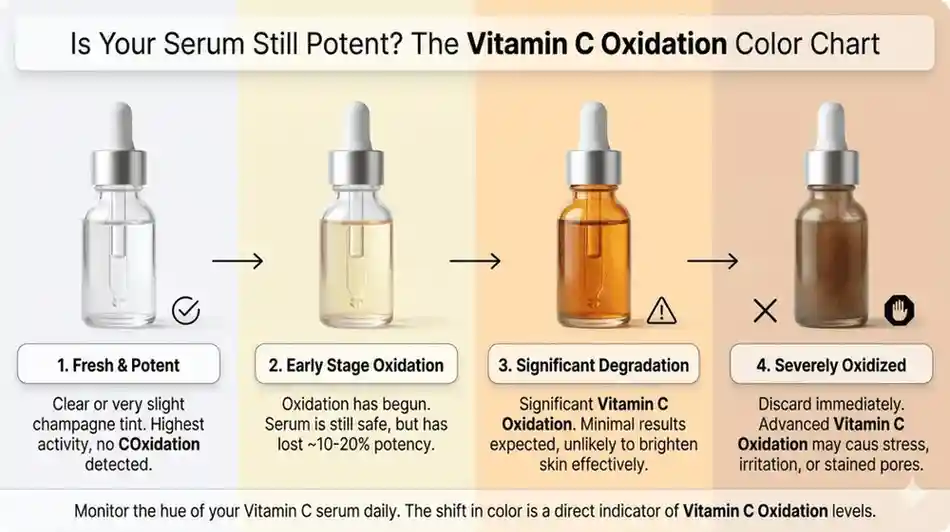
Before you apply that orange liquid to your face, it is crucial to use a color timeline to assess the stage of Vitamin C oxidation. Checking the hue of your product daily is the best way to ensure you aren’t applying a degraded formula that could irritate your skin.
1. Clear to Champagne (Fresh & Potent)
This is the “ideal” zone. If your serum is crystal clear or has a very slight champagne tint, Vitamin C oxidation is non-existent or very minimal. At this stage, the L-ascorbic acid is at its peak potency, providing maximum antioxidant protection and collagen-boosting benefits.
2. Light Yellow to Gold (Early Stage Oxidation)
When you notice a light yellow or golden hue, it indicates that the process of Vitamin C oxidation has officially begun. While the serum is still safe to use, it has likely lost about 10% to 20% of its original strength. You should aim to finish the bottle quickly at this stage before further degradation occurs.
3. Dark Orange to Amber (Significant Degradation)
If your serum resembles the color of a dark sunset or amber, significant Vitamin C oxidation has taken place. While the product isn’t necessarily “toxic,” the active molecules have mostly converted into DHAA. It is unlikely to provide the brightening results you want, and the $pH$ level may have shifted, making it more prone to causing redness.
4. Dark Brown or Murky (Severe Vitamin C Oxidation)
If the liquid is dark brown, reddish-brown, or has a murky consistency, you must stop using it immediately. At this advanced stage of Vitamin C oxidation, the serum has completely lost its nutritional value. Applying it can cause “oxidative stress,” potentially leading to:
Inflammatory breakouts.
Increased skin sensitivity.
Temporary staining of the pores (making them look like blackheads).
How to Prevent Vitamin C Oxidation: Professional Storage Hacks
While you cannot stop the chemical process forever, you can significantly slow down the rate of Vitamin C oxidation with strategic maintenance. By controlling the environment of your skincare products, you can ensure the L-ascorbic acid remains active for several months rather than weeks.
1. The Fridge Method for Temperature Control
Heat is one of the primary catalysts for Vitamin C oxidation. Storing your serum in a dedicated skincare fridge—or even your standard kitchen refrigerator—is one of the most effective ways to stabilize the formula. The consistent cold temperature slows down the kinetic energy of the molecules, preventing the rapid oxidation of Vitamin C that occurs at room temperature.
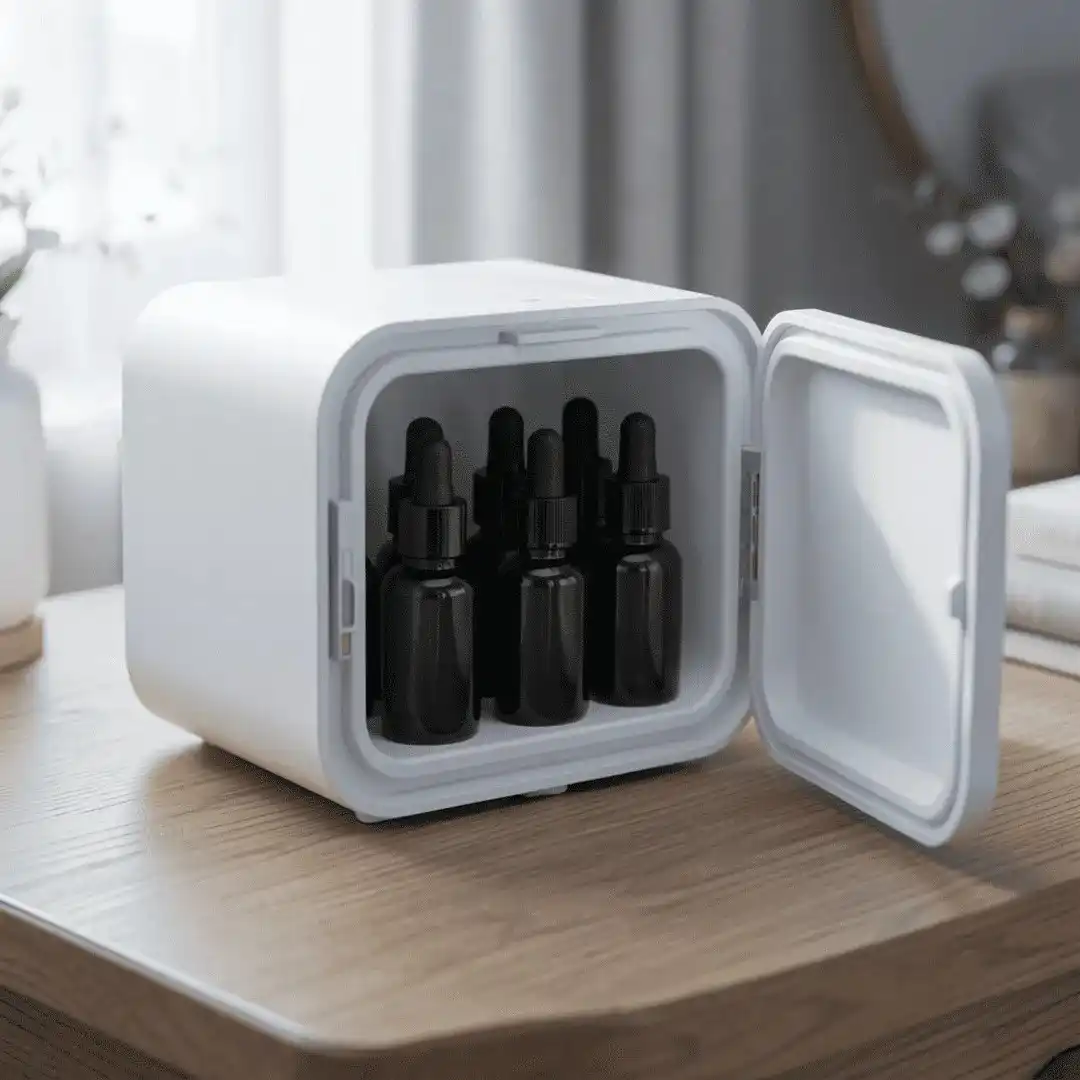
❄️ Keep Your Vitamin C Serum Fresh Longer
A mini skincare fridge helps slow down Vitamin C oxidation and keeps your serums potent for months.
2. Avoid the “Bathroom Trap”
Many people unknowingly accelerate Vitamin C oxidation by keeping their serums on a bathroom counter. The frequent fluctuations in temperature and the high humidity levels from steam showers create a “greenhouse effect” that breaks down L-ascorbic acid quickly. To protect your serum from environmental Vitamin C oxidation, move your bottle to a cool, dry place like a bedroom vanity or a dark drawer.
3. Minimize Oxygen Exposure (The 30-Second Rule)
Oxygen is the literal “O” in Vitamin C oxidation. Every time you leave the bottle open while applying your skincare, you are inviting air to react with the liquid. To prevent premature oxidized Vitamin C serum, make it a strict habit to tighten the cap immediately after dispensing your daily dose. Avoid letting the dropper touch your skin, as this can introduce bacteria and oils that further destabilize the formula.
4. Utilize the “Aluminum Foil” Hack
Photodegradation is a major contributor to Vitamin C oxidation. If your favorite brand uses clear or translucent glass bottles, the formula is constantly being hit by UV and ambient light. If you don’t want to transfer the product to a new container, you can wrap the bottle in aluminum foil. This creates a 100% light-proof barrier, significantly reducing the chances of light-induced Vitamin C oxidation.
5. Consider Decanting for Large Bottles
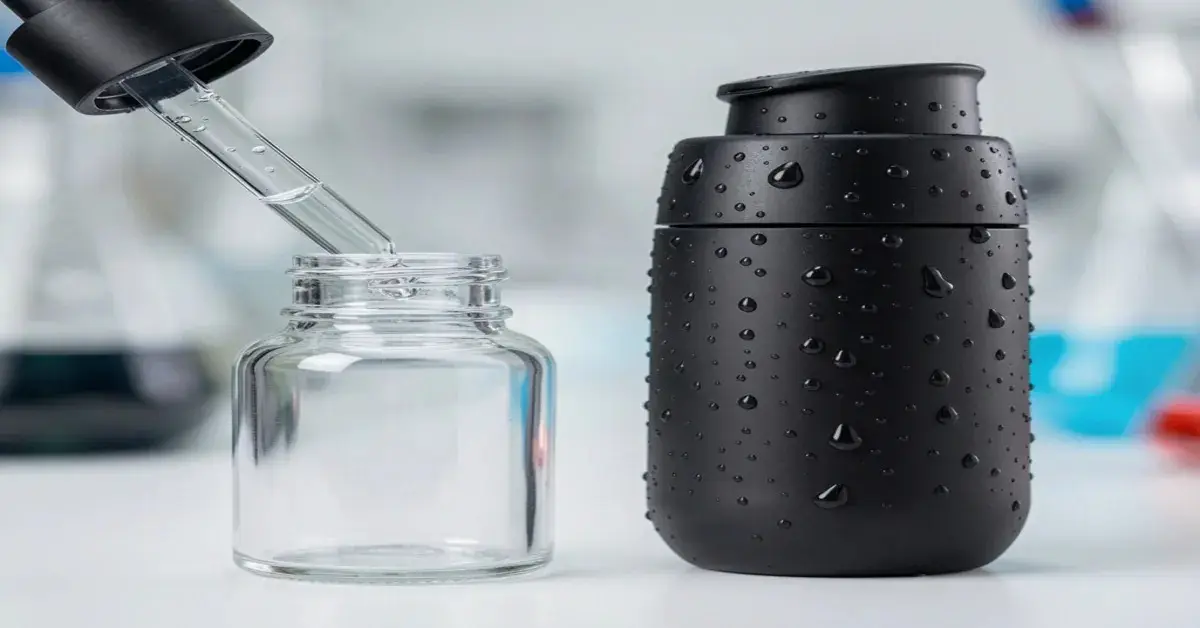
If you have purchased a large bottle of serum, you are more likely to experience Vitamin C oxidation before you can finish the product. A professional tip is to “decant” a small amount (about a week’s worth) into a smaller, dark glass vial. This allows you to keep the “mother bottle” sealed and refrigerated, protecting the bulk of your investment from the daily air and light exposure that causes Vitamin C oxidation.
What to Look for When Buying: Choosing a Formula Resistant to Vitamin C Oxidation
Before you ever open the bottle, prevention begins. When shopping for a new product, you should prioritize packaging and formulations specifically designed to combat Vitamin C oxidation.
1. UV-Protective Dark Glass
Since light is a primary trigger for Vitamin C oxidation, never purchase a serum sold in a clear or transparent bottle. Look for medical-grade Amber, Cobalt Blue, or Miron (violet) glass. These materials filter out the UV rays that cause the L-ascorbic acid to degrade prematurely.
📦 Protect Your Serum From Light Damage
Professional skincare brands use UV-protected amber bottles to prevent Vitamin C oxidation.
2. Airless Pumps vs. Traditional Droppers
While droppers are classic, they are the least effective at preventing Vitamin C oxidation because they require you to open the bottle and expose the entire liquid to oxygen every single day. Airless pumps or opaque tubes are superior; they utilize a vacuum mechanism that dispenses the product without ever letting outside air enter the container, virtually eliminating air-induced Vitamin C oxidation.
⭐ Dermatologist-Approved Vitamin C Serum
Looking for a stable Vitamin C formula with Ferulic Acid and Vitamin E?
Fast shipping available
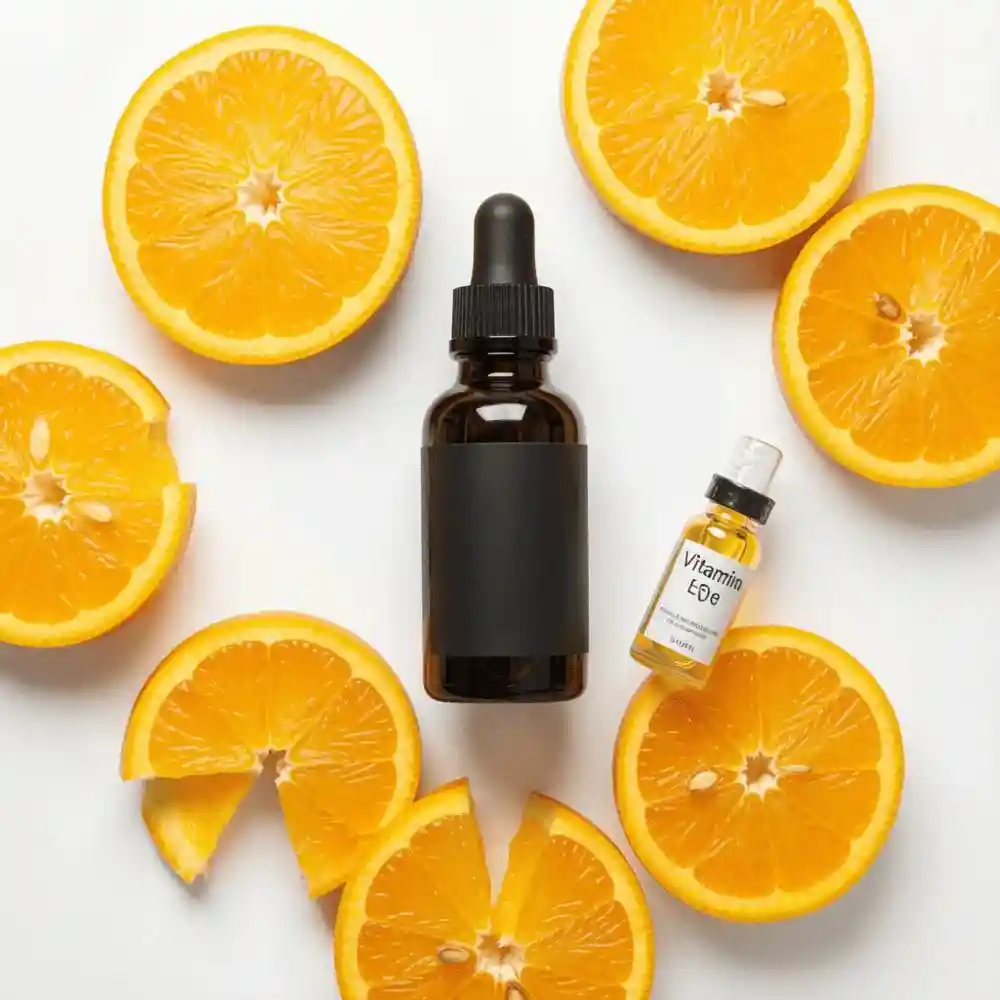
3. The “Power Trio” of Stabilizing Ingredients
The most advanced formulas include “bodyguard” ingredients that shield the active molecules from Vitamin C oxidation. When reading the ingredient label, look for:
Ferulic Acid: A potent antioxidant that doubles the photoprotection of Vitamin C and significantly increases its stability.
Vitamin E (Tocopherol): Works in synergy with Vitamin C to recharge its antioxidant power and slow down the rate of Vitamin C oxidation.
Glutathione: Another stabilizing agent that helps keep the formula clear and potent for a longer duration.
4. Check the “Manufactured” Date
Always check the batch code or manufacturing date. Because Vitamin C oxidation begins the moment the product is bottled, you want to purchase the freshest batch possible. Avoid buying Vitamin C serums that have been sitting on a bright, warm retail shelf for months.
Conclusion
A brown Vitamin C serum is a sign that your product has lost its spark. By understanding the signs of oxidation and following proper storage techniques, you can ensure your skin gets the full brightening benefits of this powerful antioxidant.
Remember, consistency is key in skincare, but using a fresh, potent product is even more important.
Frequently Asked Questions (FAQ)
1. Is using an oxidized vitamin C serum safe?
While using a serum in the early stages of Vitamin C oxidation (light yellow) is generally safe, it will be less effective. However, once the serum turns dark orange or brown, it should be discarded. Highly oxidized Vitamin C can cause skin irritation, redness, and may even lead to “oxidative stress” which can accelerate signs of aging—the opposite of what you want!
2. Why did my Vitamin C serum turn orange so fast?
The rate of Vitamin C oxidation depends on storage and formulation. If your serum is exposed to direct sunlight, kept in a humid bathroom, or lacks stabilizers like Ferulic Acid, it can oxidize within weeks. Always check that your bottle is tightly sealed after every use to minimize oxygen exposure.
3. Does putting Vitamin C in the fridge really help?
Yes! Temperature is a major factor in Vitamin C oxidation. Keeping your serum at a consistent, cool temperature slows down the chemical degradation process. It is one of the most effective ways to extend the shelf life of L-ascorbic acid.
4. Can I still use Vitamin C if it smells weird?
A change in scent often accompanies Vitamin C oxidation. If your serum starts to smell “metallic” or like “hot dog water,” it is a sign that the chemical structure has changed. If the smell is accompanied by a dark color shift, it is time to replace it.
Disclaimer
Medical Disclaimer: The information provided in this article regarding Vitamin C oxidation, skincare routines, and ingredient efficacy is for educational and informational purposes only. It is not intended to be medical advice or to take the place of a professional diagnosis or treatment plan.
While we strive to provide accurate and up-to-date information, skincare results can vary based on individual skin types and conditions. Before adding a new active ingredient to your regimen, always conduct a patch test. If you experience severe irritation, redness, or an allergic reaction, stop using the product immediately and consult with a board-certified dermatologist.
This website may contain affiliate links, meaning we may receive a small commission if you choose to purchase through them, at no extra cost to you.