Batana Oil vs. Rosemary Oil for Hair Growth (2026 Guide)
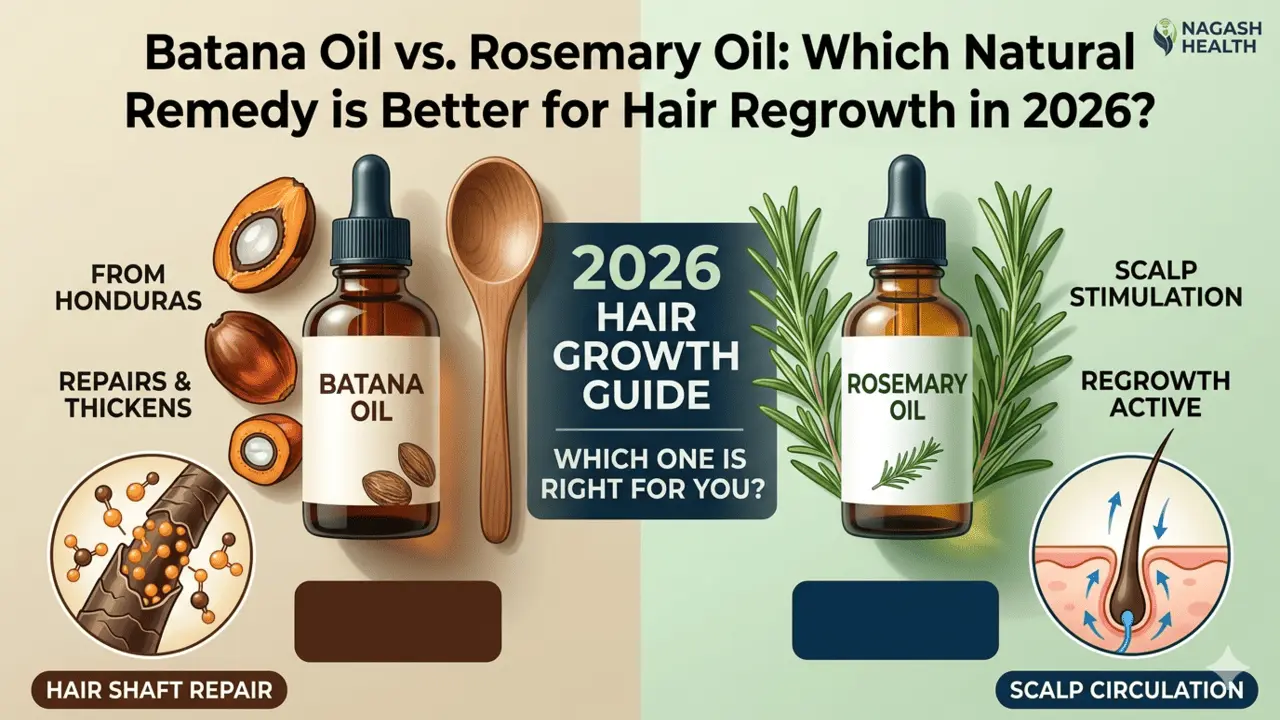
Batana Oil vs. Rosemary Oil: Which Natural Remedy is Better for Hair Regrowth in 2026?
The quest for thicker, fuller hair has moved away from harsh chemicals and toward the potent “liquid gold” found in nature. In the United States, two heavyweights have emerged as the most talked-about solutions for thinning edges and scalp health: Rosemary Oil and Batana Oil.
While Rosemary Oil gained viral fame on TikTok for being a “minoxidil alternative,” Batana Oil—often called the “Miracle Oil” from Honduras—is the rising star of 2026.
But which one deserves a spot in your nighttime routine? In this clinical yet accessible guide, we break down the science, the traditional roots, and the real-world results of Batana vs. Rosemary.
Quick Verdict: Batana Oil vs. Rosemary Oil (2026 Guide)
- Choose Rosemary Oil if your primary goal is to stimulate new growth, increase scalp circulation, and combat thinning or pattern baldness at the root.
- Choose Batana Oil if you need to repair breakage, eliminate split ends, and restore moisture to dry, brittle, or chemically treated hair strands.
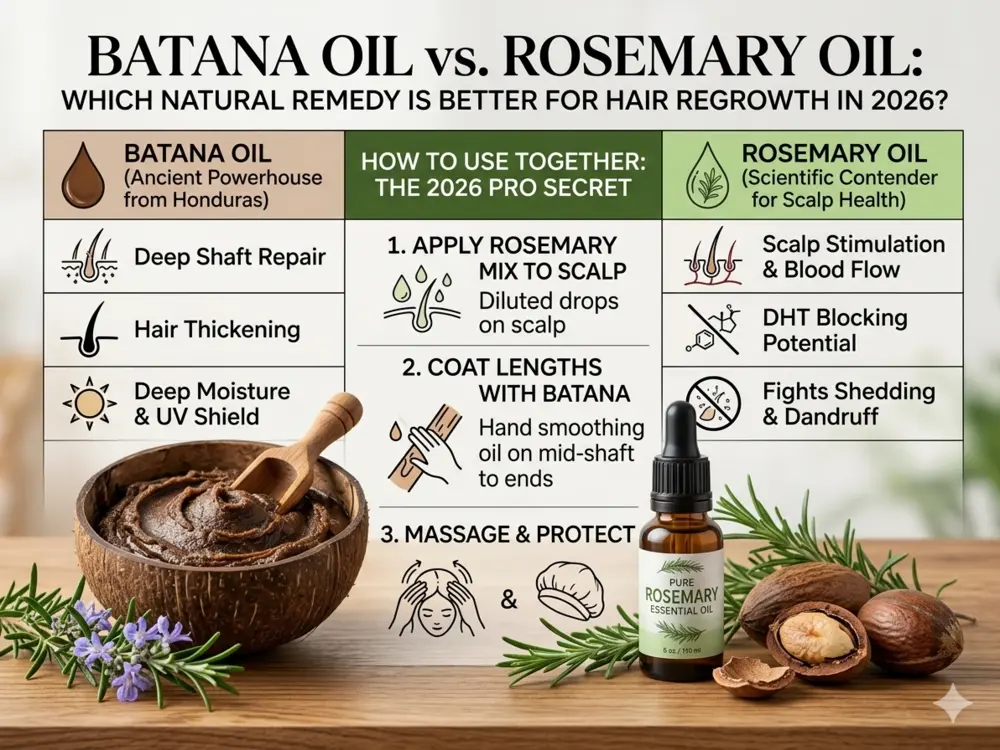
- The 2026 Pro Strategy: For maximum results, use both. Apply rosemary oil to the scalp for stimulation and Batana oil to the hair lengths for structural protection.
1. What is Batana Oil? (The Ancient Powerhouse)
When comparing Batana Oil vs. Rosemary Oil, it’s essential to look at the origins of the “miracle oil” from Honduras. Derived from the nut of the American palm tree (Elaeis oleifera) found deep in the Central American rainforests, Batana oil has been a beauty staple for centuries.
Specifically used by the Miskito people—the “people of beautiful hair”—this oil is the secret behind their long and strong tresses. In the modern debate of Batana Oil vs. Rosemary Oil for hair growth, Batana represents the ultimate repair agent.
The Nutrient Profile: Why Batana Wins for Repair
Unlike many processed oils, raw Batana oil is a thick, paste-like substance. In any Batana oil vs. rosemary oil comparison, the nutrient density of Batana is hard to beat:
Oleic and Linoleic Acids: These essential fatty acids penetrate the hair shaft deeply. While Rosemary Oil focuses on the scalp, Batana focuses on repairing the hair fiber itself.
Tocopherols and Tocotrienols (Vitamin E): These fight oxidative stress. When discussing Batana Oil vs. Rosemary Oil, it’s noted that Batana provides superior protection against environmental damage.
Carotenoids: These natural pigments provide UV protection and add depth to hair color, a feature unique to Batana in the Batana Oil vs. Rosemary Oil matchup.
Traditional Extraction vs. Modern Needs
The reason Batana Oil vs. Rosemary Oil is such a hot topic in 2026 is the purity of the extraction. Batana is still produced by boiling and cracking nuts by hand. This preserves bioactive compounds that help with hair thickening. For those deciding between Batana Oil vs. Rosemary Oil, the traditional “cold-processed” nature of Batana offers a chemical-free alternative to silicones.
Batana Oil Benefits for Different Hair Types
In the USA market, understanding your hair type is key to choosing between Batana Oil and Rosemary Oil.
For High Porosity Hair: Batana is the clear winner because it fills the gaps in the cuticle.
For Color-Treated Hair: If you are comparing Batana Oil vs. Rosemary Oil, Batana is better for preventing fade and brittleness.
For Scalp Stimulation: This is where Rosemary Oil usually takes the lead, but Batana provides the hydration needed to sustain that growth.
2. What is Rosemary Oil? (The Scientific Contender)
In the ongoing debate of Batana Oil vs. Rosemary Oil, the latter is often hailed as the “Scientific Contender.” Rosemary oil is a potent essential oil extracted from the Rosmarinus officinalis herb. While Batana Oil is a traditional paste, rosemary has become a clinical staple in the USA for those suffering from androgenetic alopecia (pattern hair loss).
The Mechanism: How It Compares to Batana Oil
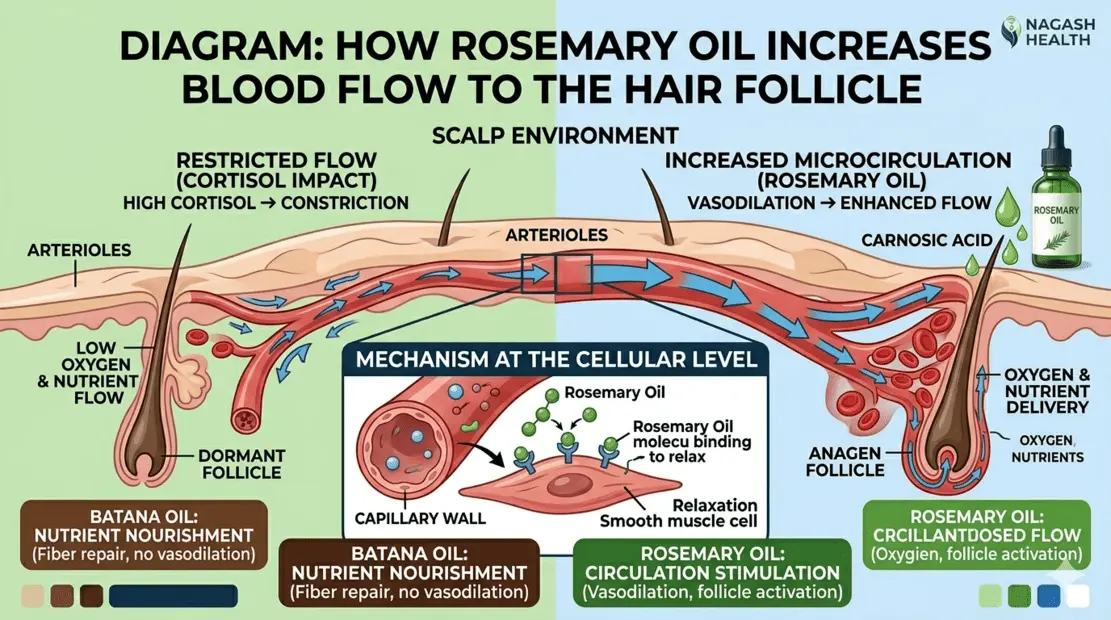
The primary strength of Rosemary Oil is circulation. When comparing Batana Oil vs. Rosemary Oil, the scientific mechanism of rosemary is what sets it apart. By increasing blood flow to the scalp, it ensures that hair follicles receive the oxygen and nutrients necessary to stay in the anagen (growth) phase longer.
Unlike Batana Oil, which focuses on the hair fiber, Rosemary targets the root of the problem—the scalp’s environment.
Key Active Compounds for Hair Growth
What makes the Batana Oil vs. Rosemary Oil comparison so interesting are the specific bioactives found in the herb:
Carnosic Acid: This is the star active compound known to heal tissue and nerve damage. When looking at Rosemary Oil vs. other natural remedies, carnosic acid provides a unique regenerative property.
Anti-Inflammatory Properties: It significantly reduces scalp irritation and dandruff, which often precede hair shedding.
DHT Blocking Potential: Some studies suggest that in the Batana Oil vs. Rosemary Oil matchup, Rosemary may help block DHT (dihydrotestosterone), the hormone responsible for male and female pattern baldness.
Rosemary Oil vs. Minoxidil: The 2026 Perspective
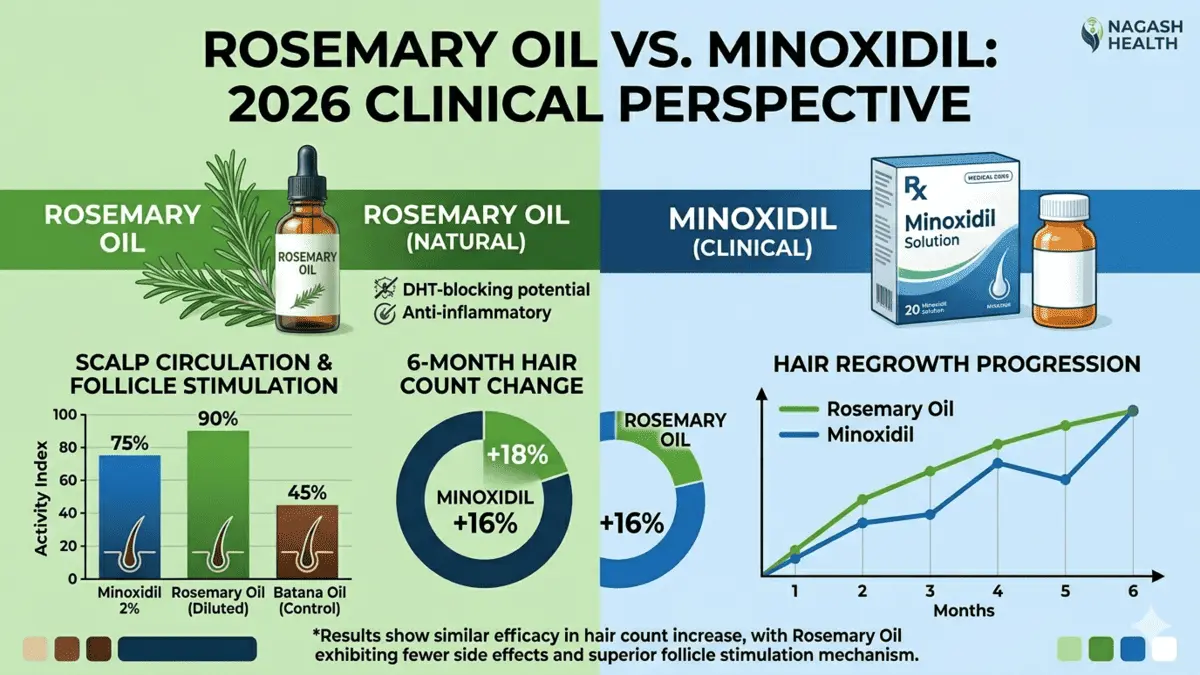
One reason Rosemary Oil has gained massive popularity in the United States is a famous study showing it performed similarly to 2% minoxidil after six months of use. In the context of Batana Oil vs. Rosemary Oil, users often choose Rosemary for its proven clinical background in stimulating new growth, whereas they use Batana for overall hair health.
Scalp Detox and Follicle Stimulation
In any Batana Oil vs. Rosemary Oil for a hair growth routine, rosemary acts as a detoxifier. It helps clear clogged follicles and balances oil production. For those with oily scalps, Rosemary Oil is often the preferred choice over the heavier texture of Batana Oil.
3. The Head-to-Head Comparison: Batana Oil vs. Rosemary Oil
Choosing between Batana Oil and Rosemary Oil depends entirely on your specific hair goals. While both are natural powerhouses, they serve different functions in a hair care routine. If you are struggling with breakage, Batana Oil is your hero; if you are dealing with thinning at the root, Rosemary Oil is the clinical choice.
Quick Comparison Table: Batana Oil vs. Rosemary Oil
| Feature | Batana Oil | Rosemary Oil |
| Primary Benefit | Deep repair and shaft thickening | Scalp stimulation and regrowth |
| Active Nutrients | Vitamin E, Omega-6, Carotenoids | Carnosic acid, antioxidants |
| Best For | Dry, damaged, brittle hair | Thinning, oily scalp, pattern baldness |
| Texture | Thick paste (solid at room temp) | Thin, volatile essential oil |
| Application | Deep conditioning mask (pre-wash) | Daily scalp massage (diluted) |
| Scent Profile | Earthy, smoky (coffee-like) | Herbal, fresh, medicinal |
Deep Dive: Understanding the Differences
In the Batana Oil vs. Rosemary Oil debate, the “texture” and “application” are the biggest differentiators for USA consumers who have busy schedules.
1. Texture and Absorption
Batana Oil is a heavy, dense paste. It acts as an occlusive, meaning it seals moisture into the hair. In contrast, Rosemary Oil is a thin, volatile essential oil. In any Batana oil vs. rosemary oil comparison, you’ll notice that Rosemary must be diluted in a carrier oil (like jojoba or almond oil) to prevent scalp irritation, whereas Batana can be applied directly as a treatment.
2. Target Concerns: Repair vs. Growth
If your hair feels “mushy” or breaks easily when stretched, the fatty acids in Batana Oil will provide the structural integrity you need. However, if you see more scalp than usual in your mirror, the Batana Oil vs. Rosemary Oil choice leans heavily toward Rosemary. Its ability to stimulate blood flow is unmatched by the heavier Batana paste.
3. Scalp Environment and pH Balance
Rosemary Oil is excellent for those with oily scalps or dandruff because of its antimicrobial properties. On the other hand, in the Batana Oil vs. Rosemary Oil matchup for dry, flaky scalps, Batana provides a deep level of hydration that an essential oil simply cannot offer.
The Verdict on Effectiveness
When we analyze Batana Oil vs. Rosemary Oil for hair growth in 2026, the data suggests that most users see the best results when they don’t choose just one. While Rosemary Oil works on the biological growth cycle, Batana Oil ensures that the hair that grows out stays healthy and long.
4. The Science of Hair Growth: How They Work
To make an informed choice in the Batana Oil vs. Rosemary Oil debate, you must first understand the biology of your hair. Hair growth is not just about the roots; it’s about the environment of the scalp and the strength of the fiber. While Rosemary Oil focuses on the biological growth cycle, Batana Oil is the ultimate structural engineer for your hair strands.
Scalp Stimulation: Why Rosemary Oil is Essential
In the USA, high-stress lifestyles often lead to increased cortisol levels, which can restrict blood flow to the scalp. This is where Rosemary Oil acts as a powerful vasodilator. When you compare Batana Oil vs. Rosemary Oil, you’ll find that Rosemary actually widens the blood vessels.
This biological “wake-up call” ensures that dormant follicles receive the oxygen and nutrients they need to grow. While Batana Oil is incredibly nourishing, it doesn’t have the same clinical ability as rosemary oil to boost microcirculation at the root level.
Strand Integrity: Where Batana Oil Takes the Lead
Many people think their hair is “falling out,” when in reality, it is simply breaking off mid-shaft due to brittleness. If breakage is your main concern, Rosemary Oil won’t provide the fatty acids needed to stop it. This is the primary strength of Batana Oil.
Because Batana Oil is a rich, fatty substance, it fills the microscopic gaps in the hair cuticle. It mimics the natural sebum of the scalp, providing a protective barrier against the harsh “hard water” and environmental pollutants often found in major USA cities. In the Batana Oil vs. Rosemary Oil matchup for brittle hair, Batana is the undisputed winner.
The Anagen Phase vs. The Telogen Phase
The secret to long hair is keeping your follicles in the anagen (growth) phase as long as possible.
Rosemary Oil works by stimulating the follicle to stay in the growth phase.
Batana Oil ensures that once the hair grows, it remains strong enough to reach its full length without snapping.
When you look at Batana Oil vs. Rosemary Oil for hair growth, you are essentially looking at two sides of the same coin: one grows the hair, and the other preserves it.
[Infographic: The Hair Growth Cycle – Anagen vs. Telogen]
Combatting USA Environmental Stressors
From the dry heat of Arizona to the humid summers of Florida, American hair faces constant stress. Rosemary Oil helps detoxify the scalp from product buildup (like dry shampoo), while Batana Oil provides the deep moisture needed to survive extreme weather. If you are comparing Batana Oil vs. Rosemary Oil for overall resilience, using them in tandem offers a 360-degree shield for your hair.
5. Can You Use Batana Oil and Rosemary Oil Together? (The 2026 Pro Secret)
The most common question in the hair care community is: “Do I have to choose between Batana Oil vs. Rosemary Oil?” The answer is a resounding No. In fact, combining them is the “Pro Secret” for 2026.
Using Batana Oil and Rosemary Oil together creates a “Total Care” system that addresses hair health from the follicle to the tip. While Rosemary Oil works biologically on the roots to encourage new growth, Batana Oil works mechanically on the lengths to ensure that new hair doesn’t snap or break.
The “Maximum Growth” Routine: Step-by-Step
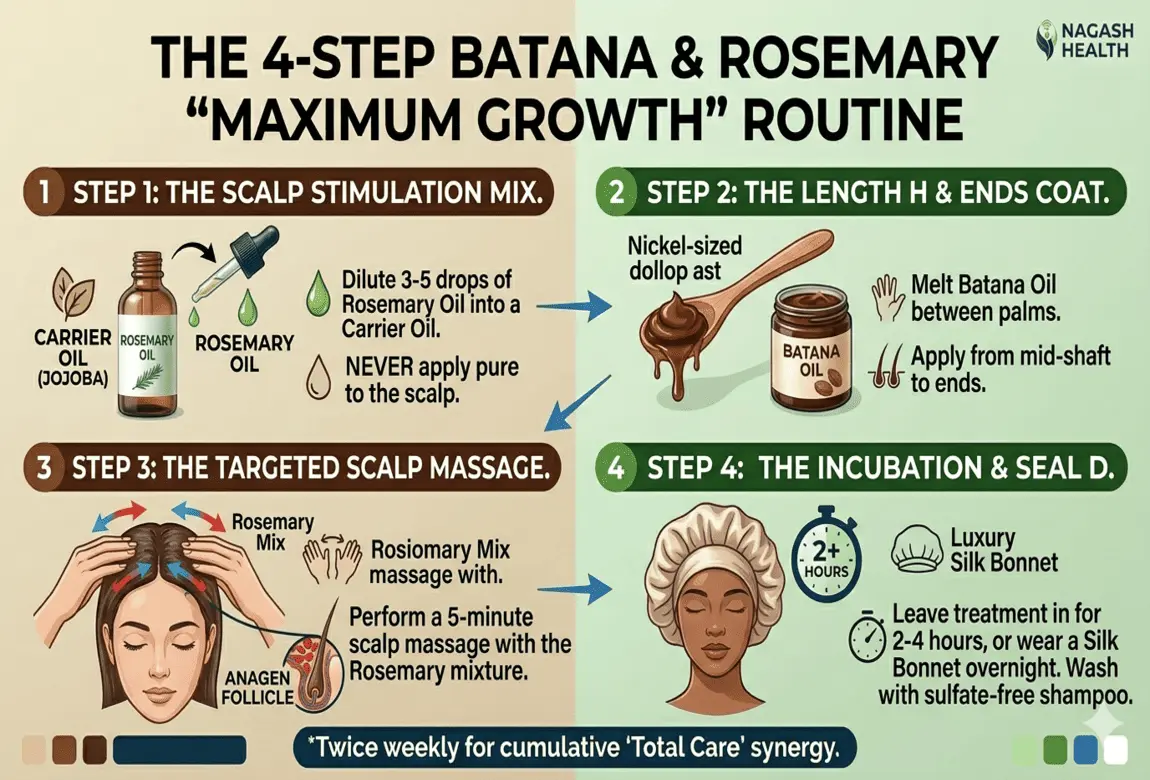
If you want the best results from the Batana Oil vs. Rosemary Oil duo, follow this clinically-inspired routine twice a week:
The Scalp Stimulation Mix: Since Rosemary Oil is a volatile essential oil, never apply it pure. Dilute 3-5 drops into a carrier like Jojoba or Grapeseed oil. This ensures the Rosemary Oil reaches the follicles without causing chemical irritation.
The Length & Ends Coat: Melt a tiny bit of raw batana oil between your palms, around the size of a nickel. Apply it from the mid-shaft down to the very ends. In the Batana Oil vs. Rosemary Oil synergy, Batana acts as the “sealant” for your hair’s protein structure.
The Targeted Scalp Massage: Spend at least 5 minutes massaging the Rosemary Oil mix into your scalp. This physical stimulation combined with the oil’s vasodilatation properties maximizes absorption.
4. The Incubation Period: For deep penetration, leave this Batana Oil vs. Rosemary Oil treatment in for at least 2 hours. For the ultimate repair, wear a Silk Bonnet and leave it overnight before washing with a sulfate-free shampoo.
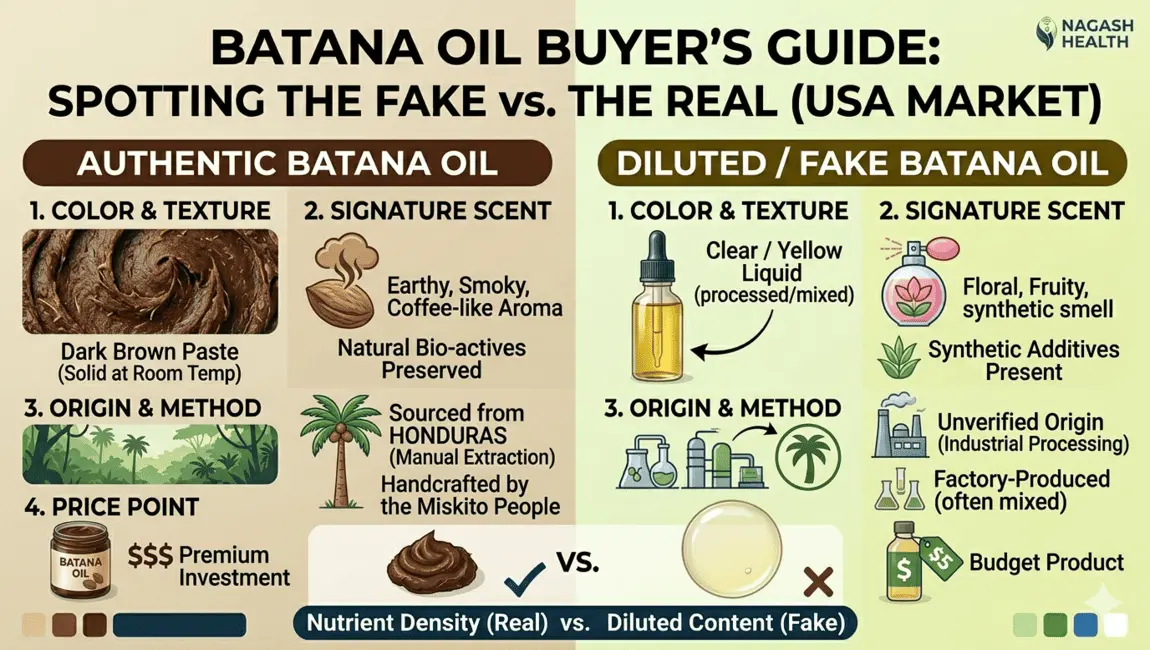
6. How to Spot Fake Batana Oil (USA Buyer’s Guide)
Because Batana Oil is rare and labor-intensive to produce in Honduras, the US market is currently flooded with “diluted” or “fake” versions. When you are comparing Batana Oil vs. Rosemary Oil, you’ll find that while Rosemary is easy to source, authentic Batana is much harder to find.
To ensure you are getting the real benefits of Batana Oil for hair growth, look for these three critical signs:
1. Color and Texture
Pure, unrefined Batana Oil is dark brown to coffee-colored. It should have a thick, paste-like consistency at room temperature. If the product is yellow, clear, or purely liquid, it has been heavily processed or mixed with cheap vegetable oils. In the Batana Oil vs. Rosemary Oil market, authenticity is everything.
2. The Signature Scent
Authentic Batana Oil has a very specific “burnt” or smoky aroma, often compared to coffee or tobacco. If your oil smells “floral,” “fruity,” or like a perfume, it likely contains synthetic additives. Unlike the fresh herbal scent of Rosemary Oil, true Batana has a raw, earthy smell.
3. Country of Origin
Always check the label for “Sourced from Honduras.” The American Palm tree (Elaeis oleifera) produces the highest quality oil in the Honduran rainforests. If a brand cannot verify its source, it is likely not the “Miracle Oil” you are looking for in your Batana Oil vs. Rosemary Oil journey.
4. The Price Point
Because it is handcrafted by the Miskito people, real Batana Oil is never “cheap.” If you find a large jar for $5, it is almost certainly a fake. When choosing between Batana Oil vs. Rosemary Oil, remember that while Rosemary is affordable, Batana is a premium investment in your hair’s long-term health.
Get 100% Authentic Batana Oil
Don’t risk your results with synthetic fakes. We’ve found the highest-rated, pure Honduran Batana Oil for our USA readers.
7. Safety and Side Effects: Batana Oil vs. Rosemary Oil
Safety is paramount when introducing potent natural remedies into your routine. While the Batana Oil vs. Rosemary Oil comparison shows incredible benefits, both require specific handling to avoid adverse reactions, especially for those with sensitive skin in the USA.
Rosemary Oil: The “Dilution” Rule
Because Rosemary Oil is a highly concentrated essential oil, it is extremely volatile.
Chemical Burns: Never apply 100% pure Rosemary Oil directly to the scalp. It can cause redness, itching, or even chemical burns.
The Carrier Solution: In the Batana Oil vs. Rosemary Oil safety guide, we always recommend a carrier oil like Jojoba, Almond, or Coconut oil. A safe ratio is usually 2-3 drops of Rosemary Oil per tablespoon of carrier oil.
Pregnancy & Conditions: If you are pregnant or have high blood pressure, consult a doctor before using Rosemary Oil, as its stimulating properties can sometimes be too intense.
Batana Oil: The “Allergy” Check
Compared to the volatile nature of essential oils, Batana Oil is generally considered safe for all skin types and is non-irritating for most.
Nut Allergy Warning: However, in the Batana Oil vs. Rosemary Oil matchup, it’s important to remember that Batana is derived from a nut. If you have a known nut allergy, you must exercise caution.
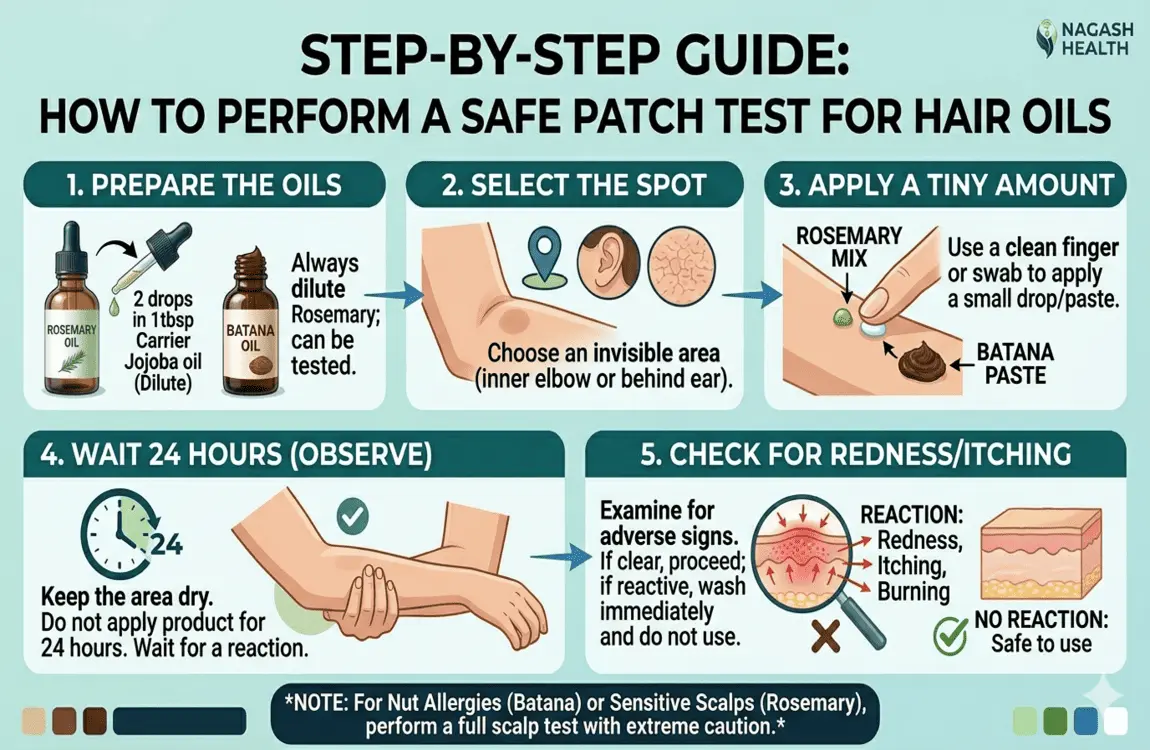
The Patch Test: Before applying a full Batana Oil mask, perform a patch test on a small area of your skin (like the inside of your elbow). Wait 24 hours to ensure there is no reaction.
Comedogenic Scale: While Rosemary Oil is lightweight, Batana Oil is quite heavy. If you have an extremely oily scalp prone to acne, focus the Batana application on the hair lengths rather than the roots.
8. Conclusion: The Verdict on Batana Oil vs. Rosemary Oil
As we navigate the hair care trends of 2026, the choice between Batana Oil vs. Rosemary Oil doesn’t have to be an “either/or” decision.
Choose Rosemary Oil if: Your primary goal is to fight thinning, stimulate dormant follicles, and improve scalp circulation. Your routine’s “Growth Engine” is this.
Choose Batana Oil if: Your hair is damaged, chemically treated, or prone to breakage. It is the “Structural Shield” that ensures your hair reaches its maximum length.
For the most transformative results, the Batana Oil vs. Rosemary Oil combination is the ultimate “Power Couple.” By using Rosemary Oil for scalp health and Batana Oil for strand integrity, you are providing your hair with a comprehensive, 360-degree restoration system.
Whether you are in the humid South or the dry West of the USA, incorporating these two “Miracle Oils” into your weekly ritual is the most effective natural way to achieve the thick, lustrous hair you’ve always wanted.
Related Hair Care Guides for You
If you found this Batana Oil vs. Rosemary Oil comparison helpful, you may also want to explore our other expert-backed guides to optimize your hair health:
- The Best Hair Loss Shampoos at Walmart for 2026: Not all shampoos are created equal. Discover which budget-friendly options actually help stop hair shedding and support new growth.
- Complete Guide to Silk Bonnets for Hair Protection: Learn why a silk bonnet is the essential “overnight partner” for protecting your hair during Batana Oil treatments.
- Scalp Acne: Causes and Best Treatments: Is scalp irritation slowing down your progress? Read our guide on clearing scalp acne to create a healthy environment for growth.
- Red Light Therapy for Hair Growth: Does It Work?: Discover how to combine natural oils with modern technology for the ultimate hair restoration results.
Frequently Asked Questions (FAQs): Batana Oil vs. Rosemary Oil
1. Can I mix Batana Oil and Rosemary Oil in one bottle?
Yes, you can mix them, but it’s better to use them strategically. Since Rosemary Oil is an essential oil, it works best when diluted in a carrier oil and massaged into the scalp. Batana Oil is a thick paste and is more effective when applied to the hair strands. For the best Batana Oil vs. Rosemary Oil results, use Rosemary on the roots and Batana on the lengths.
2. How long does it take to see results from Batana Oil vs. Rosemary Oil?
The biological process of hair growth is sluggish. Whether you choose Batana Oil or Rosemary Oil, consistency is key. Most users in the USA report noticeable changes in hair texture (due to Batana) within 4 weeks, while new hair growth (stimulated by Rosemary) typically takes 3 to 6 months of regular use.
3. Is Batana Oil better than Rosemary Oil for curly (4C) hair?
For curly and coily hair types (like 3C to 4C), Batana Oil is often the preferred choice because of its high fatty acid content which provides intense moisture. However, in the Batana Oil vs. Rosemary Oil comparison for 4C hair, adding Rosemary to the routine helps stimulate the scalp, which can sometimes be neglected in heavy moisture routines.
4. Does Rosemary Oil smell better than Batana Oil?
Scent is subjective. Rosemary Oil has a very fresh, herbal, and medicinal scent. In contrast, authentic Batana Oil has a heavy, smoky, coffee-like aroma. If you find the smell of Batana too strong, mixing it with a few drops of Rosemary Oil can help balance the fragrance.
5. Can I leave Batana Oil and Rosemary Oil in my hair overnight?
Yes, leaving the Batana Oil vs. Rosemary Oil duo overnight is a common practice in the USA for “Deep slugging.” Just ensure you protect your pillowcase with a Silk Bonnet or a towel, as Batana Oil can stain fabrics due to its natural dark pigments.
Medical Disclaimer
Disclaimer: The information provided in this article regarding Batana Oil vs. Rosemary Oil is for educational and informational purposes only and is not intended as medical advice. While natural oils have been used for centuries, results can vary significantly from person to person.
The content on Nagash Health does not seek to diagnose, treat, cure, or prevent any scalp or hair disease. Always consult with a board-certified dermatologist or healthcare professional before starting any new hair restoration treatment, especially if you have underlying health conditions like alopecia areata, scalp psoriasis, or severe allergies. If you experience any irritation, redness, or burning sensation while using Rosemary Oil or Batana Oil, discontinue use immediately and seek medical attention.