Red Light Therapy for Hair Growth: Do At-Home LED Caps Actually Work? (2026)
Red Light Therapy for Hair Growth: Do At-Home LED Caps Actually Work? (2026 Guide)
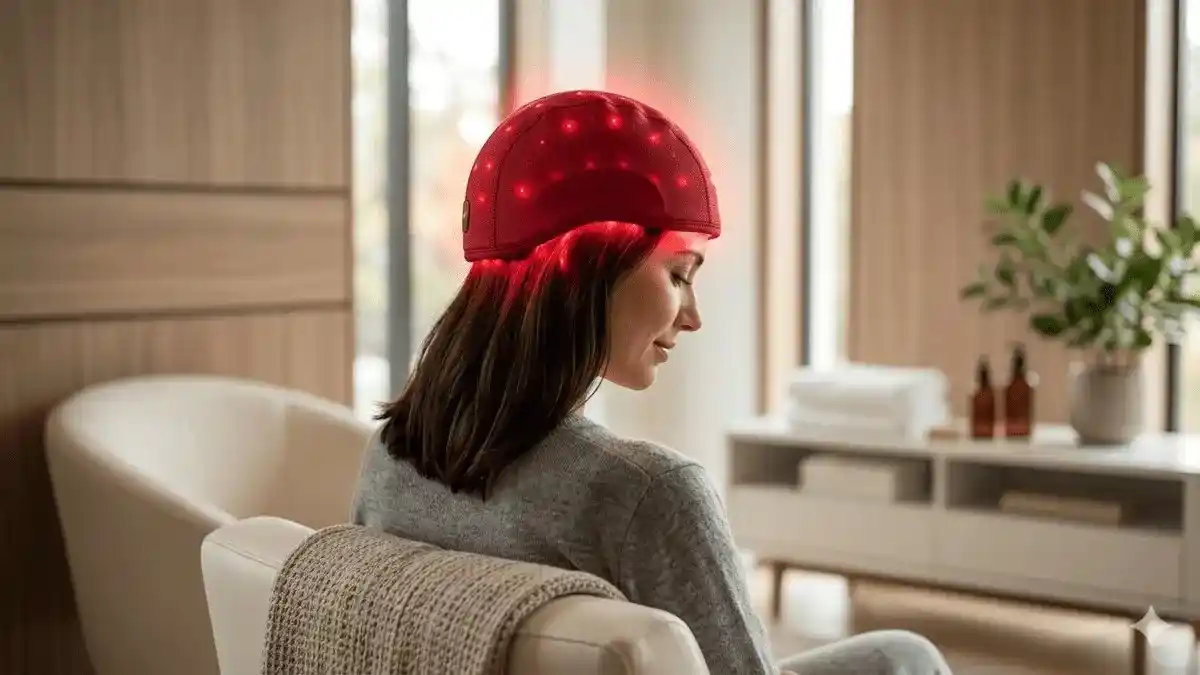
Red Light Therapy for Hair Growth is the most significant technological shift in the US hair restoration market in 2026. For years, the gold standard for treating hair loss was limited to daily topical foams or oral medications that often came with systemic side effects. Today, the conversation has shifted. Americans are increasingly looking for non-invasive, drug-free ways to stimulate their follicles. But as at-home LED caps and laser helmets flood the market with price tags often exceeding $1,000, the skepticism remains: Can light alone really regrow hair?
In this 2026 clinical guide, we explore the biology of photobiomodulation, analyze the top-rated USA devices, and provide a realistic timeline for anyone considering Red Light Therapy for Hair Growth as their primary treatment.
1. The Science: How Red Light Wakes Up Dormant Follicles
To understand why Red Light Therapy for Hair Growth is effective, we must look past the “magic wand” marketing and into the cellular biology of the scalp. The process is scientifically known as Photobiomodulation (PBM).
The Mitochondria Connection
Every cell in your body has a “powerhouse” known as the mitochondria. Your hair follicles are some of the most metabolically demanding cells in your system. When hair begins to thin (a process called miniaturization), it is essentially because the follicle is running out of fuel.
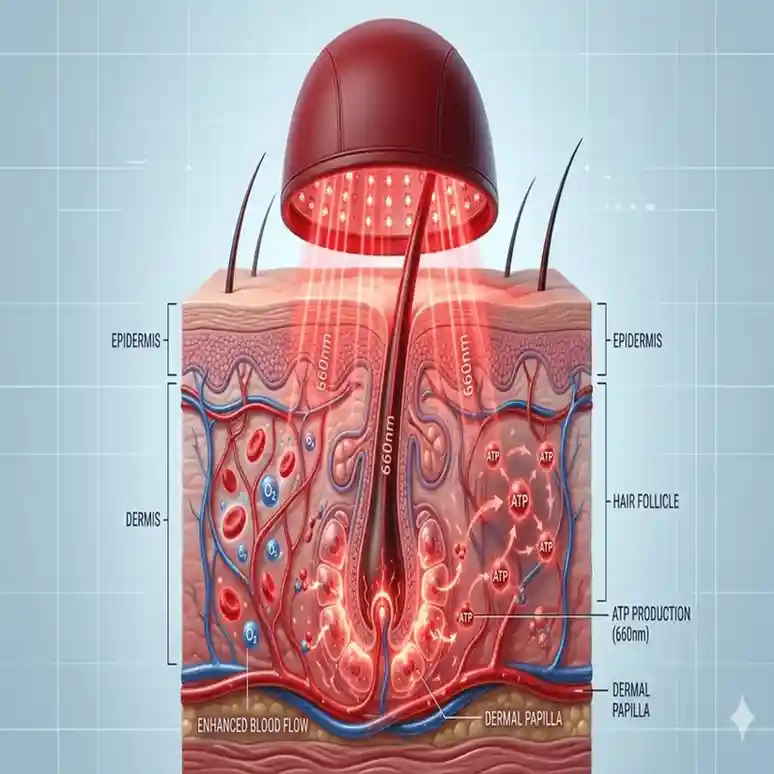
ATP Stimulation: Red light at the specific 650nm to 660nm wavelength is absorbed by an enzyme called cytochrome c oxidase. This triggers the production of Adenosine Triphosphate (ATP).
Cellular Energy: By increasing ATP, the hair follicle is “recharged,” allowing it to stay in the active growth phase (Anagen) for longer and produce a thicker, more pigment-rich hair shaft.
Nitric Oxide and Scalp Circulation
Beyond energy, Red Light Therapy for Hair Growth triggers the release of nitric oxide. This natural vasodilator opens up the blood vessels in the scalp. Better blood flow means more oxygen and nutrients reach the root of the hair, creating the optimal environment for new growth.
Reducing Oxidative Stress and Inflammation
One of the primary causes of follicular miniaturization—especially in cases of Androgenetic Alopecia—is chronic inflammation. When the scalp is under oxidative stress, reactive oxygen species (ROS) damage the hair cells, leading to premature shedding.
Red Light Therapy for Hair Growth helps neutralize these free radicals. By stabilizing the cellular environment, it reduces the inflammatory cytokines that often signal the hair follicle to shut down and enter the resting phase. This “calming” effect is why many users in 2026 report an improvement in overall scalp health, including a reduction in redness and irritation.
Advertisement
Influencing the Hair Growth Cycle
Hair doesn’t just grow; it cycles through three distinct phases. Red Light Therapy for Hair Growth influences each one:
Anagen (Growth): RLT extends this phase, allowing hair to grow longer and thicker before it sheds naturally.
Catagen (Transition): It delays the onset of this regression phase, preventing premature hair death.
Telogen (Resting): Most importantly, the light encourages follicles stuck in the resting phase to wake up and re-enter the Anagen phase faster.
Hormonal Protection: The DHT Shield Effect
While RLT does not change your systemic hormone levels, it may help protect follicles from the damaging effects of Dihydrotestosterone (DHT). DHT typically works by restricting blood flow and “starving” the follicle. By mechanically forcing the blood vessels open through nitric oxide release and boosting cellular energy, Red Light Therapy for Hair Growth acts as a secondary line of defense. According to clinical studies on LLLT, this mechanical boost helps the follicle resist the thinning signals sent by DHT, even in genetically predisposed individuals.
Gene Expression and Stem Cell Activation
Recent research in 2026 suggests that Red Light Therapy for Hair Growth may also influence gene expression. By activating transcription factors, the light therapy can stimulate the stem cells located in the “bulge” of the hair follicle. This activation is what ultimately leads to the regeneration of the hair follicle and the production of a new, healthy hair strand where a thin one once grew.
2. Comparing Technology: Lasers vs. LEDs in 2026
When shopping in the USA, you will encounter two main types of light sources. Knowing the difference is crucial for your results, as the “depth of penetration” determines whether the light actually reaches the hair bulb or simply bounces off the skin.
Laser Diodes (Medical Grade)
High-end devices like the Capillus Pro or iRestore Professional use medical-grade laser diodes. These emit “coherent” light, meaning the light waves travel in a straight, concentrated, and synchronized beam.
Deep Tissue Penetration: Because laser light is collimated (parallel), it does not scatter as easily when it hits the scalp. This allows the energy to penetrate through the epidermis and reach the hair follicle bulb, which can sit 3–5mm below the surface.
Monochromatic Precision: Lasers stay strictly within the therapeutic window (exactly 650nm), ensuring no energy is wasted on wavelengths that don’t stimulate growth.
LED (Light Emitting Diodes)
LEDs are “non-coherent,” meaning the light waves spread out in multiple directions as soon as they leave the bulb. While they often use the same 650nm wavelength, the energy density is lower.
Surface-Level Benefits: LEDs are excellent for treating the skin’s surface and increasing blood flow in the uppermost layers of the dermis.
Wider Coverage: LEDs can cover a larger area of the scalp at a lower cost, which is why many budget-friendly devices in 2026 rely heavily on them.
The Rise of Hybrid Systems in 2026
In the current market, the most effective caps have moved toward a Hybrid System. By combining both lasers and LEDs, these devices offer a “two-pronged” attack:
Lasers strike the deep-seated follicles at the crown and hairline where thinning is most aggressive.
LEDs provide broad-spectrum coverage to maintain the health of the surrounding scalp tissue.
🔥 2026 Top Recommendation
🛒 Check Price: iRestore Professional (282 Lasers & LEDs)
Rating: ⭐ 4.4/5 (1,500+ Reviews) | Offer: $799.00 ($1,299.00)
Supported by Small Business in the USA
What to Look for When Buying in the USA
When selecting your device for Red Light Therapy for Hair Growth, always verify these three critical industry standards to ensure you are getting a clinical-grade product:
FDA Clearance: Do not confuse “FDA Registered” with “FDA Cleared.” For Red Light Therapy for Hair Growth, clearance means the FDA has reviewed the device’s safety and efficacy data for that specific purpose.
Money-Back Guarantee: Most reputable brands in 2026 offer a 6-to-12-month money-back guarantee. Because the hair cycle is slow, you need this window to ensure the device is working for you.
Warranties: Given that these are high-tech electronic investments, a 2-year manufacturer warranty is the industry standard you should expect from any top-tier brand in the USA.
4. The Realistic Timeline: Managing Your Expectations
Red Light Therapy for Hair Growth is not an overnight miracle. Unlike a cosmetic concealer, it relies on biological change, and your hair follicles operate on a very specific internal clock. Understanding the hair growth cycle—Anagen (growth), Catagen (transition), and Telogen (resting)—is key to staying patient.
Month 1: The Transition and “Healer’s Shed”
The most common reason people stop using their LED cap is fear during the first 30 days. You may notice a slight increase in shedding. This is actually a positive clinical sign. It indicates that the Red Light Therapy for Hair Growth is successfully pushing follicles out of the “resting” phase and into a new “growth” phase. The old, thin, “club” hairs must fall out to make room for the thicker, healthier shafts being formed beneath the surface.
Month 2-4: The Stabilization Phase
By the second or third month, the excessive shedding typically stops. This is the “quiet” phase. While you may not see a “forest” of new hair yet, you will notice that your existing hair feels “stiffer,” “crunchier,” or simply more manageable. This is because the diameter of the hair shafts is beginning to stabilize.
Month 6: Visible Density and the “Mirror Test”
In 2026 clinical trials, the 24-week mark is where the data becomes undeniable. Most participants see a measurable increase in hair count—often ranging from 35% to 43% in density. This is usually when your friends and family start to notice that your scalp is less visible under bright lights.

Month 12+: Maintenance and Long-Term Retention
Once you achieve your goal, you cannot simply put the cap in the closet. Hair loss is a chronic condition. Think of Red Light Therapy for Hair Growth like a skin-care routine or a gym membership; you move into a maintenance phase (perhaps 2 times a week instead of daily) to keep the mitochondrial energy high and prevent the follicles from shrinking again.
5. Maximizing Results: The “Stacking” Method
If you want to see the fastest results in 2026, don’t use the cap in isolation. In the USA, top trichologists recommend a “multi-modal” approach to attack hair loss from every angle.
RLT + Minoxidil: The Power Couple
Using your red light cap before applying Minoxidil (Rogaine) is a game-changer. The light therapy increases blood flow to the surface of the scalp. When you apply the topical foam or liquid immediately after, the dilated blood vessels absorb the medication more efficiently. This “prep work” can significantly increase the effectiveness of over-the-counter topicals.
RLT + Scalp Massages (Mechanical Stimulation)
Before you put on your helmet, spend 3–5 minutes using a silicone scalp massager or your fingertips. This helps break up “scalp fibrosis” (hardening of the scalp tissue) and further increases the micro-circulation that the red light will then amplify.
The “Clean Scalp” Principle
One of the biggest mistakes users make is wearing their cap over layers of dry shampoo, hairspray, or natural oils. Light is easily reflected or absorbed by debris. For the most effective Red Light Therapy for Hair Growth, always use the device on a clean, dry scalp. If you must use it with product in your hair, ensure it is a light, water-based serum rather than a heavy oil or wax.
Nutrition and Internal Support
While the light works from the outside in, your body needs the “bricks” to build the hair. Ensure you are getting enough Vitamin D, Iron, and Biotin. Without the proper nutrients in your blood, the energized follicle still won’t have the materials it needs to build a thick hair shaft.
6. Safety, Side Effects, and Contraindications
While Red Light Therapy for Hair Growth is one of the safest treatments available—boasting a near-zero risk of serious complications—it is not for everyone.
When to Consult a Physician
History of Skin Cancer: If you have ever had basal cell carcinoma or melanoma on the scalp, you must avoid RLT unless cleared by an oncologist, as the light stimulates cell proliferation.
Photosensitizing Medications: Certain drugs (like Tetracycline for acne or specific retinoids) make your skin hyper-sensitive to light. This could lead to a mild “sunburn” sensation on the scalp.
Pregnancy: While there is no evidence that red light (which is non-ionizing) harms a fetus, clinical data is limited. Most US doctors suggest waiting until after delivery to start a routine.
Potential Side Effects
Most side effects are “transient,” meaning they go away on their own as your body adjusts:
Scalp Tingling: A sign of increased blood flow.
Mild Headaches: Often caused by the physical weight or “tight fit” of a rigid helmet rather than the light itself.
Temporary Shedding: As discussed in the timeline, this is a biological reset.
Eye Strain: You should never look directly into the lasers. Most 2026 devices have a “safety sensor” that prevents the lights from turning on unless the cap is fully seated on your head.
7. Frequently Asked Questions (FAQ)
When investing in Red Light Therapy for Hair Growth, it is natural to have questions about the logistics and long-term commitment. Below are the most common inquiries from our readers in the USA.
Is Red Light Therapy for Hair Growth safe for long-term use?
Yes. FDA-cleared devices are considered “non-ionizing,” meaning they do not carry the DNA-damaging risks associated with UV light (sunlight). Because these devices use “cold laser” technology, there is no heat, no pain, and zero downtime. Most clinical studies have followed participants for years with no adverse long-term effects reported.
Can I use the cap every day to see faster results?
You should always follow the specific manufacturer’s guide for your device. For example, some caps like Capillus are optimized for a 6-minute daily session, while others like iRestore are designed for 25 minutes every other day. “Over-treating” your scalp does not lead to faster results; in fact, there is a “plateau effect” where the cells can only absorb a certain amount of light energy at once.
Does it work for women with thinning hair?
Absolutely. In fact, Red Light Therapy for Hair Growth has shown remarkably high success rates in women. Women often suffer from “diffuse thinning” (thinning all over) rather than a receding hairline, and the full-coverage design of LED caps is perfectly suited to treat the entire scalp simultaneously.
Will it work on a completely bald head?
Unfortunately, no. If the scalp is shiny, smooth, and has been bald for many years (scarred over), the follicles are likely dead. RLT works by “waking up” weakened, miniaturized follicles. It is a tool for regrowth and preservation, but it cannot create new hair follicles where they no longer exist.
Can I use RLT if I have gray hair or color-treated hair?
Yes. The wavelength of red light (650nm) is not absorbed by hair pigment; it is absorbed by the cells in the scalp. Therefore, it is just as effective for gray or white hair. Additionally, because there is no UV light or high heat, it will not fade your salon color or damage the integrity of your hair strands.
What happens if I stop using the cap?
Hair loss is usually a progressive condition (especially Androgenetic Alopecia). Think of Red Light Therapy for Hair Growth like exercise for your hair follicles. If you stop the stimulus, the follicles will eventually return to their natural thinning cycle. Most users switch to a “maintenance” schedule of 1–2 times per week once they reach their desired density.
Can I share my cap with a family member?
Yes, as long as the device is kept clean. Most caps are one-size-fits-all. However, for hygiene purposes, it is recommended to wipe the inner lining with a gentle alcohol-free wipe between users, especially if one user has an oily scalp or dandruff.
Is it worth the high price tag compared to foams?
While the upfront cost of $500–$2,000 is high, many users find it cheaper in the long run. Topical foams and prescriptions can cost $50–$100 per month indefinitely. An LED cap is a one-time investment that can last 5–10 years, making it a highly cost-effective solution for permanent hair maintenance.
Can I use it on wet hair?
It is highly recommended to use the device on dry hair. Water can refract (bend) the light, and wet hair tends to clump together, which can block the light from reaching the scalp. For maximum penetration, use your device after you have towel-dried or blow-dried your hair.
Final Verdict: Is Red Light Therapy for Hair Growth Right for You?
In 2026, the data is clearer than ever: Red Light Therapy for Hair Growth is a powerful, science-backed weapon against thinning. While it requires a significant upfront investment and a high degree of patience, the ability to stimulate your follicles from the comfort of your home—without drugs or side effects—is a game-changer for most Americans. If you are in the early-to-moderate stages of hair loss, an LED cap is likely the most effective “tech” addition you can make to your wellness routine.
Medical Disclaimer
Important Notice: The content provided in this article is for educational and informational purposes only and is not a substitute for professional medical advice, diagnosis, or treatment. Nagash Health does not provide medical services or clinical consultations.
Always seek the guidance of your physician, dermatologist, or another qualified healthcare provider regarding any medical condition or concerns about hair loss. Never disregard professional medical advice or delay seeking it because of something you have read on this website.
While Red Light Therapy for Hair Growth is generally considered safe, it may not be suitable for everyone. Individuals with a history of skin cancer on the scalp, those with photosensitivity disorders, or patients currently taking photosensitizing medications (such as certain antibiotics or retinoids) should consult a doctor before use. Ensure you are using only FDA-cleared devices and strictly adhere to the manufacturer’s safety protocols and usage instructions.
Recommended for You