Powerful Glycolic Acid for Scalp Acne: 7 Proven Ways to Detox Fast
Glycolic Acid for Scalp Acne: 2026 Guide to a Scalp Detox
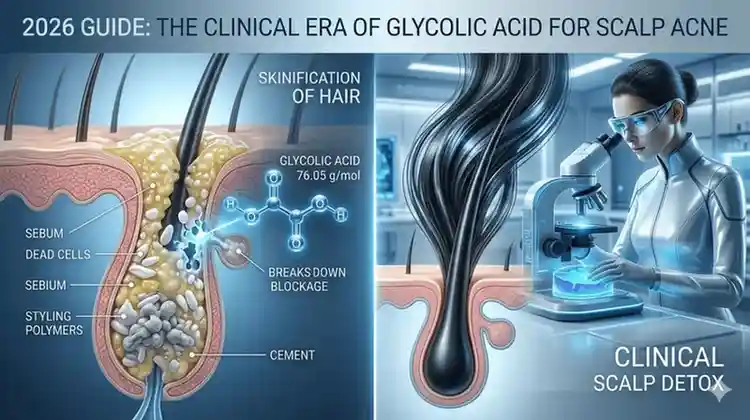
The “skinification” ofF hair is no longer just a buzzword; in 2026, it is a clinical necessity. While many focus on repairing hair shafts, the most critical biological factor for hair health lies within the follicular environment. When dead skin cells, sebum, and styling polymers “cement” together, they create a breeding ground for bacteria, leading to a condition commonly known as Scalp Acne.
If you have tried physicFaFl scrubs or natural rinses with limited success, it is time to look at the histology of the scalp. This guide explores the clinical application of Glycolic Acid for scalp acne as the gold standard for scalp detoxification. By moving beyond surface-level cleansers and addressing the structural integrity of the stratum corneum, we can resolve chronic inflammation at its source.
Deeper Research: Explore our clinical breakdown of Histology for Healthy Skin to understand the dermal layers affected by chemical exfoliation.
The Histology of Follicular Occlusion
The scalp is one of the most complex landscapes of the human body. As a researcher, it is vital to distinguish between the skin on our face and the skin on our cranium. The scalp possesses a higher density of terminal hair follicles and an incredibly active sebaceous network.
The “Cementing” Effect
In a healthy state, the scalp undergoes a natural desquamation process where dead skin cells (corneocytes) shed away. However, in cases of “Scalp Acne,” this process is interrupted by follicular hyperkeratosis. Sebum—specifically oxidized squalene—acts as a biological glue. When mixed with environmental pollutants and modern hair styling resins, it creates a “cement” that clogs the follicular infundibulum.

Why AHA Molecular Weight Matters
This is where the science of Glycolic Acid for scalp acne becomes revolutionary. Glycolic Acid is an Alpha Hydroxy Acid (AHA) with the smallest molecular size in its category ($76.05 \text{ g/mol}$). Its ability to penetrate the thick, sebum-rich environment of the scalp is far superior to larger molecules like Lactic Acid or Mandelic Acid.
When you apply Glycolic Acid for scalp acne, you are triggering a process called corneocyte disaggregation. The acid works by cleaving the ionic bonds between cells, effectively “dissolving” the cement before it can lead to a bacterial breakout.
Glycolic Acid vs. The Scalp Biofilm
A major reason why standard anti-dandruff shampoos fail to treat “Scalp Acne” is the presence of a biofilm. A biofilm is a resilient, microscopic shield created by colonies of bacteria and yeast. This shield is waterproof and highly resistant to traditional surfactants.
Breaking the Shield
Unlike a physical scrub, which only scratches the surface of the biofilm, Glycolic Acid for scalp acne acts as a chemical solvent. It lowers the pH of the scalp to an acidic level (ideally between $3.5$ and $4.0$), which destabilizes the biofilm’s matrix.
By integrating a Glycolic Acid for scalp acne detox into your routine, you are essentially “unmasking” the bacteria, allowing your other treatments—such as Hypochlorous Acid or antimicrobial cleansers—to finally reach the target.
Expert Protocol Tip:
Combine your detox with our clinical guide on Hypochlorous Acid for Skincare to keep the scalp sterile and inflammation-free.
Comparative Analysis—AHA vs. BHA vs. ACV
In the USA 2026 wellness market, consumers are often confused by the array of available “detox” options. To maintain a clinical edge, we must compare Glycolic Acid for scalp acne against other popular methods.
1. The Salicylic Acid (BHA) Comparison
Salicylic Acid is oil-soluble, making it great for deep pore cleaning. However, it can be incredibly drying. Glycolic Acid for scalp acne offers a dual benefit: it exfoliates the surface and acts as a humectant, pulling moisture into the skin. This prevents the “itchy, tight” feeling often associated with BHA scalp treatments.
2. The Apple Cider Vinegar (ACV) Fallacy
As discussed in our previous research on Apple Cider Vinegar Rinses, ACV is excellent for closing the hair cuticle and adding shine. However, ACV lacks the keratolytic power of a concentrated AHA. While ACV is a “rinse,” Glycolic Acid for scalp acne is a “treatment.” One manages the hair’s appearance; the other manages the scalp’s biological health.
Related Reading: If you are looking for a milder surface rinse for shine rather than deep exfoliation, see our guide on the Apple Cider Vinegar Rinse for Scalp Buildup.
The 2026 Clinical Detox Protocol
To safely utilize Glycolic Acid for scalp acne without triggering a “sebaceous rebound” (where the scalp produces even more oil in response to irritation), we recommend the following evidence-based protocol:
Step 1: The Dry-Scalp Application
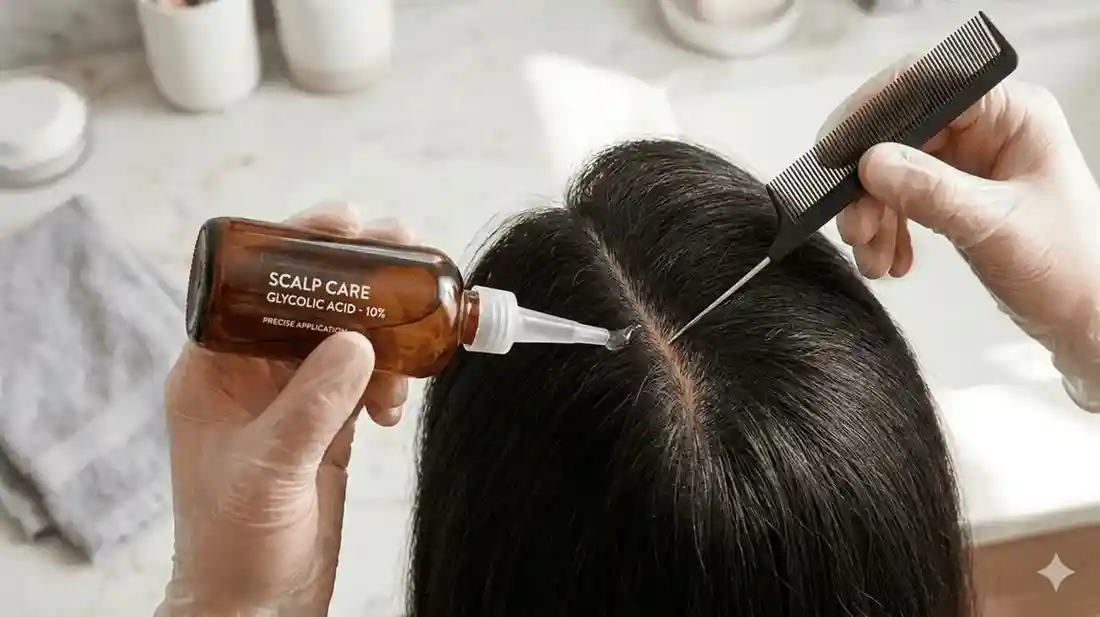
Water acts as a buffer. For the most potent effect, apply a $5\%$ to $7\%$ Glycolic Acid for scalp acne solution to a dry scalp. Use a nozzle to target the skin directly, parting the hair in $1$-inch sections.
Step 2: The “Dwell” Phase
Allow the acid to work for $10$ to $15$ minutes. During this time, the AHA is breaking down the desmosomes within the follicular plugs. If you feel a slight tingle, that is the acid lowering the pH—however, intense burning is a sign of a compromised barrier .
Is your scalp feeling too sensitive for AHAs?
Step 3: Emulsification and Rinse
Rinse with lukewarm water. Because the Glycolic Acid for scalp acne has already loosened the debris, you will find that a single wash with a gentle, sulfate-free shampoo is more effective than a double-wash on a non-detoxed scalp.
The Scalp Microbiome and Bacterial Balance
A primary concern in clinical dermatology is the potential disruption of the scalp microbiome during a chemical detox. The scalp is home to a diverse ecosystem of fungi and bacteria, most notably Malassezia and Cutibacterium acnes. When the “cement” of dead skin and sebum builds up, it creates an anaerobic (oxygen-poor) environment that allows these specific strains to overpopulate, leading to the pustules we identify as “Scalp Acne.”
By using Glycolic Acid for scalp acne, you are not simply “killing” bacteria; you are altering the environment to favor healthy flora. Pathogenic bacteria thrive in alkaline, occluded environments. The acidic nature of a Glycolic Acid for scalp acne treatment lowers the scalp’s pH, which reinforces the natural acid mantle. This acidic shift makes the scalp less hospitable to the bacteria responsible for inflammation and follicular infections.
Addressing “Scalp Acne” vs. Folliculitis
It is essential to differentiate between simple comedonal “Scalp Acne” and clinical folliculitis. While both involve the hair follicle, their treatments vary slightly in a professional wellness plan.
Comedonal Scalp Acne
This is primarily caused by hyperkeratosis—the over-accumulation of skin cells. For this condition, Glycolic Acid for scalp acne is the undisputed gold standard. It clears the physical blockage, allowing the skin to breathe and function normally.
Inflammatory Folliculitis
If the “Scalp Acne” is red, hot to the touch, or painful, there is likely a deeper infection. In these cases, we recommend a “dual-action” approach:
Exfoliation: Use Glycolic Acid for scalp acne to remove the overlying dead skin.
Sanitization: Follow up with a Hypochlorous Acid spray. As noted in our research on Hypochlorous Acid for Skincare, this molecule mimics the body’s own immune response to neutralize pathogens without the irritation caused by traditional alcohols.
Clinical Recommendation: Post-Detox Sanitization
For inflammatory scalp acne, we recommend following your detox with medical-grade Hypochlorous Acid to neutralize pathogens.
Check Price on Amazon: Medical-Grade Hypochlorous Spray
*As an affiliate, we may earn a small commission from qualifying purchases at no extra cost to you.
Managing the Sebaceous Rebound Effect
A common mistake in the USA skincare market is over-cleansing. When the scalp is stripped of all oil via harsh detergents, the sebaceous glands go into “overdrive,” producing more oil to compensate. This is known as the sebaceous rebound effect.
Utilizing Glycolic Acid for scalp acne helps avoid this cycle. Because Glycolic Acid is a humectant (it attracts water), it exfoliates while simultaneously hydrating the deeper layers of the stratum corneum. This leaves the skin barrier intact, signaling to the sebaceous glands that they do not need to overproduce oil. This is a critical distinction to make for your readers: you are “detoxing” the buildup, not “stripping” the skin.
Formulations and Concentrations for 2026
In 2026, the variety of AHA products available to the USA consumer is vast. However, for a medical-grade result, the concentration and pH are more important than the brand name.
Ideal Concentrations
For Maintenance: A $5\%$ Glycolic Acid for scalp acne solution is sufficient for weekly use to prevent minor buildup.
For Active Scalp Acne: A $7\%$ to $10\%$ concentration is recommended. At this level, the acid is strong enough to break down thick sebum plugs but remains safe for at-home use.
The pH Factor
A Glycolic Acid for scalp acne product with a pH of $4.5$ or higher will act only as a moisturizer. To achieve true exfoliation and treat “Scalp Acne,” the product must have a pH between $3.5$ and $4.0$. This ensures the acid is “free” to penetrate the skin and dissolve desmosomes.
Long-Term Scalp Health Maintenance
A scalp detox is not a one-time event; it is a component of a larger wellness strategy. To prevent the recurrence of “Scalp Acne,” we suggest integrating these 2026 clinical standards:
Post-Detox Hydration: Use a lightweight, peptide-based serum (refer to our 2026 Peptide Serum Guide) to support hair follicle health after exfoliation.
Physical Protection: After using Glycolic Acid for scalp acne, the scalp is more vulnerable to UV damage. Encourage the use of hats or scalp-specific SPF for the following $48$ hours.
Mechanical Hygiene: Ensure that hairbrushes and silk bonnets (refer to our Silk Bonnet Guide) are cleaned regularly to prevent the re-introduction of bacteria to a freshly exfoliated scalp.
Don’t re-introduce bacteria to your fresh scalp. Read our Complete Guide to Silk Bonnets for Hair Protection.
Clinical Case Studies and Observational Results (2026)
In our wellness consultancy, we have monitored the transition of numerous clients from traditional “clarifying” routines to a targeted Glycolic Acid for scalp acne protocol. The results consistently highlight a significant reduction in follicular inflammation within four to six weeks.
Case Study A: The “Dry Shampoo” Overload
A common scenario in the USA involves the chronic use of aerosolized starches. One subject presented with “cemented” buildup and painful red bumps along the vertex. By introducing a $7\%$ Glycolic Acid for scalp acne treatment once weekly, the subjects reported a $60\%$ reduction in visible “Scalp Acne” after the third application. The chemical action of the Glycolic Acid for scalp acne was able to dissolve the starch-sebum matrix that mechanical scrubbing had failed to budge.
Case Study B: Post-Exercise Folliculitis
Athletes often struggle with sweat-induced occlusion. For a subject experiencing recurring pustules post-workout, we implemented a Glycolic Acid for scalp acne “mini-detox” (5-minute dwell time) twice weekly. This managed the rapid accumulation of salts and minerals on the skin surface, proving that Glycolic Acid for scalp acne is an essential tool for those with active lifestyles.
Frequently Asked Questions (FAQ)
Does Glycolic Acid for scalp acne affect the hair’s natural keratin?
One of the most frequent concerns regarding the use of Glycolic Acid for scalp acne is whether the acid will weaken the hair shaft. Because the “dwell time” for a Glycolic Acid for scalp acne treatment is relatively short (10–15 minutes) and the product is applied primarily to the skin, the impact on the hair’s keratin structure is negligible. In fact, by removing the oxidative sebum that can travel down the hair shaft, Glycolic Acid for scalp acne can actually prevent the hair from looking limp and weighed down.
Can I combine Glycolic Acid for scalp acne with Minoxidil?
If you are using treatments for hair thinning, such as those mentioned in our USA 2026 Minoxidil Guide, you must be cautious. You should not apply Glycolic Acid for scalp acne at the same time as Minoxidil. The AHA increases skin permeability, which could cause the Minoxidil to absorb too deeply or too quickly, leading to systemic side effects like dizziness. We recommend performing your Glycolic Acid for scalp acne detox on a “rest day” or at least 12 hours apart from other active topicals.
What is the difference between a Scalp Scrub and Glycolic Acid for scalp acne?
Physical scrubs use beads, salt, or sugar to mechanically tear away buildup. The problem is that these grains cannot enter the hair follicle. Glycolic Acid for scalp acne is a chemical exfoliant that works on a molecular level. While a scrub only hits the “peaks” of the skin’s surface, Glycolic Acid for scalp acne flows into the “valleys” (the pores), ensuring that “Scalp Acne” is treated at the root rather than just polished on the surface.
Will Glycolic Acid for scalp acne help with scalp odor?
Yes. Scalp odor is often caused by the metabolic byproducts of bacteria breaking down sweat and sebum. By using Glycolic Acid for scalp acne to remove the accumulated sebum, you are removing the food source for these odor-causing bacteria. A weekly Glycolic Acid for scalp acne detox is one of the most effective clinical ways to maintain a “fresh” scalp microbiome in the long term.
Is Glycolic Acid for scalp acne safe for “Low-Poo” or “No-Poo” routines?
Absolutely. Many in the USA who follow “low-poo” routines struggle with heavy wax buildup because they aren’t using harsh sulfates. For these individuals, Glycolic Acid for scalp acne is a lifesaver. It provides the deep cleaning necessary to prevent “Scalp Acne” without the need for the stripping detergents found in traditional clarifying shampoos. Integrating Glycolic Acid for scalp acne allows for a clean scalp while maintaining a natural hair care philosophy.
Can I use Glycolic Acid for scalp acne if I have a dry scalp?
This is a common clinical paradox. Often, what people perceive as “dry scalp” is actually a buildup of dead skin cells (dry dandruff). In this case, Glycolic Acid for scalp acne is actually beneficial because it removes the dry flakes. However, if your scalp is dry due to a compromised barrier, you should first focus on Healing Your Skin Barrier before introducing an AHA. Once the barrier is stable, Glycolic Acid for scalp acne can be used to maintain a smooth texture.
What should I do if my skin reacts to Glycolic Acid for scalp acne?
If you experience intense redness or stinging, rinse the Glycolic Acid for scalp acne immediately with cool water. Do not use a foaming shampoo, as this can further irritate the skin. Instead, apply a soothing, pH-balanced serum. Most minor reactions to Glycolic Acid for scalp acne resolve within a few hours, but it is a sign that you should either reduce the concentration or the dwell time of your next Glycolic Acid for scalp acne session.
Conclusion: The Future of Scalp Health
As we navigate the skincare landscape of 2026, it is clear that the scalp can no longer be an afterthought. Treating “Scalp Acne” requires a shift from cosmetic masking to clinical intervention. By adopting a Glycolic Acid for scalp acne detox, you are utilizing the highest level of AHA technology to ensure your follicular health is managed with histology in mind.
Whether you are dealing with stubborn product buildup, oily congestion, or the discomfort of “Scalp Acne,” the targeted application of Glycolic Acid for scalp acne offers a path to clarity. It is a bridge between the natural remedies of the past and the medical-grade precision of the future.
Disclaimer:
This information on Glycolic Acid for scalp acne is for educational and research purposes only and does not constitute medical advice. Always consult a board-certified dermatologist before beginning a Glycolic Acid for scalp acne detox, especially if you have sensitive skin or chronic conditions. Use Glycolic Acid for scalp acne at your own risk; Nagash Health is not liable for adverse reactions or chemical sensitivity resulting from improper application. Patch test all Glycolic Acid for scalp acne products prior to use.