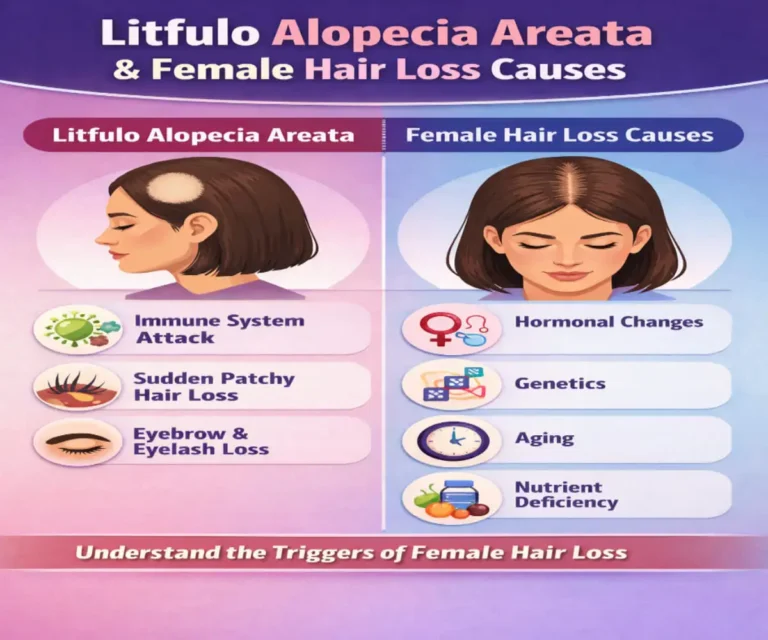
Minoxidil Foam vs Liquid for Women (USA 2026 Guide): Which One Works Better?
Minoxidil Foam vs Liquid for Women (USA 2026 Guide): Which One Works Better?
Hair loss is common — it affects millions of women in the United States. If you’re exploring treatments, you’ve likely come across Minoxidil Foam vs Liquid for Women, a topical solution widely recommended by dermatologists for female pattern hair loss.
Both forms contain the same active ingredient, minoxidil, but their delivery method, ease of use, and daily experience differ.
In this 2026 guide, we’ll use the PAS framework to break down the real problem, why it matters, and the measurable evidence comparing Minoxidil Foam vs Liquid for Women, so you can make a confident choice that fits your routine and goals.
Problem: Understanding Minoxidil Foam vs Liquid for Women Can Be Confusing

When thinning starts, it doesn’t take long for doubts to creep in. For many women, noticing extra hair in the shower or on a brush triggers a mix of concern and confusion:
- Is it stress, hormones, or genetics?
- Will minoxidil even help me?
- Foam or liquid — which one truly grows hair better?
- Should I spend money on a form that won’t work long term?
These questions aren’t trivial. Hair loss is more than just a cosmetic issue — it can affect self-esteem, social confidence, and even professional life. Yet, the flood of online information makes it harder to separate fact from opinion. Some websites praise foam, others swear by liquid, and countless forums offer conflicting personal experiences.
The truth is, deciding between Minoxidil Foam vs Liquid for Women isn’t just about picking what looks “better” in an ad or Instagram post. It’s about understanding which treatment fits your scalp sensitivity, hair type, lifestyle, and patience level. One person might tolerate the liquid just fine, while another develops irritation and gives up before seeing any results.
This confusion is compounded by the fact that minoxidil requires consistent use over months to be effective. Missing doses, applying incorrectly, or stopping too soon can make it seem like the treatment doesn’t work — even if the formula itself is clinically proven.
The problem most women face isn’t a lack of information — it’s too much conflicting information, combined with high expectations and low guidance. Without clear, evidence-based advice, many abandon treatment too early or choose a product that doesn’t suit their routine. And once hair loss continues unchecked, the emotional and psychological impact only grows, reinforcing the feeling of frustration.
By understanding the real differences between Minoxidil Foam vs Liquid for Women, including effectiveness, side effects, and practical use, women can make informed decisions that maximize the chance of seeing results without unnecessary stress or wasted money.
Agitation: Minoxidil Foam vs Liquid for Women — Which One REALLY Works?
Let’s be straight. When comparing Minoxidil Foam vs Liquid for Women, the clinical evidence doesn’t point to a clear winner. Multiple studies confirm that both formulations can stimulate hair regrowth, but the details matter — and that’s exactly where confusion begins for many women.
Clinical Evidence: Foam and Liquid Show Comparable Results
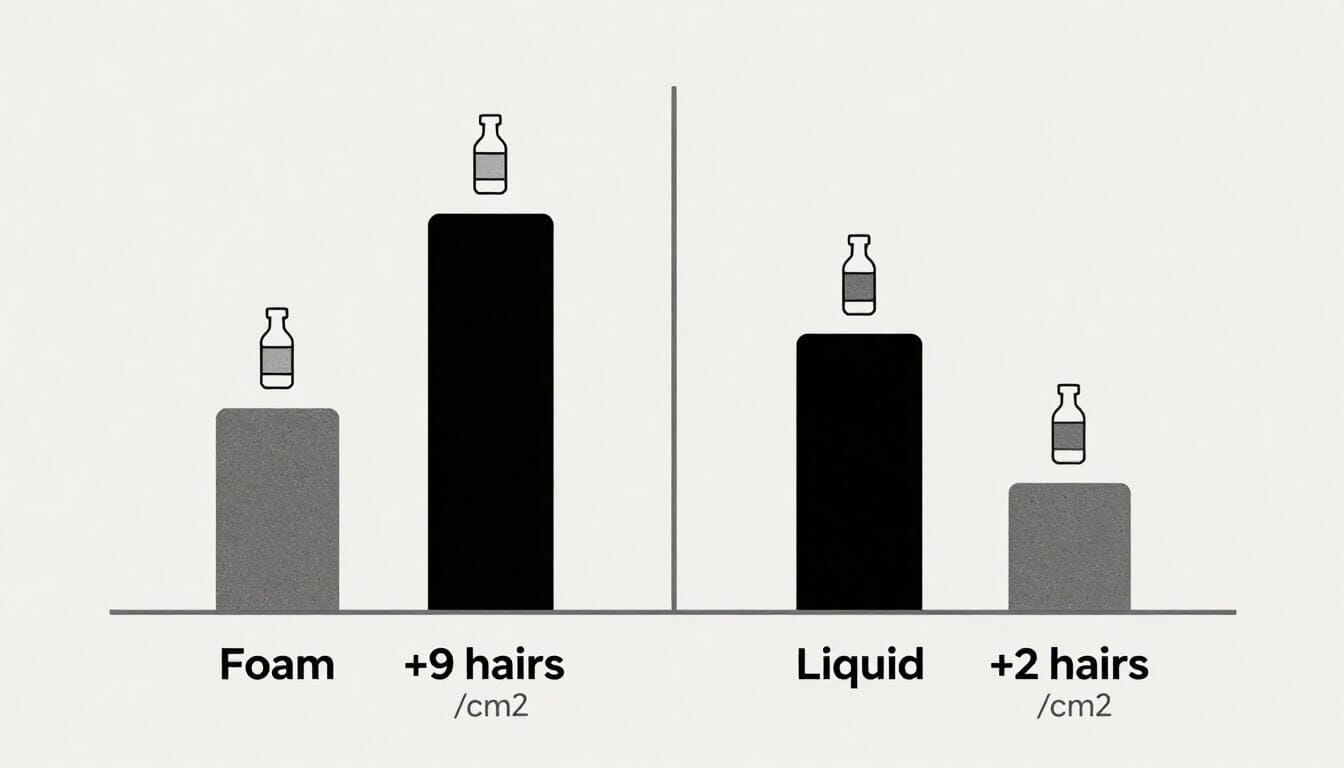
A landmark study evaluated once-daily 5% minoxidil foam versus twice-daily 2% minoxidil liquid solution in women with androgenetic alopecia. After 24 weeks of consistent use:
- Foam users gained approximately 9 additional hairs per cm²
- Liquid users gained roughly 2 additional hairs per cm²
- The statistical difference was negligible
- Both groups experienced noticeable improvements in scalp coverage
From a purely clinical perspective, foam and liquid were essentially equal in promoting hair regrowth.
Another study compared 5% foam and 5% liquid in women, showing similar results: by 24 weeks, foam increased hair counts by around 13%, while liquid increased them by 14%. (PubMed, 2016)
On paper, this makes the choice seem straightforward. If both options work equally well, why not pick either and move on?
Why Real-World Experience Tells a Different Story
Here’s where the frustration begins. Despite similar clinical effectiveness, real-world outcomes often differ because studies can’t capture every practical detail of daily use. For women dealing with thinning hair, small differences quickly become significant:
- Scalp sensitivity – some women develop itching, redness, or flaking from liquid due to propylene glycol, even though regrowth potential is equal.
- Daily routine – foam dries faster and doesn’t drip, making it easier to integrate into a busy morning schedule. Liquid can be messy, slow to dry, and inconvenient for styling.
- Application errors – applying liquid correctly requires precision; missing spots or washing it off too soon reduces effectiveness. Foam is more forgiving in day-to-day use.
These factors explain why a treatment that “works on paper” may not feel like it’s working in real life. Many women start with liquid, experience minor irritation, get discouraged, and stop before seeing any visible results. Meanwhile, a foam user with similar hair loss may continue consistently and see meaningful improvements.
Why This Comparison Matters
The bottom line is that Minoxidil Foam vs Liquid for Women is more than a numbers game. While clinical studies measure hair counts, adherence, comfort, and routine integration ultimately determine whether you’ll see the benefits for yourself.
This is exactly why so many women feel stuck: research shows both forms are effective, but practical issues in daily use can make the difference between regrowth and disappointment.
In the next section, we’ll break down these differences further, focusing on side effects, comfort, and ease of application, so you can choose the form that will actually fit your life — and deliver results over the long term.
Side Effects of Minoxidil Foam vs Liquid for Women: Why Some Quit Early
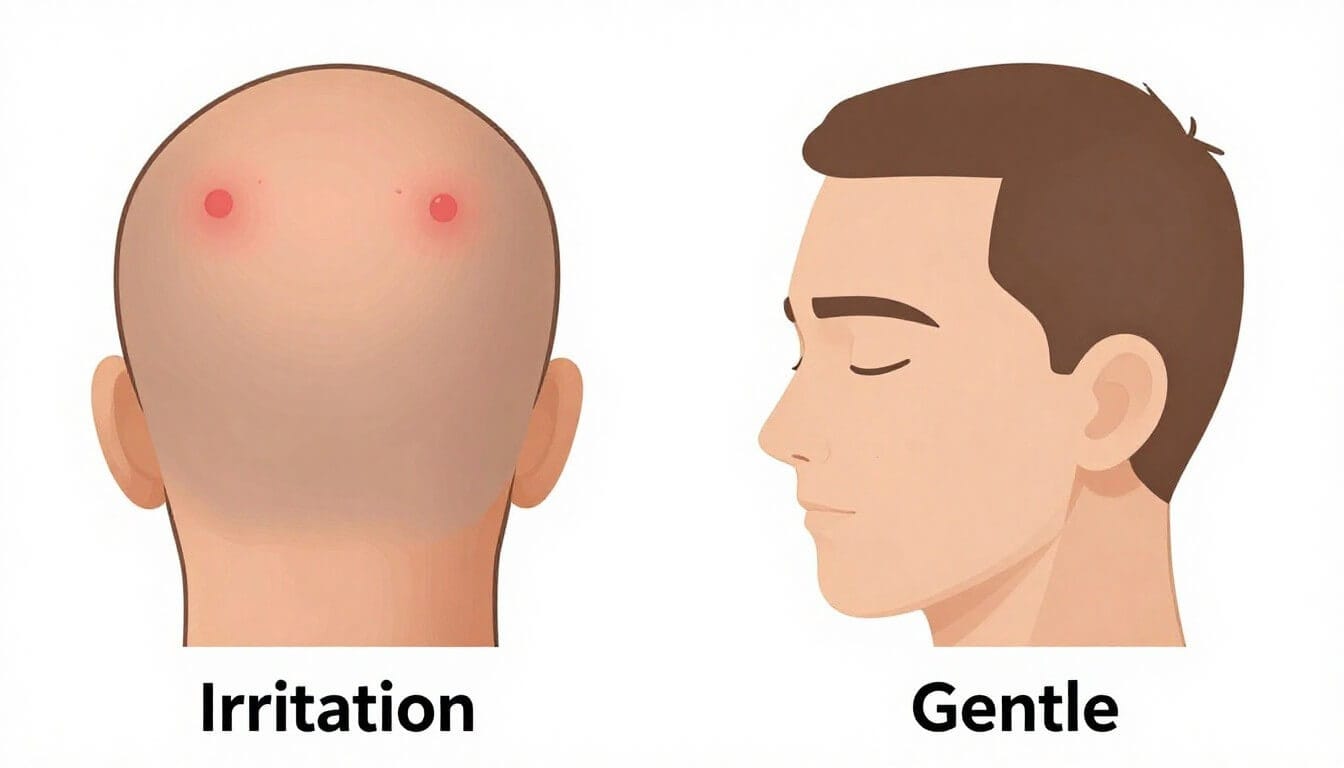
When it comes to Minoxidil Foam vs Liquid for Women, the clinical numbers don’t tell the whole story. Both formulations are effective in regrowing hair, but real-world results often depend on how your scalp reacts. This is exactly where many blogs, influencers, and online forums miss the point: tolerability is as important as effectiveness.
Propylene Glycol in Liquid Minoxidil
The liquid form of minoxidil often contains propylene glycol, a solvent that helps the solution absorb into the scalp. While this ingredient aids effectiveness, it can also trigger irritation in roughly 5–10% of women who use it. Common reactions include:
- Scalp itching
- Redness or inflammation
- Flaking or dandruff-like residue
- Contact dermatitis in sensitive users
For women who already have sensitive scalps, these reactions can be enough to make them stop using minoxidil — even if it is effectively promoting hair regrowth. Studies and user surveys indicate that irritation is the leading reason why many women abandon liquid minoxidil early, reducing long-term results.
Why Foam Often Works Better for Tolerability
Foam formulations do not contain propylene glycol, which makes a significant difference in user experience. Benefits observed with Minoxidil Foam vs Liquid for Women include:
- Fewer reports of irritation – itching, redness, and flaking are much less common.
- Faster drying time – foam usually dries within a minute, making styling easier.
- Less greasy residue – hair looks and feels cleaner immediately after application.
Clinical observations and real-world user feedback consistently suggest that women using foam are more likely to stick with the treatment long-term, simply because it is gentler on the scalp and easier to incorporate into daily routines.
The Takeaway
While hair regrowth rates are comparable, tolerability is the hidden factor that determines success. A treatment that irritates the scalp, no matter how effective on paper, will fail if it’s abandoned early. For many women, this is the critical advantage of foam over liquid: it combines proven hair growth with a more comfortable, practical daily experience.
In other words, when comparing Minoxidil Foam vs Liquid for Women, foam often wins not because it grows more hair, but because it keeps you using the product consistently — and consistency is the real key to results.
Application Experience With Minoxidil Foam vs Liquid for Women
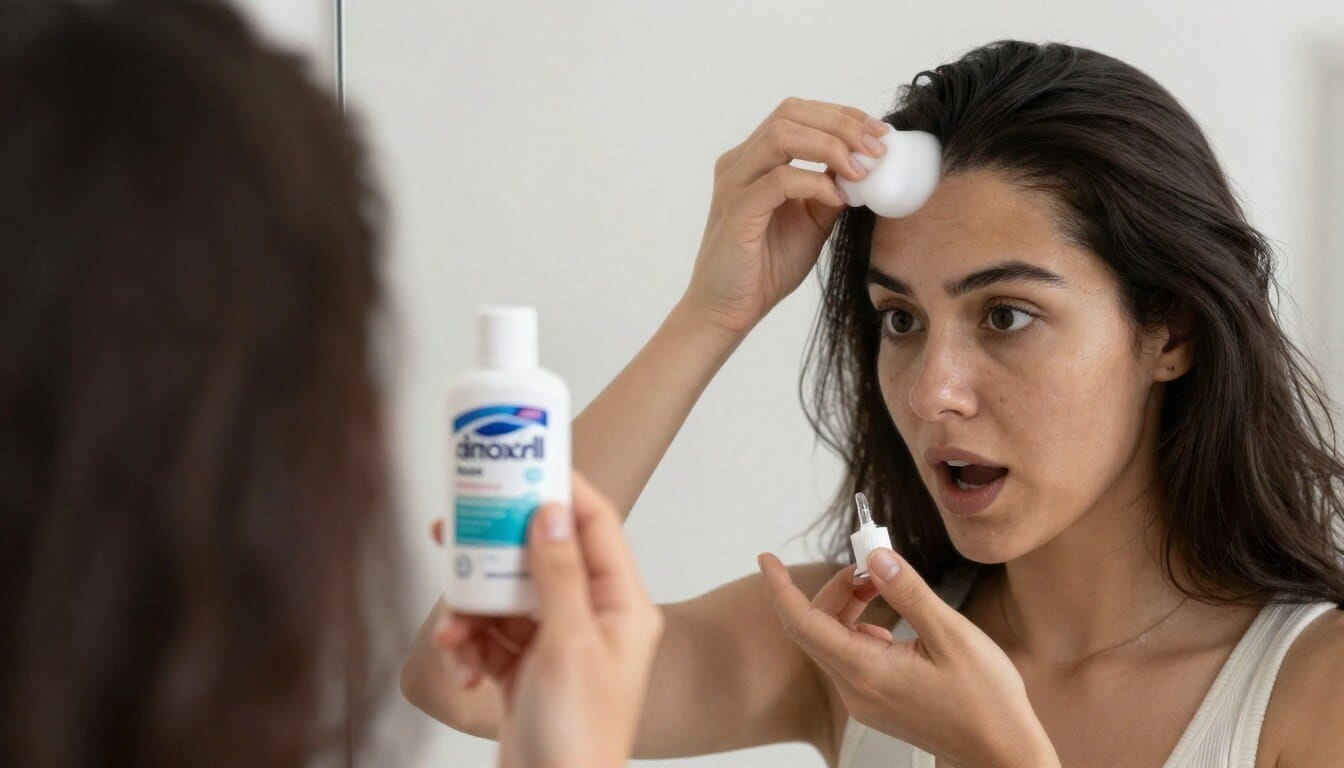
Here’s something you don’t often see in clinical summaries: a hair loss treatment only works if you use it consistently, day after day, week after week. Even the most effective formula is useless if skipped too often, applied incorrectly, or abandoned due to frustration.
When comparing Minoxidil Foam vs Liquid for Women, daily routine becomes a critical factor — and this is where foam often has a practical edge.
Liquid Challenges: Why Consistency Can Break Down
The liquid form of minoxidil, while effective on paper, introduces a few challenges that can interfere with consistent use:
- Drips easily, especially if you have long or thick hair
- Takes longer to dry, which can be frustrating in the morning or before bedtime
- Leaves hair feeling greasy or flat, making styling more difficult
- Requires precise application, since missing a patch reduces effectiveness
Over time, these small inconveniences add friction. And friction, over months or years, often kills compliance, which is the number one reason why some women stop using liquid before seeing results.
Foam Advantages: Simple, Quick, and Routine-Friendly
Foam formulations were designed with ease of use in mind, and many women find it easier to stick to their treatment schedule. Key benefits include:
- Dries in about a minute, making it quick for morning routines
- Sits directly on the scalp, reducing waste and mess
- Less greasy residue, so hair styling is easier immediately after application
- More forgiving application, since foam spreads evenly without precise droppers
For busy women, saving even one or two minutes per application can make the difference between daily adherence and skipped doses. That small convenience, repeated consistently over months, has a major impact on results.
The Real Takeaway
Ultimately, the “best” form of minoxidil isn’t always the one that looks the most premium or is most heavily marketed. It’s the one you’ll actually use consistently.
When evaluating Minoxidil Foam vs Liquid for Women, consider your daily routine, hair length, and tolerance for mess or greasiness. Foam may feel more convenient and less disruptive, which means you’re more likely to see measurable hair regrowth in the long term.
Consistency, not marketing hype, is what turns clinically effective minoxidil into visible results.
Cost Considerations for Minoxidil Foam vs Liquid for Women
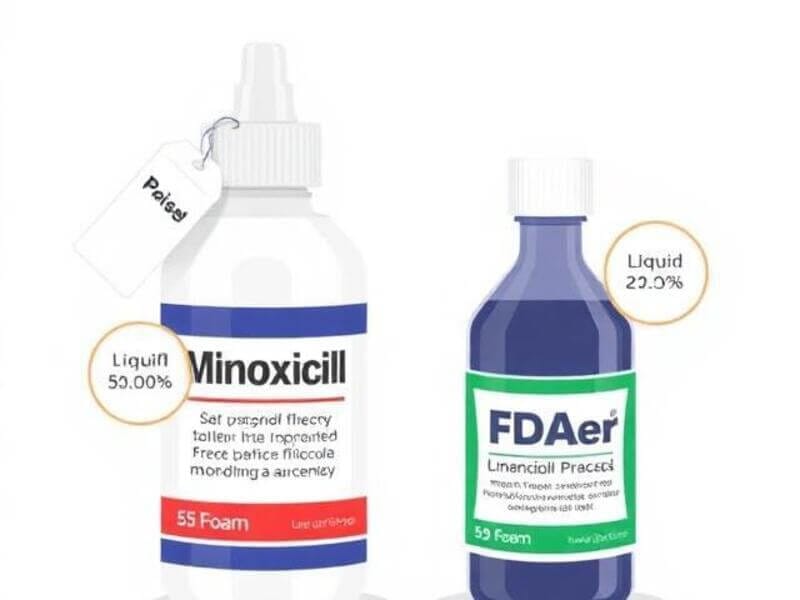
Let’s talk dollars and cents — because even the best‑performing product doesn’t matter if you’ll stop buying it.
Admittedly, foam versions tend to be more expensive per dose than liquid. That’s true in the U.S. market as of 2026. But here’s the nuance:
- Foam may cost more upfront
- Liquid may cause irritation and avoidable dermatology visits
- Foam may improve daily comfort, reducing dropout rates
In other words: liquid might seem cheaper, but foam might work better long‑term simply because you stick with it.
What About FDA Approval and Strengths?
In the USA, the FDA regulates how topical minoxidil is labeled:
- 5% foam is FDA‑approved for women
- Historically, 5% liquid was not FDA‑approved for women (only 2% liquid) — though some dermatologists still recommend higher concentration solutions off‑label.
This matters for legal labeling, insurance considerations, and manufacturer claims.
This means if you buy liquid labeled for women from big pharmacy brands, it’s typically a 2% solution — weaker than the 5% foam option. That’s a significant practical difference that affects expectations.
Solution: Choosing Between Minoxidil Foam vs Liquid for Women
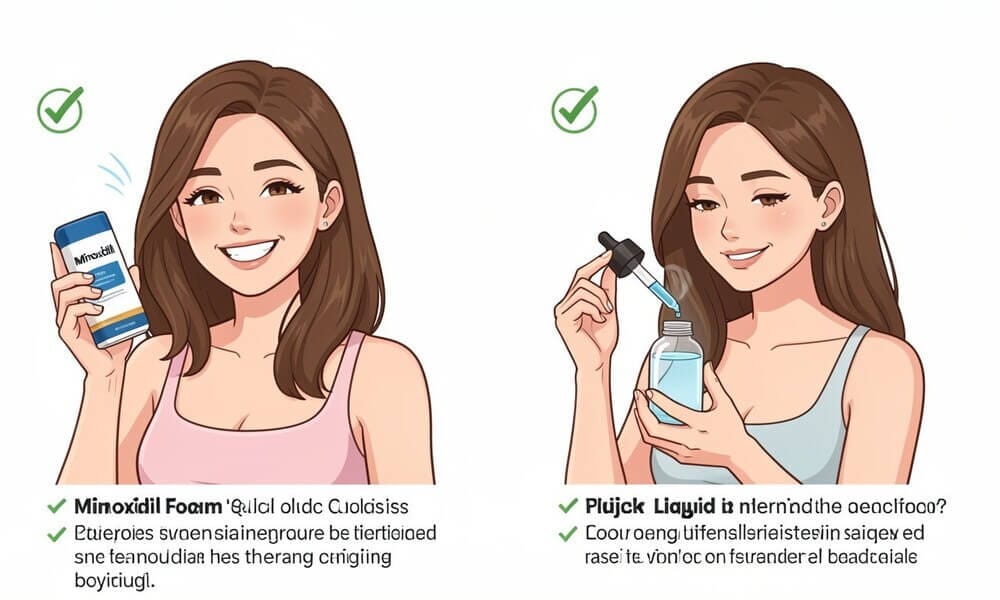
Now that we’ve laid out the problem and reviewed the evidence, it’s time for actionable guidance. Here’s a practical breakdown for women comparing Minoxidil Foam vs Liquid for Women, focusing on efficacy, comfort, and real-world usability.
1. If You Want Maximum Efficacy With Minimum Daily Hassle — Choose 5% Foam
For most women, 5% minoxidil foam is the easiest way to achieve results without adding friction to your routine.
Why foam works best for daily use:
- Comparable hair count improvements – Clinical studies show foam works just as well as liquid in increasing hair density.
- Lower rates of scalp irritation – Foam does not contain propylene glycol, reducing itching, redness, or flaking.
- Faster drying time and easier styling – Foam dries within minutes, making it simple to integrate into your morning or evening routine.
In real-world terms, foam is easier to fit into life. And the most important factor that determines long-term effectiveness is adherence. Women who consistently apply foam over months are more likely to see measurable hair regrowth than those who struggle with liquid.
2. If You Have Severe Localized Thinning or Need Precise Application — Liquid May Be Better
Liquid minoxidil shines in situations requiring targeted application. The dropper allows precise coverage of thinning spots,
Minoxidil Liquid
Liquid allows precise application on targeted areas but may cause irritation in sensitive scalps.
Disclaimer: This is an affiliate link. If you purchase through this link, we may earn a commission at no extra cost to you.
making it useful when only specific areas are affected.
However, there are trade-offs:
- Irritation risk – Propylene glycol in liquid can cause itching or redness.
- Longer drying time – May interfere with styling or require extra care before bed.
- Potential product loss – Dripping or wiping off before absorption can reduce effectiveness.
Some women prefer to use liquid only on affected areas to minimize contact with healthy scalp and hair. This approach works, but it demands careful application and patience.
3. If You’ve Tried One and It Didn’t Work — Don’t Assume the Other Won’t Either
Individual responses to Minoxidil Foam vs Liquid for Women can vary. Personal experiences show:
- Some women get better results with foam.
- Others see improvement using liquid.
- Many notice the difference is more about comfort and tolerability than effectiveness.
The key takeaway: clinical effectiveness is similar, but experience matters. If one formulation irritates your scalp, is messy, or interferes with your routine, switching to the other may help you stick with treatment long enough to see results.
4. Expect 3–6 Months Before You See Real Change
Patience is critical. Minoxidil doesn’t regrow hair overnight. Clinical studies and dermatology guidance show:
- Initial improvement: usually around 3–4 months
- Peak improvement: typically 6–12 months
- Maintenance: continued use is required; stopping almost always leads to shedding of newly regrown hair within a few months
Consistency is non-negotiable. Choosing a formulation that fits your routine — whether foam or liquid — is the most important factor for success.
Key Takeaways for Women Choosing Between Foam and Liquid
- Foam: Best for comfort, ease of use, and long-term adherence. Ideal if irritation or daily routine is a concern.
- Liquid: Best for targeted application and precise coverage, but may require extra care and attention to avoid irritation.
- Consistency beats formulation: The most effective treatment is the one you will use daily for months, regardless of whether it’s foam or liquid.
By understanding the pros, cons, and real-world application of Minoxidil Foam vs Liquid for Women, you can make a data-driven decision that fits your hair type, lifestyle, and comfort — maximizing your chance of regrowth in 2026 and beyond.
Other Practical Considerations for Minoxidil Foam vs Liquid for Women
When evaluating Minoxidil Foam vs Liquid for Women, small practical details can have a big impact on your real-world results. Beyond clinical effectiveness, factors like drying time, scalp sensitivity, and application frequency determine whether you’ll stick with treatment long enough to see meaningful regrowth.
1. Drying Time & Styling
One of the biggest day-to-day differences between foam and liquid is how quickly it dries and affects your hair appearance:
- Foam: Dries fast (usually under a minute) and does not interfere with hairstyling. Ideal for mornings when you need to get ready quickly.
- Liquid: Takes longer to dry and can leave hair feeling greasy or heavy, especially on longer hair.
For women who style their hair daily, this seemingly minor difference can influence routine adherence and overall satisfaction with the treatment.
2. Sensitive Scalps
Scalp sensitivity is another key factor in real-world use:
- Many women with sensitive scalps report less irritation with foam, making it easier to maintain consistent use over months.
- Liquid may still be effective, but irritation — itching, redness, or flaking — can become a significant deterrent, leading to skipped applications or early discontinuation.
Choosing the right formulation for your scalp type can directly affect how long you stick with minoxidil and, ultimately, your results.
3. Dosages & Application Frequency
Application frequency matters more than most women realize:
- Foam (5%) is usually applied once daily, which is easier to remember and integrate into a routine.
- Liquid solution (2%) is typically applied twice daily, doubling the burden of use and the chance of missed doses.
This difference can impact consistency — and as we’ve highlighted before, consistency is the #1 determinant of hair regrowth success.
4. Why You May See Different Results in Real Life
Clinical trials are controlled, but everyday life is not. Factors that influence how well Minoxidil Foam vs Liquid for Women works outside of studies include:
- Hair length and thickness, which may affect absorption
- Styling habits and use of hair products
- Washing frequency and water exposure
- Sweat and exercise
- Precision and skill during application
Even with the same active ingredient, these variables mean that personal experience may differ from clinical averages. Choosing the form that fits your lifestyle, hair type, and tolerance is as important as the concentration itself.
Final Verdict: Minoxidil Foam vs Liquid for Women — Which Works Best?
Based on real clinical evidence and honest user experience:
Minoxidil Foam Works Better for Most Women — Not Because it Grows More Hair, But Because You’ll Use It More Consistently.
Effectiveness in clinical trials is comparable, but tolerability, ease of use, and daily routine influence results in the real world.
Here’s the bottom line:
- Foam: Better for compliance, less irritation, and daily comfort.
- Liquid: Lower cost and more precise targeting — but higher irritation risk and heavier routine.
Both work. But if you drop the product because it annoys you twice a day, it doesn’t matter how effective it could be on paper.
Minoxidil Foam vs Liquid for Women: FAQ (2026 Guide)
Q1. Are foam and liquid minoxidil equally effective for women?
Yes. Clinical studies show that both 5% foam and 2–5% liquid solutions lead to similar increases in hair density when used correctly. The main difference is not effectiveness but tolerability and ease of use, which affects long-term adherence. Choosing the right form for your routine can influence real-world results.
Q2. Which formulation causes less scalp irritation?
Foam generally causes less irritation because it doesn’t contain propylene glycol, a common irritant in liquid minoxidil. Women with sensitive scalps usually tolerate foam better, making it easier to maintain consistent use.
Q3. How long before I see noticeable results?
Patience is key with Minoxidil Foam vs Liquid for Women:
- Noticeable improvement: 3–4 months
- Peak improvement: 6–12 months
Consistency is critical. Stopping early or skipping doses can reverse gains.
Q4. How often should I apply foam versus liquid?
- Foam (5%): Once daily — convenient for busy schedules
- Liquid (2% or 5%): Twice daily (2% is FDA-approved for women; 5% is sometimes used off-label)
Daily routine and convenience can significantly impact adherence and results.
Q5. Which is more economical, the one or the other?
Liquid minoxidil is often cheaper per bottle, but foam may be more cost-effective long-term because it is easier to use consistently. Sticking with treatment is more important than upfront cost for achieving regrowth.
Q6. Can I switch from liquid to foam if I experience irritation?
Yes. Switching from liquid to foam is common and can reduce scalp irritation while maintaining hair regrowth effectiveness.
Many women find this adjustment allows them to stay on treatment longer.
Q7. Can I use minoxidil on short or long hair?
Both foam and liquid are effective for all hair lengths. However, foam is easier to apply on longer hair, as it dries faster and doesn’t drip, making it simpler to incorporate into daily styling routines.
Q8. Do I need to see a doctor before starting minoxidil?
Minoxidil is available over-the-counter in the U.S., but consulting a dermatologist is recommended to:
- Confirm female pattern hair loss diagnosis
- Choose the correct formulation and concentration (especially 5% solutions)
- Review potential scalp conditions or sensitivities
Q9. Can I use foam or liquid if I’m pregnant or breastfeeding?
No. Minoxidil is not recommended during pregnancy or breastfeeding. In these circumstances, always seek medical advice before using.
Q10. Can I combine minoxidil with other hair treatments?
Yes, but check for interactions. Common combinations include:
- Finasteride (off-label for women, under doctor supervision)
- Platelet-rich plasma (PRP) therapy
- Low-level laser therapy (LLLT)
Always apply minoxidil after washing and drying the scalp and separate from other topical treatments unless directed by a medical professional. Proper sequencing ensures optimal absorption and effectiveness.
Disclaimer
The information provided in this article on Minoxidil Foam vs Liquid for Women is for educational and informational purposes only. It does not serve as a substitute for professional medical advice, diagnosis, or treatment.
Always consult a licensed healthcare provider or dermatologist before starting, stopping, or changing any hair loss treatment, including minoxidil. Individual results may vary based on hair type, scalp condition, health status, and adherence to treatment.
Do not use minoxidil if you are pregnant, breastfeeding, or have known sensitivities without consulting a medical professional. The author and publisher are not responsible for any adverse effects or outcomes from the use of products mentioned in this guide.