Spearmint Tea for Hormonal Acne: The Ultimate 2026 Guide to Clear Skin
Spearmint Tea for Hormonal Acne: Does It Really Work? (2026 Guide)
Hormonal acne is perhaps the most taxing skin condition a person can endure. Unlike a standard whitehead caused by surface-level bacteria or a dirty makeup brush, hormonal breakouts are deeply rooted in the endocrine system. These painful, cystic lesions typically congregate along the “U-zone”—the jawline, chin, and neck—acting as a visible flare-up of internal hormonal chaos.
If you have spent years cycling through medical-grade cleansers, expensive retinoids, and professional chemical peels only to see your acne return every month like clockwork, it is time to look inward. In 2026, the USA skincare market has moved beyond the “scrub it away” mentality, embracing a more holistic approach known as internal skincare. At the forefront of this movement is a simple, natural, and scientifically-backed remedy: Spearmint Tea for Hormonal Acne.
1. The Science of the “U-Zone”: Why Hormones Cause Acne
To understand why Spearmint Tea for Hormonal Acne is so effective, we must first identify the biological trigger of these breakouts. Adult acne in women is primarily driven by an excess of androgens—specifically testosterone. While testosterone is essential for female health, an overabundance (or an increased sensitivity in the skin receptors) causes the sebaceous glands to enter “overdrive.”
These glands produce thick, sticky sebum that becomes trapped within the pores. When this oil mixes with dead skin cells and bacteria, it creates the deep, inflamed cysts characteristic of hormonal acne. Because this process happens deep within the dermis, topical creams often fail to reach the source. This is exactly where Spearmint Tea for Hormonal Acne intervenes.
2. How Spearmint Tea for Hormonal Acne Works Internally
The secret to Spearmint Tea for Hormonal Acne lies in its anti-androgenic properties. Unlike peppermint tea, which is primarily used for digestive relief, Spearmint (Mentha spicata) contains specific polyphenols that directly interact with the hormones responsible for oil production.
Lowering Free Testosterone
Clinical research published in journals like Phytotherapy Research has demonstrated that drinking Spearmint Tea for Hormonal Acne twice a day can significantly reduce the levels of free testosterone in the bloodstream. By lowering the hormone that signals the skin to produce excess oil, you are effectively “turning off” the acne at its biological source.
Balancing LH and FSH
For many women in the USA, hormonal acne is a secondary symptom of Polycystic Ovary Syndrome (PCOS). Studies have shown that Spearmint Tea for Hormonal Acne helps increase Luteinizing Hormone (LH) and Follicle-Stimulating Hormone (FSH). This balance helps regulate the menstrual cycle, further reducing the monthly “hormonal surge” that leads to skin flare-ups.
3. Comparing Spearmint Tea for Hormonal Acne to Clinical Treatments
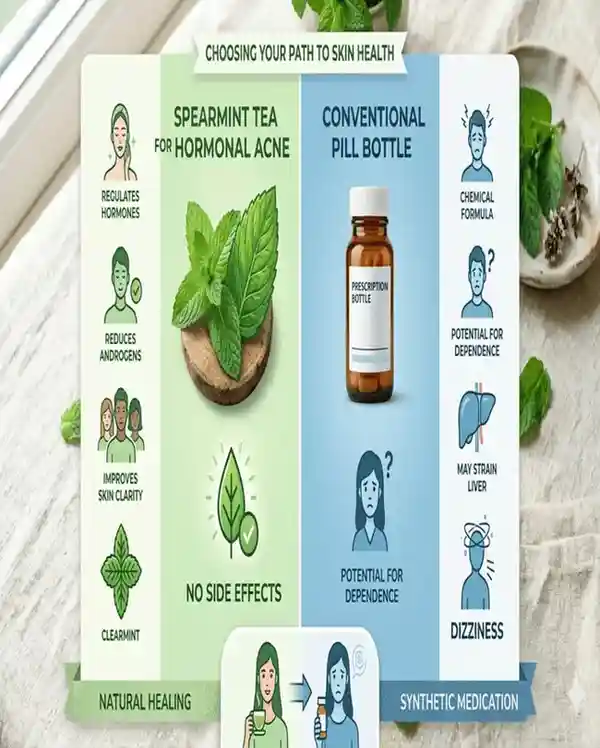
Why many are choosing Spearmint Tea for Hormonal Acne as a natural alternative to synthetic drugs
In the United States, the most common medical treatment for hormonal acne is Spironolactone. While effective, this prescription drug is a potassium-sparing diuretic that can cause side effects like dizziness, frequent urination, and breast tenderness.
Many individuals are now turning to Spearmint Tea for Hormonal Acne as a “natural Spironolactone.” While the tea is a gentler approach, it follows a similar hormonal pathway without the harsh synthetic side effects.
Comparison Table: Acne Treatment Modalities in 2026
| Feature | Spearmint Tea for Hormonal Acne | Spironolactone (Prescription) | Topical Retinoids |
| Action | Internal Anti-Androgen | Systemic Androgen Blocker | Surface Cell Turnover |
| Best For | Mild to Moderate Hormonal Acne | Severe Hormonal Cysts | Texture & Blackheads |
| Side Effects | Minimal (Mild GERD) | High (Dizziness, Fatigue) | Skin Peeling & Redness |
| Accessibility | Over-the-counter / Natural | Prescription Only | OTC or Prescription |
4. The 90-Day Protocol: A Practical Guide to Consistency
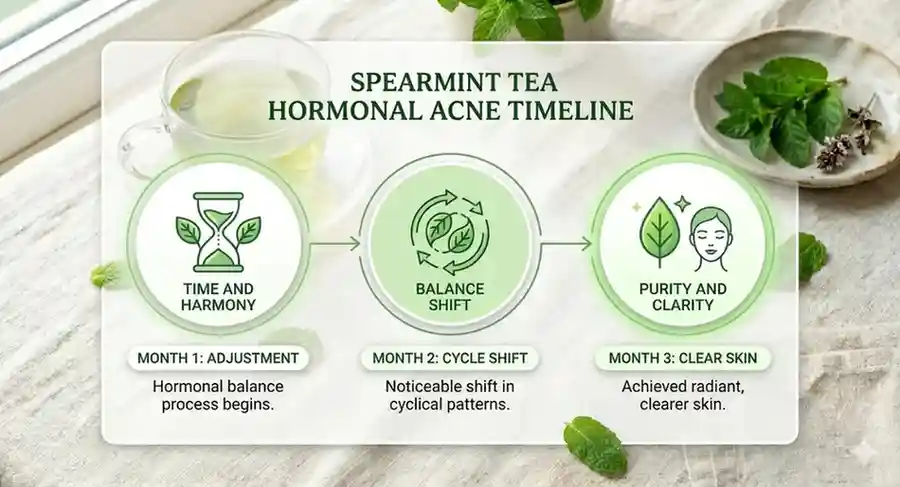
The most common reason people fail to see results with Spearmint Tea for Hormonal Acne is a lack of consistency. Hormonal changes do not happen overnight; they follow the rhythm of your monthly cycle. To see a permanent change in your skin, you must commit to the “90-Day Protocol.”
Month 1: Your body is adjusting. You may notice a decrease in the “oiliness” of your skin, but existing cysts may still be present.
Month 2: The “Cycle Shift.” Most users report that their period-related breakout is significantly less inflamed than the month prior.
Month 3: The “Sweet Spot.” This is where the cumulative effects of Spearmint Tea for Hormonal Acne become undeniable. The jawline begins to clear, and new cysts stop forming.
5. Sourcing and Brewing for Maximum Potency
To ensure your Spearmint Tea for Hormonal Acne is therapeutically effective, you cannot simply buy the cheapest tea bags at the grocery store. In 2026, purity and potency are paramount.
The Importance of Organic Loose Leaf
Many commercial tea bags in the USA contain microplastics or are bleached with chemicals that can actually disrupt your endocrine system—the very thing you are trying to fix. For the best results, source Organic Loose Leaf Spearmint Tea for Hormonal Acne. Certified organic leaves ensure that you aren’t consuming pesticides that mimic estrogen in the body.
🌿 Essentials for Your Spearmint Tea Ritual
Top-Rated Organic Supplies for Maximum Potency
🥇 Best Choice: Frontier Co-op Organic Spearmint
1lb Bulk Organic Loose Leaf – Pure & Anti-Androgenic.
🥈 Must-Have: Glass Infuser Mug with Lid
Keeps essential oils trapped during steeping.
🥉 Clean Water: Brita Filter Pitcher
Removes impurities that can disrupt hormones.
The Medicinal Brewing Method
Water Quality: To prevent heavy metals and chlorine, use filtered water.
Temperature: Bring water to a full boil ($100°C$ / 212°F).
Measurement: Use 2 rounded teaspoons of dried leaves per 10oz cup.
The Critical Step (The Cover): Always steep your Spearmint Tea for Hormonal Acne with a lid on the cup. The essential oils containing the anti-androgenic compounds are volatile; if you don’t cover the cup, they will escape with the steam.
Time: Steep for exactly 10 to 12 minutes.
6. Spearmint Tea for Hormonal Acne and the PCOS Connection
In the USA, approximately 1 in 10 women of childbearing age suffer from PCOS. For these women, acne is rarely the only symptom. It is often accompanied by hirsutism (excess facial hair) and scalp hair thinning.
The beauty of Spearmint Tea for Hormonal Acne is its multi-functional nature. By reducing the androgens that cause acne, it simultaneously addresses the root cause of hirsutism. In 2026, functional medicine doctors are increasingly recommending two cups of spearmint tea daily as a fundamental lifestyle pillar for PCOS management.
7. Strategic Lifestyle Pairing for Clear Skin
While Spearmint Tea for Hormonal Acne is powerful, it works best when paired with a lifestyle that supports hormonal health.
The Insulin-Acne Loop
High insulin levels stimulate the ovaries to produce more testosterone. To maximize the effectiveness of Spearmint Tea for Hormonal Acne, try to maintain a low-glycemic diet. Reducing processed sugars and refined carbohydrates in the USA diet helps keep insulin stable, allowing the spearmint tea to work more efficiently on your testosterone levels.
Topical Support
While the tea works from the inside, you must protect your skin barrier on the outside. We recommend pairing your tea ritual with a gentle, non-stripping routine. If your skin is currently irritated from previous treatments, refer to our guide on 7 Proven Tips to Heal Your Skin Barrier Fast.
8.FAQs
Q: Can I use peppermint tea instead?
A: No. While they belong to the same plant family, peppermint tea does not have the same anti-androgenic research backing as Spearmint Tea for Hormonal Acne. Peppermint contains high levels of menthol, which is excellent for digestion and headaches, but it lacks the specific concentration of polyphenols found in spearmint that target and lower free testosterone. For skin-clearing results, ensure the label specifically says Mentha spicata.
Q: Does Spearmint Tea for Hormonal Acne cause “purging”?
A: Generally, no. “Purging” typically occurs when you use topical actives like Retinol or Salicylic Acid that accelerate cell turnover, pushing trapped debris to the surface quickly. Because Spearmint Tea for Hormonal Acne works internally to slow down oil production at the source, it usually leads to a calmer complexion rather than a “flare-up” phase. If you experience a breakout, it is likely your existing hormonal cycle finishing its course.
Q: Can I drink it while on hormonal birth control?
A: You should consult your healthcare provider before combining the two. Both hormonal birth control and Spearmint Tea for Hormonal Acne work to modulate your endocrine system. Since the pill already regulates your hormones, adding an anti-androgenic herb could potentially alter those effects. It is important to ensure they are working in harmony for your specific body chemistry.
Q: Can I take Spearmint capsules instead of drinking the tea?
A: While capsules exist, the 2026 wellness community in the USA largely prefers the tea form. Drinking Spearmint Tea for Hormonal Acne ensures you are also increasing your daily hydration, which is vital for flushing out toxins. Furthermore, the hot water extraction process during brewing releases volatile oils that are sometimes lost during the high-heat processing of capsules. If you choose capsules, ensure they are standardized to a high percentage of polyphenols.
Q: How many cups of Spearmint Tea for Hormonal Acne are too many?
A: Clinical studies primarily focus on the “two cups a day” protocol. Drinking more than 3–4 cups of Spearmint Tea for Hormonal Acne daily is generally unnecessary and could lead to stomach upset or an excessive drop in androgens, which are still needed in small amounts for energy and libido. Stick to the twice-daily ritual for the best balance of safety and efficacy.
Q: Does it matter if I drink it on an empty stomach?
A: For most people, Spearmint Tea for Hormonal Acne is gentle enough to drink on an empty stomach. In fact, drinking your first cup in the morning before breakfast may help with absorption. However, if you have a sensitive stomach or suffer from GERD, it is best to drink it after a meal to prevent the mint oils from relaxing the esophageal sphincter and causing heartburn.
Q: Can I add honey or lemon to my Spearmint Tea for Hormonal Acne?
A: Yes, you can flavor your tea, but be mindful of the “Insulin-Acne Loop” mentioned earlier. In the USA, many people unknowingly spike their insulin with excess honey or sugar. To keep your Spearmint Tea for Hormonal Acne as effective as possible, use a natural, low-glycemic sweetener like Stevia or Monk Fruit, or simply a squeeze of fresh lemon, which adds a boost of Vitamin C.
Q: Will the results of Spearmint Tea for Hormonal Acne disappear if I stop drinking it?
A: Since the tea addresses a systemic hormonal issue, the benefits typically last as long as the habit does. If you have a permanent underlying condition like PCOS, your testosterone levels may gradually rise back to their baseline if you stop drinking Spearmint Tea for Hormonal Acne. Many women move to a “maintenance dose” of one cup a day once their skin has fully cleared.
Q: Can men use Spearmint Tea for Hormonal Acne?
A: Men should use extreme caution. Because Spearmint Tea for Hormonal Acne is an anti-androgen, it can lower testosterone levels in men, which may lead to unwanted side effects like reduced muscle mass, fatigue, or changes in libido. Men struggling with acne are usually better served by topical treatments or other internal supplements like Zinc.
Q: Is Spearmint Tea for Hormonal Acne safe for teenagers?
A: Puberty is a time of significant hormonal flux. While Spearmint Tea for Hormonal Acne is a natural herb, teenagers should only use it under the guidance of a pediatrician or dermatologist to ensure it does not interfere with their natural developmental hormones.
9. Safety and Precautions
Even though it is a natural herb, Spearmint Tea for Hormonal Acne is a potent hormonal modulator.
Pregnancy: It is not recommended to drink Spearmint Tea for Hormonal Acne during pregnancy as it can interfere with the hormonal balance required for a healthy term.
Anemia: Like many teas, spearmint contains tannins that can inhibit iron absorption. If you have a history of iron deficiency, drink your tea at least one hour away from meals.
Kidney/Liver Health: If you have underlying organ issues, always speak with a physician before starting any daily herbal regimen.
10. The 2026 Verdict on Spearmint Tea for Hormonal Acne
The evidence is clear: Spearmint Tea for Hormonal Acne is more than just a wellness trend. It is a scientifically validated, affordable, and accessible tool for anyone struggling with the emotional and physical toll of adult acne.
By addressing the androgenic root cause, providing antioxidant support, and offering a natural alternative to harsh pharmaceuticals, this herbal infusion has earned its place as a staple in the modern American skincare routine.
Ready to start? Pick up a high-quality organic loose-leaf bag today, commit to your two cups, and give your body the 90 days it needs to find its balance.
Internal Linking & Resources
Medical Disclaimer:
The information provided in this guide is for educational and informational purposes only and does not constitute medical advice, diagnosis, or treatment. Herbal supplements like spearmint tea can interact with medications and underlying health conditions. Always seek the advice of your physician or a qualified dermatology professional before starting any new dietary regimen or supplement.