Skin Streaming 101:: Ultimate Clinical Guide to Flawless Skin
Skin Streaming 101: The Ultimate Clinical Guide to Achieving Flawless Skin with Less
Disclaimer
In the fast-evolving landscape of 2026, many individuals are experiencing a “maximalist breaking point” with their beauty routines. For years, the industry pushed 10-step regimens and “shelfies” overflowing with products, operating under the narrative that “more is better.” However, as professional skincare researchers, we have observed a troubling surge in chronic inflammation and compromised barriers. To combat this, experts are turning to Skin Streaming, a streamlined approach that prioritizes physiological balance over product quantity. By embracing Skin Streaming, you can effectively reverse product-induced sensitivity and restore your skin’s natural health through a minimalist, clinical framework.
Introduction
Most social media skincare trends just drain your wallet. Skin streaming is the exception. Instead of a complicated 10-step routine, this minimalist approach cuts back to the absolute essentials. It uses a few multi-functional products that work with your skin’s biology, not against it. In this guide, we will break down why less is truly more. You’ll learn how skin streaming beats trends like “skin flooding” and how to simplify your daily routine while keeping your natural glow.
The Biological Rationale: Why the Stratum Corneum Craves Less
To understand why skin streaming is effective, we must analyze the stratum corneum—the skin’s outermost layer. This barrier consists of corneocytes (cells) held together by a complex lipid matrix of ceramides, cholesterol, and fatty acids.
The Danger of “Product Fatigue”
When users apply five or six different serums, they are not just applying active ingredients; they are applying preservatives, emulsifiers, and fragrances multiple times. This cumulative exposure leads to:
pH Disruption: Most skincare requires specific pH levels to remain effective.
Acid Mantle Shift: Layering too many products can shift the skin’s natural acidic mantle, which typically sits between pH 4.7–5.5.
Significant Irritation: This biochemical shift often results in significant irritation and sensitivity.
Active Ingredient Conflict: Using high-potency vitamin C, AHAs, and retinol simultaneously can overwhelm the skin’s recovery capacity.
Micro-inflammation: This ingredient “clash” leads to chronic micro-inflammation, which accelerates the visible signs of aging.
Transepidermal Water Loss (TEWL)
Maximalist routines often involve over-cleansing and over-exfoliating, which strip away the essential natural oils necessary to prevent moisture evaporation.
Barrier Reinforcement: Skin Streaming focuses on reinforcing the natural barrier to mitigate TEWL (Transepidermal Water Loss).
Natural Mitigation: Rather than relying on heavy, pore-clogging occlusion to trap moisture, it encourages the skin’s own ability to retain hydration.
Lipid Preservation: By reducing the number of surfactants and exfoliants, the lipid matrix remains intact, maintaining a resilient and “glazed” complexion.
2. Skin Streaming vs. Skin Flooding: A Comparative Analysis
In the modern skincare landscape, it is vital to distinguish between these two viral philosophies, as they serve entirely different clinical needs for the skin. While both trends aim for a healthy complexion, their methodologies are fundamentally opposite.
| Feature | Skin Streaming | Skin Flooding |
| Primary Goal | Minimalist efficiency & barrier rest | Maximum hydration through strategic layering |
| Number of Steps | Usually 3 (Cleanse, Treat, Protect) | Often 5–7 (Multiple mists and serums) |
| Ideal For | Sensitive, reactive, or “tired” skin | Severely dehydrated or dry skin types |
| Philosophy | “Less is more” | “Drench the skin.” |
Understanding the Clinical Distinction
Skin Streaming is designed for the modern user suffering from “product fatigue.” It prioritizes giving the skin’s natural defense system a break from the constant onslaught of multiple active ingredients. By reducing the routine to its core essentials, the skin can focus on repairing its natural lipid matrix.
Conversely, skin flooding is a specialized technique for those whose skin barriers are struggling to retain moisture. It involves dampening the skin between multiple layers of humectants and emollients to “lock in” water.
When to Stream: If you notice sudden redness, stinging when applying products, or a rough texture, your skin is likely signaling a need for the minimalist approach of Skin Streaming.
When to Flood: If your skin feels tight, looks dull, or shows fine dehydration lines despite using a moisturizer, you may benefit from the intensive layering found in flooding.
For those requiring intensive hydration, refer to our previous detailed analysis on skin flooding (#82).
3. The Clinical 3-Step Pillar of Skin Streaming
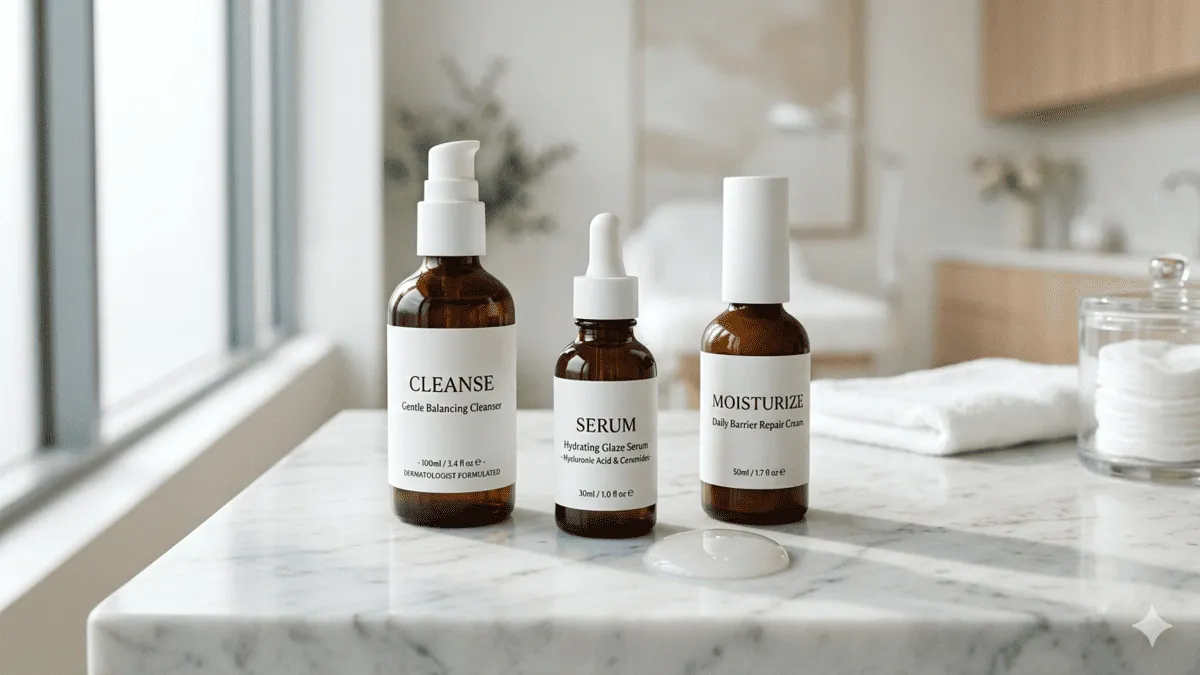
A successful skin streaming routine is built upon three functional pillars designed to maximize efficacy while minimizing skin stress. Rather than following traditional brand-specific steps, this method focuses on the biological necessity of each product layer.
Step 1: The biocompatible cleanser
The primary objective of this stage is to remove environmental pollutants, sebum, and debris without compromising the integrity of the lipid barrier.
What to Look For: Prioritize non-foaming, sulfate-free, and pH-balanced formulas.
The Science: Seek out gentle surfactants such as decyl glucoside or coco-betaine. These provide effective cleansing without the aggressive “stripping” effect associated with harsh chemicals like sodium lauryl sulfate (SLS).
Step 2: The Multitasking Treatment (The “Hero” Step)
This stage represents the core of Skin Streaming. Instead of utilizing three separate serums for hydration, brightening, and anti-aging, you select a single, potent formula containing synergistic active ingredients.

Recommended: Multitasking Barrier Repair Serum
This clinical-grade formula combines Niacinamide, Hyaluronic Acid, and Peptides—perfect for your Skin Streaming ‘Hero’ step.
Example A: A multitasking serum that combines niacinamide (to target pores and redness) with hyaluronic acid (for deep hydration) and panthenol (to soothe inflammation).
Example B: Copper Peptides, which function as both a powerful antioxidant and a collagen-booster, effectively replacing multiple anti-aging products.
Step 3: The Shield (Moisturizer + Broad Spectrum SPF)
Protection remains the most critical, non-negotiable step in any dermatological routine. Within a skin-streaming framework, your morning moisturizer should ideally serve as your primary sun protection to reduce product layering.
Clinical Insight: For optimal defense, ensure your “Shield” provides PA++++ protection and a minimum of SPF 30.
Mature Skin Recommendation: For those with mature skin or hyperpigmentation concerns, tinted sunscreens are highly recommended. These formulas contain iron oxides that protect against visible light—a crucial factor in preventing and managing melasma.
4. Tailoring Minimalism to Specific Skin Types
Skin Streaming is not a one-size-fits-all solution; it must be strategically adapted to meet the physiological demands of different skin profiles. By understanding the unique needs of your skin type, you can achieve professional results with a reduced product count.
For Acne-Prone Skin
A common mistake in managing acne is the over-application of harsh drying agents, which often triggers “reactive sebum production”—the skin’s way of overcompensating for extreme dryness.
The Approach: Streamline the routine by utilizing a salicylic acid cleanser followed by a lightweight, niacinamide-based moisturizer.
The Science: This combination manages cellular turnover and reduces inflammation without stripping the lipid barrier.
Precaution: Avoid mixing heavy botanical oils with active acne treatments during a steaming phase to prevent further follicular congestion.
For Aging and Mature Skin
As skin matures, it typically features a thinner epidermal barrier and a slower rate of cellular regeneration, requiring gentle yet highly effective clinical support.
The Approach: Focus on high-potency retinoids or polynucleotides at night to stimulate DNA repair and collagen production.
Morning Routine: Transition to a rich antioxidant cream in the morning to neutralize environmental oxidative stress.
Clinical Comparison: For a deeper technical analysis on advanced anti-aging ingredients, see our comparative report on Polynucleotides vs. Hyaluronic Acid.
5. Common Myths and Clinical Truths
Despite the rising popularity of skin streaming, several misconceptions persist regarding the effectiveness of a minimalist approach. As a skincare researcher, it is essential to address these myths with evidence-based facts.
Myth: Streaming means you don’t use actvies.
Truth: It actually means using active ingredients more intentionally and strategically.
Clinical Insight: Reducing the number of layers allows the high-potency ingredients in your “Hero” serum to penetrate the skin more effectively, as they are no longer blocked by a “clutter” of excessive products.
Myth: You won’t see results without a 10-step routine.
Truth: Clinical studies consistently demonstrate that adherence to three high-quality, scientifically backed products often outperforms the inconsistent or improper use of ten mediocre items.
Biological Fact: Human skin cells require approximately 28 days to complete a natural turnover cycle.
Compliance: A simplified routine significantly aids long-term compliance, ensuring the skin receives consistent care throughout its entire regeneration cycle.
6. The Financial and Environmental Impact
Beyond the biological benefits, Skin Streaming directly addresses the growing “skincare consumerism” crisis by promoting a “quality over quantity” mindset.
Sustainability: Utilizing fewer products results in a measurable reduction in plastic waste and a smaller carbon footprint due to decreased shipping and manufacturing demands.
Economic Efficiency: By focusing on high-quality medical-grade essentials rather than overpriced serums, consumers can save significant amounts of money annually.
Superior Results: Investing in a few concentrated, high-performance products often leads to superior skin health outcomes compared to spending the same budget on a large volume of diluted formulas.
7. How to Transition: The 3-Phase Audit
Shifting to a minimalist routine should be a deliberate process. Follow this clinical framework to audit your current regimen safely:
The Audit: Closely examine your current shelf to identify products that perform redundant functions, such as having multiple types of exfoliating acids.
The “Slow-Down”: Do not stop using all of your current products abruptly.
Merge Steps: Begin the transition by merging your morning steps into a single multitasking moisturizer that includes SPF.
Monitor the Barrier: Closely observe your skin for signs of success, such as reduced redness and improved overall texture.
Adjust if Necessary: If your skin feels tight or dry during the transition, adjust your “hero” treatment step to include more humectants for added hydration.
Conclusion: The Future of Intentional Beauty
Skin streaming represents a definitive return to physiological balance. By respecting the skin’s natural ability to heal while providing necessary clinical support, we can achieve a healthy, “glazed” complexion without the risk of irritation.
As we progress into 2026, the emphasis continues to be firmly on Evidence-Based Wellness.
Whether you are managing Melasma or seeking to Heal Your Skin Barrier Fast, the answer is rarely “more products”—it is “better science.”
Frequently Asked Questions (FAQ)
Q1. Can I still use retinol while skin streaming?
Yes. Skin streaming does not eliminate actives; it integrates them more intentionally. For aging skin, focusing on a high-quality retinoid at night is a core part of a streamlined clinical approach.
Q2. Is Skin Streaming suitable for all skin types?
While the philosophy of “less is more” benefits most, the specific products must be tailored. Acne-prone skin requires different multitasking “hero” ingredients than mature or severely dry skin.
Q3. What is the duration required to observe results?
Because skin cells take roughly 28 days to complete a natural turnover cycle, you should commit to your minimalist routine for at least one full month to observe significant changes in texture and barrier health.
Q4. Will my skin get worse before it gets better?
If your barrier is currently compromised from “product fatigue,” you may notice a transition period. However, by reducing irritants like excessive preservatives and fragrances, most users see a reduction in redness and sensitivity relatively quickly.