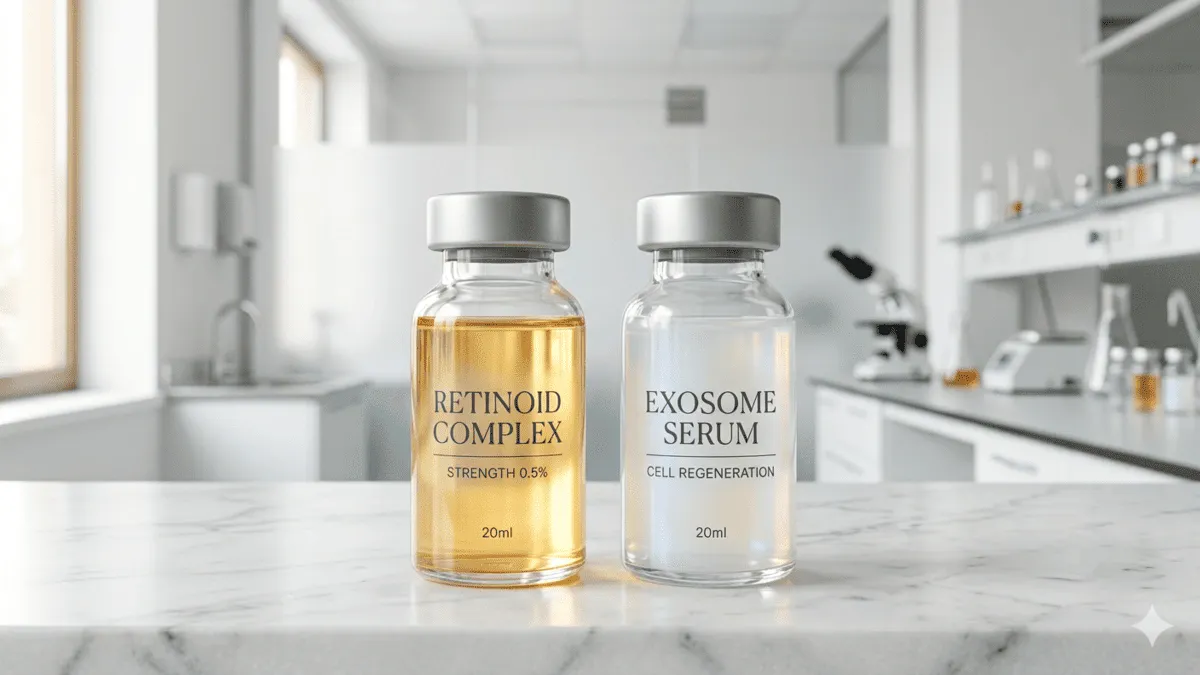
Exosomes vs Retinoids: The Ultimate Biotech Secrets to Flawless Skin
The New Frontier of Skin Regeneration
Exosomes vs Retinoids: which really speeds up skin regeneration in today’s medical world? Though Retinoids have been the top choice for anti-aging for decades, a newcomer from regenerative medicine is challenging that position. Exosomes, these tiny biological messengers, are making waves because they’re said to repair skin better than conventional creams. So while Retinoids hold lots of clout, Exosomes are changing how we think about cellular healing.
The Core Question: A Faster, Needle-Free Alternative?
While Retinoids are celebrated for their ability to remodel the skin over time, they often come with a “tax”—the infamous redness, peeling, and irritation known as Retinization. This has led researchers and skincare enthusiasts to ask: Do Exosomes offer a faster, more efficient, and needle-free alternative to traditional Vitamin A? To answer this, we must first understand the fundamental difference in how these two powerhouses operate.
Defining the Contenders: Vitamin A vs. Cellular Messengers
To compare them, we have to look at their biological identities:
Retinoids: These are derivatives of Vitamin A that work by binding to specific receptors in the skin. Their primary job is to accelerate cell turnover and stimulate collagen production from the outside in.
Exosomes: Unlike traditional ingredients, Exosomes are not “chemicals.” They are microscopic, membrane-bound extracellular vesicles (cellular messengers). They carry a potent cargo of growth factors, lipids, and mRNA, acting as a communication system that tells old or damaged cells exactly how to repair themselves.
While Retinoids act like a “workhorse” pushing the skin to work harder, Exosomes act like the “project manager,” delivering precise instructions for rapid regeneration.
2. Mechanism of Action: Exosomes vs Retinoids (How They Communicate)
To truly understand the difference between Exosomes vs Retinoids, imagine the skin as a busy construction site. One acts as a tireless laborer, while the other acts as a high-tech communication network.
Retinoids: The Biological “Workhorse”
Retinoids, including Retinol and Retinal, function by interacting with Retinoic Acid Receptors (RARs) found within your skin cells. Their action is direct and physical:
Accelerated Cell Turnover: Retinoids signal the basal layer of the skin to produce new cells more rapidly, pushing old, damaged cells to the surface to be shed.
Collagen Synthesis: They inhibit the enzymes that break down collagen while simultaneously stimulating fibroblasts to produce new collagen and elastin fibers.
The “Push” Method: Retinoids effectively “force” the skin to work harder. This intense activity is what leads to the standard “Retinol burn” or peeling phase, as the skin struggles to keep up with the increased workload.
Exosomes: The “Messenger” and Cellular Programmer
When comparing Exosomes vs Retinoids, the former operates on a completely different level. They are not ingredients that the skin has to process; they are extracellular vesicles that already speak the “language” of your cells:
mRNA and Protein Delivery: Exosomes are like biological “envelopes” filled with a cargo of mRNA, microRNA, and growth factors. When they reach a “tired” or aging cell, they fuse with its membrane and dump this cargo directly inside.
Reprogramming from Within: Exosomes supply the genetic instructions (mRNA) needed to reprogram the cell rather than making it work harder. They tell a dormant fibroblast to start behaving like a young, healthy cell again.
The “Signal” Method: They utilize paracrine signaling, facilitating communication between cells to coordinate a massive, systemic repair effort. This is why they can reduce inflammation and speed up healing simultaneously, rather than causing the irritation often found in the Exosomes vs Retinoids debate.
While Retinoids are fantastic for long-term “training” of the skin, Exosomes provide the immediate “software update” that aging cells need to function at peak performance.
3. The Speed Factor: Exosomes vs. Retinoids Timeline
If you are looking for a quick transformation, understanding the biological clock of these two treatments is essential.
Exosomes: The Rapid Regenerator (1–2 Weeks)
Exosomes deliver results at a pace that traditional topicals simply cannot match. Because they bypass the need for the body to “convert” an ingredient (like the skin must convert Retinol into Retinoic Acid), the cellular communication begins instantly.
Immediate Anti-Inflammatory Effect: Within the first 48 to 72 hours, Exosomes work to calm systemic inflammation in the skin.
The 14-Day Glow: By week 2, most users report a visible “glow,” improved hydration, and a reduction in redness.
Post-Procedure Speed: When used after clinical treatments like microneedling or lasers, Exosomes can reduce downtime from 5–7 days to just 24–48 hours.
Retinoids: The Long-Term Architect (4–12 Weeks)
Retinoids are famous for their efficacy, but they require patience and a “period of adjustment.”
The Retinization Phase: During the first 2–4 weeks, users often experience “purging,” dryness, and peeling. This is the skin’s way of adjusting to the accelerated cell turnover.
Structural Changes: You typically won’t see a visible reduction in fine lines or a significant change in skin architecture until week 8 to 12 of consistent use.
The 6-Month Peak: The full collagen-building benefits of Retinoids usually peak after 6 months of disciplined application.
The Verdict: Winner for Speed
Winner for Immediate Radiance: Exosomes. They are the superior choice for someone who needs visible skin improvement or recovery before a major event or after a clinical procedure.
Winner for Structural Remodeling: Retinoids. While slower to start, they remain the gold standard for long-term, permanent changes to skin density and deep wrinkle repair.
4. Clinical Performance: Exosomes vs Retinoids – Beyond the Surface
The surge in popularity for Exosomes isn’t merely due to their speed; it is rooted in their unprecedented clinical efficiency. When we analyze the data of Exosomes vs Retinoids, the results reveal a significant performance gap that is reshaping the future of wellness.
The 7.2x Advantage: Outperforming the Gold Standard
Recent advancements in regenerative research indicate that Exosome-based formulations are rapidly surpassing the “gold standards” of previous decades. In the direct comparison of Exosomes vs Retinoids, the metrics are clear:
Superior Wrinkle Reduction: Independent clinical studies have proven that Exosome-powered formulas are 7.2 times (7.2x) more powerful at reversing wrinkles compared to standard Retinol.
Collagen Boosting Power: While Retinoids provide a gradual push, Exosomes increase collagen levels by 65% within just two weeks.
Fibroblast Stimulation: In advanced clinical formulations, researchers observed a 300% increase in fibroblast stimulation—the cells responsible for skin elasticity—further widening the gap between Exosomes vs Retinoids.
Pigment Reduction: Exosomes can outperform Retinol by up to 17 times (17x) when fading stubborn hyperpigmentation and dark spots.
Synergy: The Power of Clinical Combinations
The true potential of these cellular messengers is unlocked when paired with professional treatments. This creates a synergy where the Exosomes vs Retinoids debate shifts toward a “Hybrid Strategy.”
Microneedling + Exosomes: When applied after microneedling, Exosomes achieve 5.87 times deeper penetration into the dermis compared to topical application alone.
Healing vs. Downtime: While you must stop using Retinoids 5–7 days before invasive treatments to avoid sensitivity, Exosomes are applied immediately post-treatment to “supercharge” the healing process.
Refining Texture: Clinical trials report a significant reduction in pore size and texture categorized as “vastly improved” when compared to traditional serums.

Experience the 7.2x wrinkle reduction power mentioned in our clinical analysis. This professional-grade Exosome serum accelerates cellular repair and boosts collagen by 65% in just 14 days.
5. Why Choose Exosomes? (The Exosomes vs Retinoids Comparison)
While results are the ultimate goal, the experience of achieving them matters just as much. When evaluating Exosomes vs Retinoids, the former offers several “killer advantages” that traditional Vitamin A derivatives simply cannot provide—especially for those with sensitive skin or busy lifestyles.
Zero Irritation: The End of “Retinol Burn”
The biggest hurdle with Retinoids is the “Retinization” phase—a period of weeks where the skin is often red, peeling, and painfully dry. In the Exosomes vs Retinoids debate, comfort is a major deciding factor:
No Peeling or Redness: Exosomes are naturally anti-inflammatory. Instead of causing trauma to force repair, they soothe the skin while signaling regeneration.
Zero Sun Sensitivity: Retinoids are notorious for making skin photosensitive, requiring strict nighttime-only application. Exosomes do not increase sun sensitivity and can be used safely in both AM and PM routines.
DNA Repair and Advanced Cellular Signaling
Building on our previous clinical research regarding Polynucleotides, Exosomes take DNA health a step further through sophisticated communication.
The Signaling Power: While Polynucleotides provide the “building blocks” for DNA repair, Exosomes act as the “instruction manual,” telling the cells exactly how to utilize those blocks for repair.
Mitochondrial Boosting: Exosomes help revitalize the mitochondria (the cell’s power plant), which is essential for reversing the signs of biological aging rather than just masking them.
The #1 Choice for Post-Treatment Recovery
In a clinical setting, Exosomes vs Retinoids is an easy choice for minimizing “downtime” after aggressive procedures.
Accelerated Healing: Using Exosomes after a chemical peel or laser treatment can slash recovery time by more than half.
Immediate Comfort: Unlike Retinoids, which must be stopped at least a week before and after major treatments, Exosomes are applied during the inflammatory peak to instantly calm the skin.
Clinical Insight: If you have struggled with a compromised skin barrier or have “reactive” skin that cannot tolerate Vitamin A, the Exosomes vs Retinoids comparison proves that Exosomes are the superior high-performance alternative that heals as it transforms.
6. The Clinical Protocol: Can You Use Both?
The short answer is yes. In fact, combining Exosomes vs Retinoids can create a comprehensive “360-degree” anti-aging strategy. While Exosomes handle cellular signaling and rapid repair, Retinoids ensure long-term structural integrity and cell turnover.
The Hybrid Approach: A High-Performance Routine
To maximize the benefits of both without causing irritation, we recommend a “split-day” or “post-procedure” cycle to balance the Exosomes vs Retinoids dynamic:
Morning (The Repair Phase): Apply an Exosome serum to clean skin. This provides cells with the growth factors and mRNA needed to combat daily oxidative stress and maintain a calm, hydrated barrier. Since Exosomes are non-photosensitive, they are the perfect biological shield for daytime wear.
Evening (The Maintenance Phase): Use your Retinoid (Retinol or Retinal) at night when the body’s natural repair mechanisms are most active. The Retinoid will continue building collagen and clearing pores while you sleep.
Post-Procedure Cycle: If you have recently undergone a clinical treatment like microneedling, switch to Exosomes only for the first 72 hours. This accelerates the healing phase significantly before reintroducing the more aggressive Retinoid.
Crucial Precautions: Protecting Your Barrier
While the synergy of Exosomes vs Retinoids is powerful, caution is required to prevent “over-treating” the skin:
Avoid Concurrent Layering: We advise against mixing Exosomes and high-strength Retinoids in the exact same application window. Accelerated cell turnover from Retinoids can sometimes interfere with the delicate signaling process of Exosomes.
The Barrier Rule: If your skin barrier is compromised—marked by stinging or redness—suspend all Retinoid use immediately. Stick to a “Skin Streaming” approach using only Exosomes and barrier-repair creams until the skin is fully resilient.
Professional Guidance: Given the high potency of clinical-grade products, always monitor your skin’s tolerance when introducing both into a single routine.
7. The Final Verdict: Why Exosomes are the Superior Successor
Ultimately, the choice between Exosomes vs Retinoids marks the transition from traditional skin maintenance to high-tech cellular regeneration. While Retinoids remain a foundational pillar for long-term cell turnover, Exosomes represent the future of “fast-track” skin health.
Clinical Winner for Speed: If your primary goal is rapid healing, DNA repair, and visible results without the “Retinol burn,” Exosomes are the clear winner.
Winner for Maintenance: If you are focused on long-term structural integrity and budget-friendly cell turnover, Retinoids remain your best ally.
The Ultimate Result: For the most effective clinical outcome, a strategic combination of both—utilizing biotech signaling and traditional turnover—is the most powerful path to flawless skin.
Frequently Asked Questions (FAQs)
Q1: Can I use Exosomes at home daily? Yes, clinical-grade topical Exosome serums are now available for safe daily home use. For best results, incorporate them into your morning routine.
Q2: Should I stop using Retinoids if I have sensitive skin? If your skin cannot tolerate Vitamin A, the Exosomes vs Retinoids comparison shows that Exosomes are a superior, irritation-free alternative.
Q3: How long do Exosome results last? Because they repair at a cellular level, results are long-lasting. However, periodic professional treatments are recommended to maintain skin longevity.
Q4: Can I mix Exosomes and Retinol together? It is better to use a “Split Routine“—Exosomes in the AM and Retinol in the PM—to maintain the efficiency of both.
Q5: Are Exosomes safe for all skin types? Yes. Their anti-inflammatory properties make them ideal for oily, dry, acne-prone, and highly reactive skin types.
Disclaimer
This article is provided for informational purposes only and should not be considered a substitute for professional medical advice. While Muhammad Yasin is a Skincare Researcher and Wellness Consultant, every skin type is unique. Always consult with a board-certified dermatologist before introducing new active ingredients or starting clinical treatments. If you experience a severe reaction or irritation, discontinue use immediately and contact a medical professional.