Ferritin and Hair Loss: 7 Shocking Truths
Ferritin and Hair Loss: The Real Reason Your Hair Is Thinning
Have you ever looked in the mirror and noticed your ponytail feels a little thinner, or maybe your brush is collecting more hair than usual? You’ve tried the expensive shampoos, the biotin gummies, and the scalp massages, but nothing seems to stick.
The truth is, the secret to a thick, healthy mane often isn’t sitting on your bathroom shelf—it’s flowing in your blood. Specifically, it’s a tiny protein called ferritin. If you’ve been struggling with unexplained shedding, understanding the connection between ferritin and hair loss might just be the “aha!” moment you’ve been looking for.
What Exactly is Ferritin? (And Why Your Hair Cares)
Most people think iron and ferritin are the same thing, but they play different roles. Think of iron as the cash in your pocket that you spend every day. Ferritin, conversely, represents your savings account. It’s a blood protein that stores iron so your body can use it whenever it needs a boost.
Now, here’s the kicker: your body is a master of prioritization. When your “savings account” (ferritin levels) starts to run low, your body doesn’t panic—it just starts cutting the budget. It sends what little iron is left to essential organs like your heart and lungs. Your hair follicles? They’re considered “non-essential luxury items.”
When the follicles are starved of the iron they need to produce hair cells, they basically go on strike. This is the direct link between low ferritin and hair loss.
How Low Ferritin Triggers the Shed
Hair growth happens in cycles. Your hair follicles need a lot of energy and nutrients to stay in the “growing phase” (anagen).
When you have low ferritin and hair loss begins, it’s usually because your hair follicles are being pushed prematurely into the “resting phase” (telogen). Telogen Effluvium is the result of this.
The Result: You don’t wake up bald, but you notice a “see-through” quality to your hair, especially at the temples or the part line.
The Feeling: Your hair feels “tired,” lacks volume, and seems to grow at a snail’s pace.
The “Normal” Range vs. The “Hair Growth” Range
This is where things get tricky. You might get a blood test, and your doctor says, “Your iron is fine!” because you fall within the “normal” lab range. The range needed for ideal hair renewal, however, differs greatly from the range for overall health.
| Status | Ferritin Level (ng/mL) | Impact on Hair |
| Deficient | Under 30 | High risk of active shedding |
| Standard Lab Range | 10 – 150 | May still show signs of thinning. |
| Optimal for Hair | 70 – 100 | Ideal environment for regrowth |
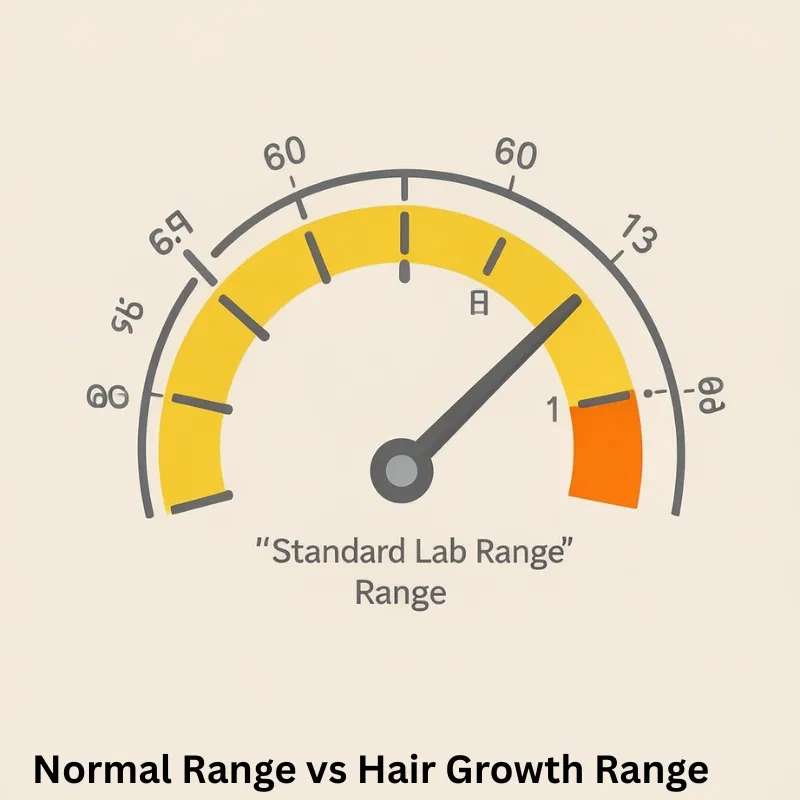
If you are dealing with ferritin and hair loss, simply being “not anemic” isn’t enough. Your follicles often need those levels to be significantly higher to trigger new growth.
Signs Your Hair Loss is Iron-Related
How do you know if ferritin is the culprit? While a blood test is the only way to be 100% sure, keep an eye out for these “low-iron” red flags:
Brittle nails are those that are prone to peeling or chipping.
Constant Fatigue: Feeling like you need a nap even after eight hours of sleep.
Pale Skin: Especially inside your lower eyelids.
Cold Hands and Feet: Poor circulation is a classic sign.
Restless Legs: That annoying “itchy” feeling in your legs at night.
How to Bounce Back: Fixing Ferritin and Hair Loss
The good news? This type of thinning is usually reversible! Once you replenish your iron stores, your follicles can get back to work. Here’s how to start:
1. Focus on Heme Iron
Not all iron is created equal. Heme iron (from animal sources like red meat, liver, and shellfish) is absorbed much more efficiently by your body than non-heme iron (from plants).
2. The Vitamin C Trick
If you’re eating plant-based iron (like spinach or lentils), always pair it with Vitamin C. Squeeze some lemon on your salad or have a glass of orange juice. Vitamin C acts like a key that unlocks the iron for your body to absorb.
3. Watch the “Iron Blockers”
Did you realize that the tannins found in coffee and tea can hinder iron absorption by as much as 60%?
If you’re fighting ferritin and hair loss, try to wait at least an hour after eating before hitting the caffeine.
4. Consult a Professional
Don’t just start popping high-dose iron supplements! Too much iron can be toxic. Work with a professional to find a supplement that is gentle on your stomach (like iron bisglycinate) and get your levels checked every three months.

Final Thoughts
Thinning hair can be incredibly frustrating, but sometimes the solution is as simple as checking your internal chemistry. By addressing the link between ferritin and hair loss, you’re not just treating a symptom; you’re fueling your body from the inside out.
Be patient—hair takes time to grow. But with the right levels, you’ll be well on your way to seeing those tiny “baby hairs” sprout again!
FAQs About Ferritin and Hair Loss
Can ferritin and hair loss be corrected with diet alone?
While a diet rich in red meat, spinach, and legumes helps, if your levels are severely low, supplements are often necessary to bridge the gap. Once you reach the optimal range, a balanced diet can help maintain those levels.
How long does it take to see results for ferritin and hair loss?
Patience is key! It usually takes 3 to 6 months of consistent iron levels to see a noticeable reduction in shedding and the beginning of new growth.
Why does my doctor say my iron is fine even though I have ferritin and hair loss?
Many labs consider 15 or 20 ng/mL “normal.” However, trichologists (hair experts) generally agree that you need a level of at least 70 ng/mL to stop the shedding and 100 ng/mL to see vigorous regrowth.
Are there side effects to treating ferritin and hair loss with supplements?
Standard iron tablets can sometimes cause constipation or upset stomach. If this happens, look for “liquid iron” or “chelated iron” (iron bisglycinate), which are much easier on the digestive system.
Disclaimer:
This article’s content should not be interpreted as medical advice and should only be used for educational and informational purposes. Thinning hair can be caused by a variety of underlying factors, and an accurate diagnosis requires professional evaluation. Always consult with a qualified healthcare professional or dermatologist before starting any new iron supplements or changing your healthcare routine, as excessive iron intake can be harmful.