Iron Infusion for Hair Loss: 5 Signs Oral Pills Failed
Iron Infusion for Hair Loss: 5 Signs Iron Pills Aren’t Working

There’s something deeply frustrating about watching your hair thin out day after day — especially when you’ve followed every instruction, taken every supplement, and still see strands piling up in the shower drain.
For many people dealing with iron-deficiency hair loss, the first treatment recommendation is usually oral iron tablets. You take them daily, wait patiently for results, and hope your hair finally starts recovering. But months can pass with little improvement. The shedding continues. Your ponytail feels thinner. In bright light, your scalp appears more noticeable.
At that stage, many doctors begin discussing iron infusion for hair loss as the next step. Instead of relying on the digestive system to absorb iron slowly, an IV treatment delivers iron directly into the bloodstream. For people who struggle with absorption issues or severe deficiency, an iron infusion for hair loss can work much faster than oral supplements alone.
If your ferritin levels refuse to rise, your hair keeps shedding, and the pills leave you bloated or constipated, it may be time to rethink the approach altogether.
Why Oral Iron Supplements Often Fail
On paper, taking iron sounds simple: swallow a pill, restore your iron levels, regrow your hair.
In reality, the body makes the process much harder than most people realize.
Your Gut Only Absorbs a small amount.
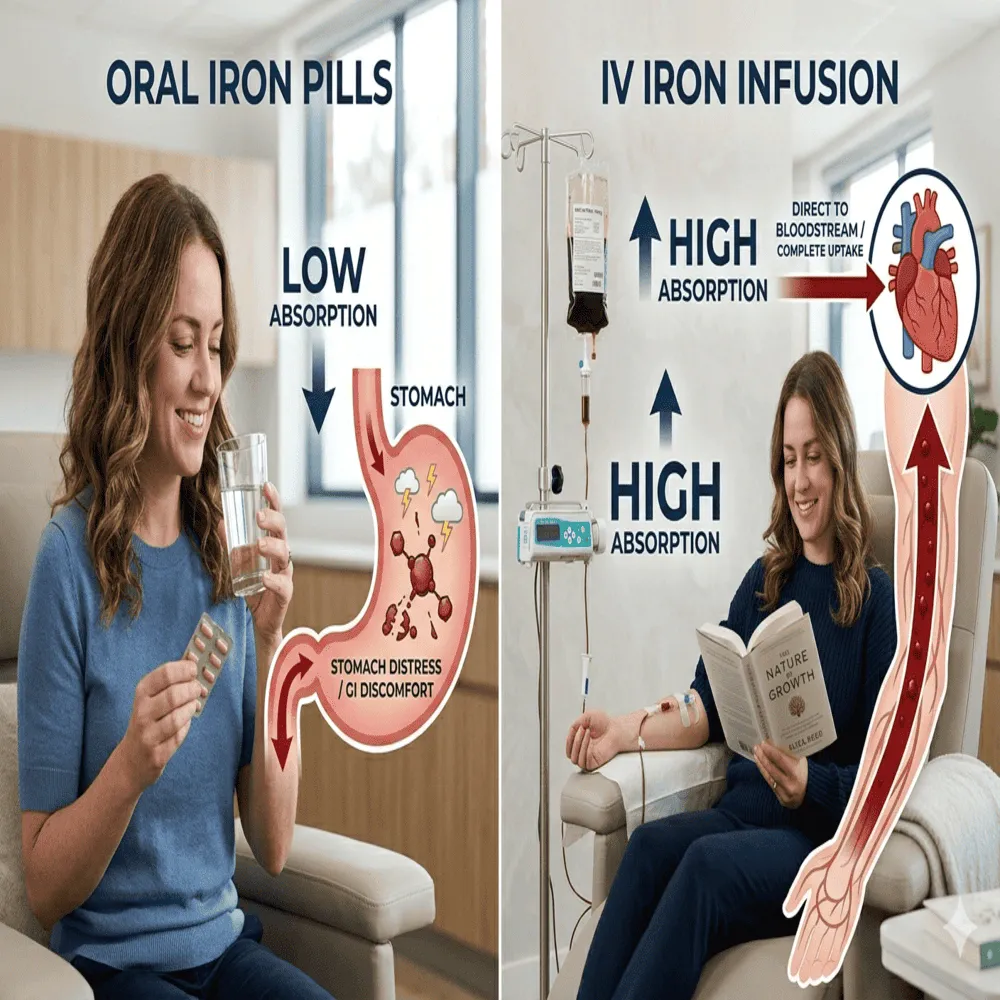
Even under ideal conditions, the body absorbs only a fraction of the iron from oral supplements. A typical iron tablet may contain 65 mg of elemental iron, but your system might absorb only 6 to 13 mg of it.
The rest stays in the digestive tract, where it often causes side effects like the following:
- Constipation
- Nausea
- Acid reflux
- Stomach cramps
- Bloating
Meanwhile, your hair follicles continue struggling to get the iron they need. This is one reason why many specialists eventually recommend an iron infusion for hair loss instead of long-term oral therapy.
The Hepcidin Problem
There’s another issue most people never hear about: hepcidin.
Hepcidin is a hormone that regulates iron absorption. When you take large iron doses every day, the body reacts by increasing hepcidin levels. That response can temporarily block further iron absorption for the next day or two.
So ironically, taking high-dose iron pills daily can sometimes make absorption less efficient over time. In difficult cases, an iron infusion for hair loss bypasses this issue entirely because the iron enters the bloodstream directly.
Your body prioritizes survival over hair.
When iron is low, the body focuses on essential organs first — the heart, brain, lungs, and bone marrow.
Hair growth is considered non-essential.
That means your scalp gets pushed to the bottom of the priority list. Until your iron stores are fully replenished, your follicles may remain stuck in a stressed, shedding state. This is why an iron infusion for hair loss is often recommended when ferritin levels stay chronically low.
5 Signs Oral Iron Pills Have Failed
1. Your Ferritin Levels Stay low.
This is often the clearest sign.
Many people take iron for months only to see ferritin levels barely move. A ferritin result under 30 ng/mL may technically fall inside “normal” lab ranges, but for hair growth, it’s usually not enough.
Hair specialists often look for ferritin levels closer to 70–100 ng/mL before noticeable regrowth begins. If your labs plateau despite consistent supplementation, your body may simply not be absorbing enough iron orally, making an iron infusion for hair loss the next logical option.
2. The Side Effects Are Becoming Unmanageable
Iron pills can be rough on the digestive system.
For some people, the nausea, constipation, or stomach pain becomes so severe that staying consistent is nearly impossible. Others continue taking them anyway and end up feeling miserable every day.
At a certain point, treatment shouldn’t make you feel worse than the original problem. In these situations, doctors may recommend an iron infusion for hair loss to avoid further digestive distress.

Recommended: Clinical-Grade Iron Support Supplement
If you’re struggling with absorption, this highly bioavailable iron formula is designed to be gentle on the stomach while effectively boosting ferritin levels.
3. You Have an Absorption Disorder
Certain medical conditions make oral iron much less effective, including:
- Celiac disease
- Crohn’s disease
- Ulcerative colitis
- SIBO
- History of gastric bypass surgery
Long-term use of acid-reducing medications can also interfere with iron absorption.
In these situations, the gut may physically struggle to process iron properly, no matter how many pills you take. For many patients, an iron infusion for hair loss becomes the most reliable way to restore healthy iron levels.
4. You Have Heavy Menstrual Bleeding
If you lose significant blood every month, oral supplements may not keep up with the amount of iron leaving your body.
It becomes a constant cycle of depletion and partial replacement.
An iron infusion for hair loss can deliver a much larger amount of iron at once, helping restore ferritin stores more effectively and reducing ongoing shedding linked to chronic deficiency.
5. Your Hair Shedding Is Still Getting Worse
If months of supplementation haven’t slowed the shedding — or if it’s accelerating — your follicles may still be iron-starved.
Persistent telogen effluvium often signals that the body hasn’t corrected the underlying deficiency yet.
The longer follicles stay under stress, the harder recovery can become. In severe cases, delaying an iron infusion for hair loss may prolong unnecessary thinning.
Why Iron Infusions Work Faster
The biggest advantage of an iron infusion for hair loss is simple: it bypasses the digestive system completely.
Instead of relying on the gut to absorb small amounts over many months, the iron goes directly into the bloodstream. That allows the body to replenish ferritin stores much faster.
For some patients, what oral supplements take nearly a year to accomplish can happen within days or weeks after an iron infusion for hair loss.
That doesn’t mean hair regrows overnight. Hair cycles are slow. But restoring iron stores quickly gives follicles the resources they need to finally shift out of survival mode.
What Happens During an Iron Infusion?
The procedure itself is usually straightforward.
You sit in a clinic while iron is delivered through an IV line in your arm. Depending on the formulation, the session may take anywhere from 15 minutes to an hour.
Most people read, scroll on their phones, or relax during the infusion.
Afterward, you can usually go home immediately and continue normal activities. Most importantly, an iron infusion for hair loss begins replenishing iron stores far more rapidly than oral supplements.
When Will Hair Growth Improve?
Hair recovery happens in stages after an iron infusion for hair loss.
Weeks 1–4
Your body replenishes iron stores. Energy levels may improve before hair changes become noticeable.
Weeks 6–8
Shedding often starts slowing down. You may notice fewer hairs in the shower or on your pillow.
Months 3–6
New growth becomes visible. Small baby hairs may appear around the hairline and parting areas.
Full density restoration can take much longer, but this is usually when people finally feel like progress is happening after an iron infusion for hair loss. Are Iron Infusions Safe?
Modern IV iron treatments are considered very safe when administered properly.
Common short-term side effects can include:
- Mild headache
- Metallic taste
- Fatigue
- Temporary flu-like symptoms
Serious allergic reactions are now extremely rare with newer formulations. For most eligible patients, the benefits of an iron infusion for hair loss outweigh the temporary discomforts.
Who Qualifies for an Iron Infusion?
Doctors typically look at several lab markers before recommending an iron infusion for hair loss, including:
- Low ferritin
- Low transferrin saturation (TSAT)
- Symptoms like fatigue and hair shedding
- Poor response to oral supplements
In many cases, documented failure of oral therapy is required before insurance approves infusion treatment.
Final Thoughts
Hair loss caused by iron deficiency can feel exhausting, especially when you’ve spent months doing everything “right” without results.
But sometimes the issue isn’t effort. It’s absorption.
If oral supplements aren’t raising your ferritin levels, your symptoms are worsening, or your hair continues thinning despite treatment, discussing an iron infusion for hair loss with your doctor may be worthwhile.
For many people, an iron infusion for hair loss becomes the turning point that finally allows recovery to begin.
FAQs
Can iron infusions cause temporary shedding?
Not directly. However, shedding may continue briefly after an iron infusion for hair loss because those hairs were already in the resting phase before treatment.
How long do the effects last?
That depends on the underlying cause of your deficiency. If heavy periods or absorption problems continue, iron levels may eventually drop again.
How soon does shedding improve?
Six to eight weeks after receiving an iron infusion for hair loss, many people report less shedding.
Can you get an iron infusion just for cosmetic hair growth?
No. An iron infusion for hair loss is still a medical treatment and usually requires documented iron deficiency.
Are infusions better than supplements?
For severe deficiency or poor absorption, an iron infusion for hair loss is often much faster and more effective than oral pills.
Medical Disclaimer
This article is for educational purposes only and should not replace professional medical advice. Always speak with a qualified healthcare provider before starting or changing any treatment for hair loss or iron deficiency.